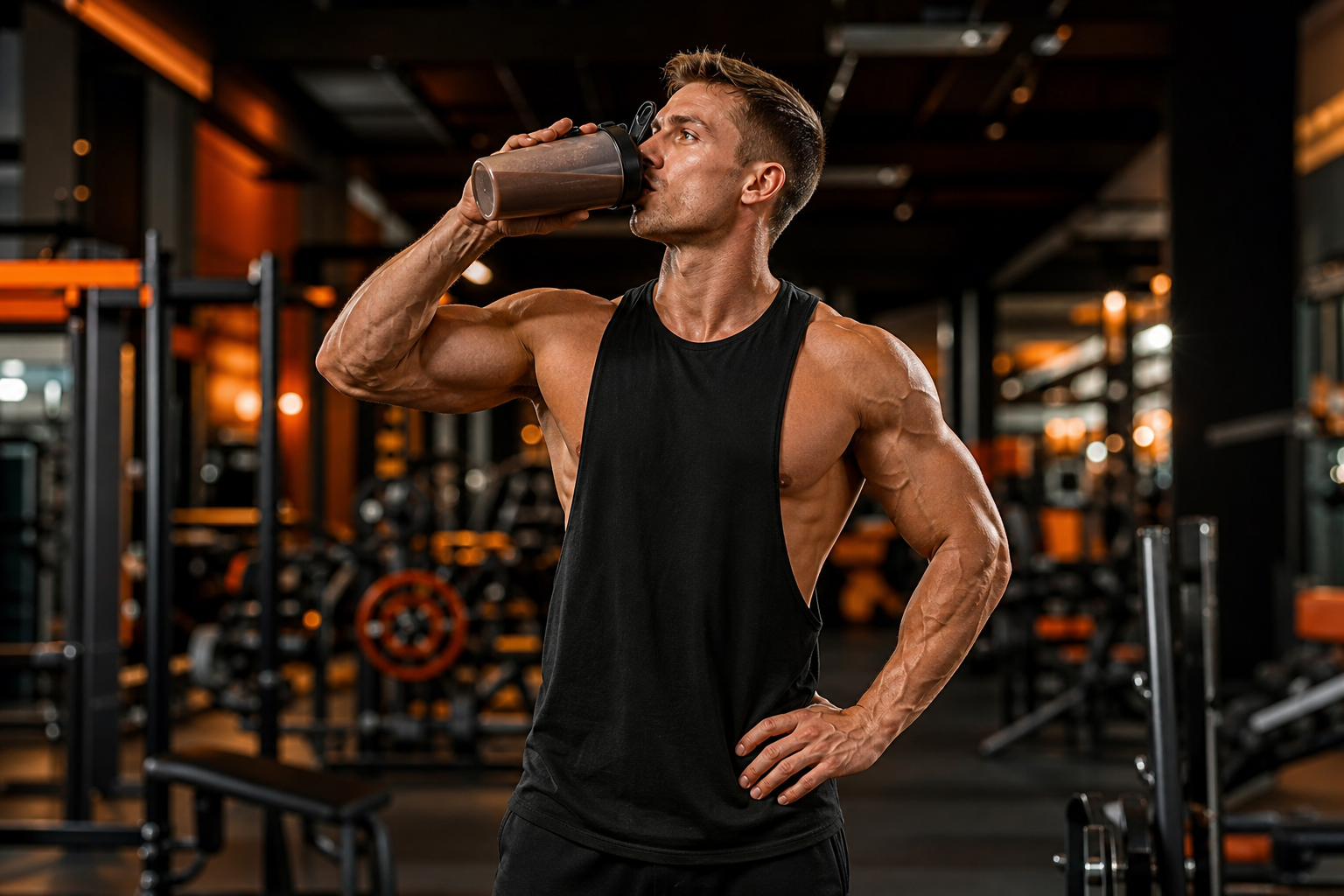
Protein Intake: How Much Protein Do You Need Per Day?
Why Protein Matters for Fitness
Protein is the single most important macronutrient for anyone who trains. Every time you lift a weight, run a sprint, or do a push-up, you create microscopic tears in your muscle fibers. Protein provides the amino acids your body uses to repair those tears — and rebuild the muscle slightly stronger than before. This cycle of damage and repair is how you get stronger, bigger, and more resilient.
Beyond muscle, protein supports immune function, hormone production, and enzyme activity. According to a 2019 review published in Nutrients, inadequate protein intake impairs recovery and increases injury risk in athletes — even when total calories are sufficient.
From my experience working with beginners, the most common mistake is not eating enough protein, not too much. Most new lifters focus on training intensity while neglecting the raw material their muscles need to actually grow.
How Much Protein Do You Need Per Day?
The right amount depends on what you do and what you are trying to achieve. Here is what the research says:
Sedentary adults (RDA): 0.8 g/kg per day (0.36 g per pound). This is the bare minimum to prevent deficiency — not enough for active people.
Active adults and recreational lifters: 1.2-1.6 g/kg per day (0.55-0.73 g per pound). The American College of Sports Medicine recommends this range for anyone doing regular exercise.
Muscle building: 1.6-2.2 g/kg per day (0.7-1.0 g per pound). A landmark 2018 meta-analysis by Morton et al., published in the British Journal of Sports Medicine, analyzed 49 studies and found that protein supplementation beyond 1.62 g/kg produced no additional muscle gain.
Fat loss while preserving muscle: 1.8-2.7 g/kg per day. Higher protein intake during a calorie deficit helps spare lean muscle mass.
Quick calculation example: If you weigh 75 kg (165 lb) and want to build muscle, aim for 120-165 g of protein per day (75 × 1.6 to 75 × 2.2). That breaks down to roughly 30-40 g per meal across four meals.
Best Protein Sources for Muscle Building
Not all protein is equal. Your body absorbs and utilizes some sources far better than others. The key metric is leucine content — leucine is the amino acid that triggers muscle protein synthesis, and you need about 2.5-3 g per meal to maximize it.
Animal-based proteins (complete amino acid profile, high leucine):
- Chicken breast — 31 g protein per 100 g, leucine-rich
- Lean beef — 26 g per 100 g, also provides iron and B12
- Eggs — 6 g per egg, considered the gold standard for protein quality
- Greek yogurt — 10 g per 100 g, convenient and easy to digest
- Fish (salmon, tuna) — 20-25 g per 100 g, plus omega-3 fats
Plant-based proteins (combine sources for complete amino acids):
- Tofu and tempeh — 12-19 g per 100 g, soy is the only complete plant protein
- Lentils — 9 g per 100 g (cooked), high in fiber
- Chickpeas — 8 g per 100 g (cooked), versatile in meals
- Quinoa — 4 g per 100 g (cooked), contains all essential amino acids
| Source | Protein/100g | Leucine | Type |
|---|---|---|---|
| Chicken breast | 31 g | High | Animal |
| Lean beef | 26 g | High | Animal |
| Tofu (firm) | 12 g | Moderate | Plant |
| Lentils (cooked) | 9 g | Moderate | Plant |
| Greek yogurt | 10 g | High | Dairy |
Protein Timing: When to Eat Protein
The "anabolic window" — the idea that you must consume protein within 30 minutes of training — has been largely debunked. A 2017 review in the Journal of the International Society of Sports Nutrition found that total daily protein intake matters far more than precise timing.
That said, distribution across the day does make a difference. Research by Schoenfeld and Aragon (2018) suggests spreading protein across 3-5 meals, each containing 20-40 g, maximizes muscle protein synthesis better than eating most of your protein in one or two large meals.
Pre-workout: Eat 20-30 g of protein 1-2 hours before training. This ensures amino acids are available during exercise.
Post-workout: Within 1-2 hours is fine. If you had a protein-rich meal 2-3 hours before training, you are already covered.
Before bed: Casein-rich foods like cottage cheese or Greek yogurt provide slow-release amino acids overnight, which may help reduce muscle breakdown during sleep.
Breakfast: Many people skip protein at breakfast — a mistake. Starting the day with 20-30 g kick-starts muscle protein synthesis after the overnight fast.
Key Takeaways
| Point | Recommendation |
|---|---|
| Sedentary minimum | 0.8 g/kg per day (RDA) |
| Active adults | 1.2-1.6 g/kg per day |
| Muscle building | 1.6-2.2 g/kg per day |
| Per meal | 20-40 g, spread across 3-5 meals |
| Timing | Total daily intake matters more than precise timing |
Common mistakes to avoid:
- Eating only 0.8 g/kg because "that is the RDA" — it is the minimum, not the target
- Putting all protein in one big dinner instead of spreading it across meals
- Ignoring plant-based proteins — they work if you combine sources
- Chasing expensive supplements before fixing your whole-food intake
Next steps: Calculate your protein target (body weight in kg × 1.6-2.2 g), plan 3-4 protein-rich meals, and start tracking for one week. For more on how nutrition supports training, see our complete nutrition guide.
자주 묻는 질문
근육 성장에 하루 단백질 얼마나 필요?
체중 1kg당 1.6-2.2g/일이 유효 범위. 2022년 메타분석에 따르면 2.2g/kg 초과는 대부분 추가 근성장이 없습니다.
운동 후 단백질 섭취 최적 시간?
1-2시간 이내면 충분 — "30분 동화 윈도우"는 대부분 신화. 하루 총 섭취량이 더 중요합니다.
단백질 과다 섭취가 가능한가?
건강한 성인은 2.5g/kg/일까지 안전(ISSN). 잉여분은 산화되거나 배설 — 자동으로 근육이나 지방이 되지 않습니다.
운동하는 사람에게 0.8g/kg이 충분?
아닙니다. 0.8g/kg은 좌식 생활자의 결핍 예방 최솟값. ACSM은 활동적인 사람에게 1.2-2.0g/kg 권장 — RDA의 약 2배.
최고의 식물성 단백질 공급원?
대두 제품(두부, 템페), 렌틸콩, 병아리콩, 퀴노아. 하루 동안 콩류와 곡물을 조합하면 모든 필수 아미노산을 섭취할 수 있습니다.