Fitness Nutrition for Beginners: What to Eat Before, During, and After Exercise
Why Fitness Nutrition Matters
You cannot out-train a bad diet. What you eat directly affects your energy levels, recovery speed, and the results you get from every workout. The Academy of Nutrition and Dietetics states that proper nutrition can improve exercise performance by up to 25% compared to training on an unbalanced diet.
For beginners, the biggest shift is thinking about food as fuel — not just calories. Different nutrients serve different purposes: carbohydrates power your workouts, protein rebuilds your muscles, and fats support hormone function and joint health. Getting the right balance is what turns effort into visible progress.
Macronutrient Basics for Beginners
Every meal you eat is made up of three macronutrients — protein, carbohydrates, and fat. Here is what each one does for your fitness:
Protein (1.6–2.2g per kg of bodyweight per day) — The building block of muscle. After exercise, your body uses dietary protein to repair micro-tears in muscle fibers, making them stronger and slightly larger. The International Society of Sports Nutrition recommends this range for active individuals. Good sources: chicken breast, eggs, Greek yogurt, fish, legumes.
Carbohydrates (3–5g per kg per day) — Your primary energy source for moderate-to-high intensity exercise. Carbs are stored in your muscles and liver as glycogen, which fuels every rep and every sprint. Low-carb diets and intense training do not mix well — you will feel sluggish and weak. Good sources: rice, oats, sweet potatoes, fruit, whole-grain bread.
Fat (0.8–1g per kg per day) — Essential for hormone production (including testosterone), joint health, and absorbing fat-soluble vitamins (A, D, E, K). Avoid going too low on fat — it will hurt your recovery and energy. Good sources: olive oil, avocado, nuts, fatty fish.
A simple starting ratio for beginners: 30% protein, 40% carbs, 30% fat. Adjust based on how you feel and perform.
What to Eat Before a Workout
Your pre-workout meal determines whether you train with energy or drag yourself through the session. The general rules:
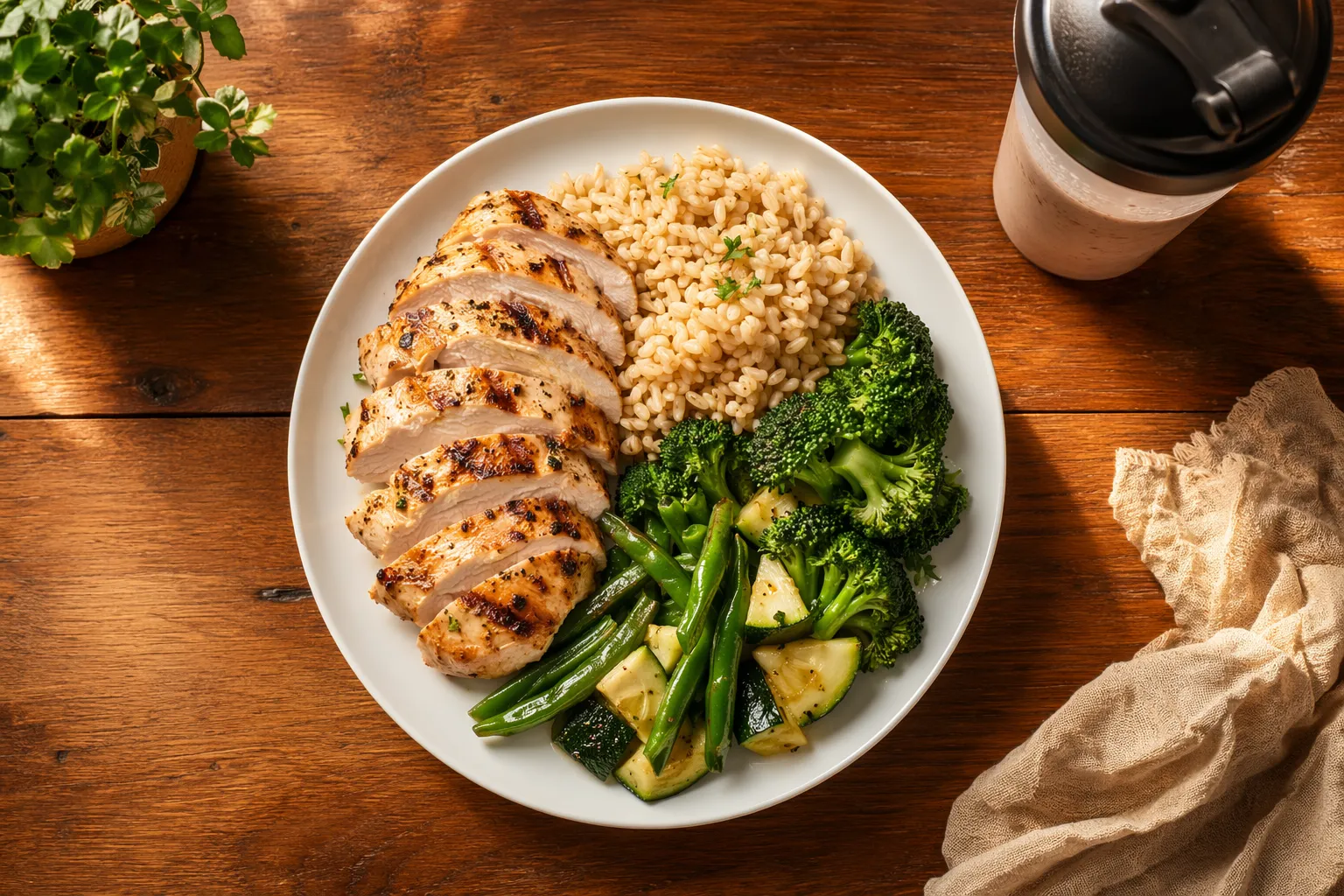
2–3 hours before: Eat a balanced meal with carbs, protein, and a small amount of fat. Example: chicken with rice and vegetables, or oatmeal with protein powder and banana. This gives your body time to digest and store glycogen.
30–60 minutes before: If you are hungry and need a quick boost, go for easily digestible carbs with minimal fat and fiber (which slow digestion). Example: a banana, a slice of toast with honey, or a small smoothie. The goal is fast energy without stomach discomfort.
Avoid high-fat or high-fiber foods right before training — they sit in your stomach and can cause bloating or nausea during intense movement.
Post-Workout Nutrition for Recovery
After exercise, your muscles are primed to absorb nutrients and begin the repair process. The "anabolic window" — the period when your body is most efficient at using protein for muscle repair — lasts roughly 2 hours post-workout, though recent research suggests the window is wider than previously thought.
What to eat: A combination of protein and carbs. Protein triggers muscle protein synthesis; carbs replenish depleted glycogen stores. A practical guideline: aim for 20–40g of protein and a similar amount of carbs within 2 hours after training.
Examples: Protein shake with a banana, grilled chicken with sweet potato, Greek yogurt with berries and granola, or even a balanced dinner if your workout ends close to mealtime.
The key is consistency, not perfection. Missing one post-workout meal will not ruin your progress — but consistently eating well after training will compound into real results over weeks and months.
Hydration During Exercise
Dehydration as low as 2% of your body weight can reduce exercise performance by up to 20%, according to the American College of Sports Medicine. For a 70kg person, that is just 1.4 liters of fluid loss — easy to reach during a 45-minute session.
Before exercise: Drink 400–600ml of water 2–3 hours before, and another 200–300ml in the 30 minutes before you start.
During exercise: Sip 150–250ml every 15–20 minutes. For sessions under 60 minutes, water is sufficient. For longer or more intense sessions, consider a drink with electrolytes (sodium, potassium) to replace what you lose through sweat.
After exercise: Drink 500–750ml for every 0.5kg of body weight lost during the workout. A simple check: your urine should be pale yellow, not dark.
Key Takeaways
| Point | Recommendation |
|---|---|
| Macros starting ratio | 30% protein, 40% carbs, 30% fat |
| Pre-workout (2-3h before) | Balanced meal with carbs + protein |
| Pre-workout (30-60min) | Quick-digesting carbs (banana, toast) |
| Post-workout | 20-40g protein + carbs within 2 hours |
| Hydration | 400-600ml before, sip during, rehydrate after |
Common nutrition mistakes beginners make:
- Training on an empty stomach without a reason (intermittent fasting is fine if planned)
- Ignoring post-workout nutrition entirely
- Drinking only when thirsty (you are already dehydrated at that point)
- Over-relying on supplements instead of real food
Next step: This week, plan one pre-workout meal and one post-workout meal. Start small — even a banana before training and a protein-rich snack after will make a noticeable difference.
Perguntas Frequentes
O que comer 1-2 horas antes do treino?
Mistura de carboidratos e um pouco de proteína — banana com pasta de amendoim ou aveia com whey. Evite gorduras pesadas e fibras antes, pois atrasam a digestão e causam desconforto.
Quanto tempo após o treino devo comer?
Em 1-2 horas está bem — sem janela mágica de 30 minutos. O que importa é a proteína e calorias diárias totais. Mas se treinou em jejum, comer antes ajuda a recuperação.
Preciso de shakes de proteína para ganhar músculo?
Não. Shakes são convenientes mas não necessários. Frango, ovos, peixe, tofu e iogurte grego funcionam igual. A meta é 1.6-2.2 g de proteína por kg de peso — de comida ou suplementos.