
Barbell Chest Workout: How to Bench Press and Incline Bench Press
Why the Barbell Is the Best Tool for Chest Training
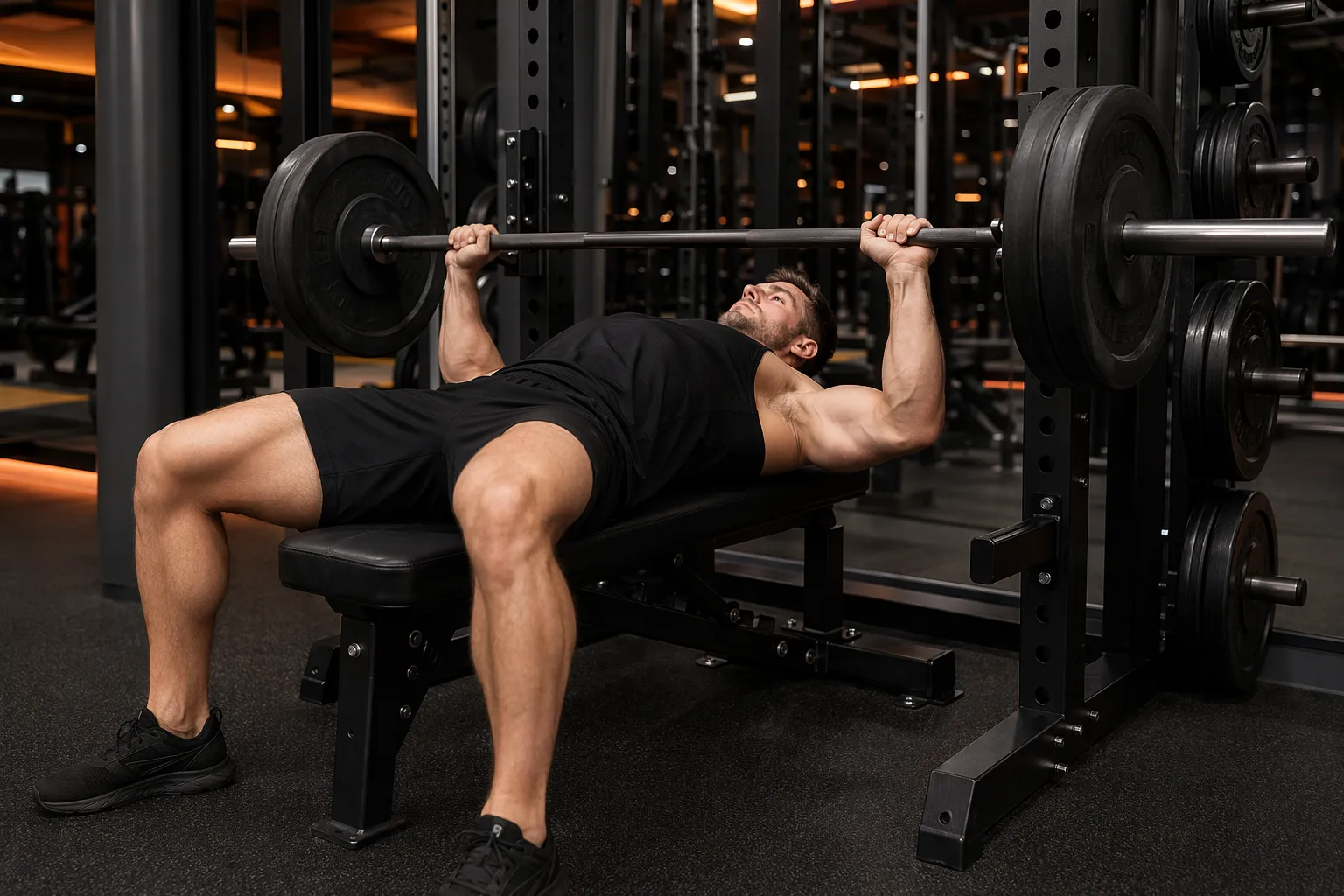
The barbell bench press is the gold standard for chest development — it allows you to use the heaviest loads, recruit the most muscle fibers, and track progressive overload with precision. According to a 2020 EMG study published in the Journal of Strength and Conditioning Research, the barbell bench press activates the pectoralis major more effectively than any machine-based chest exercise.
Why barbell over dumbbells for chest? Two reasons: first, the barbell lets you lift more total weight because both sides work together, creating a stable platform. Second, the fixed grip path makes it easier to maintain consistent form as fatigue sets in. For building raw strength and thickness, the barbell is unmatched.
This guide covers the two essential barbell chest exercises — the flat bench press and the incline bench press — with step-by-step form breakdowns for each.
How to Do the Flat Barbell Bench Press with Proper Form
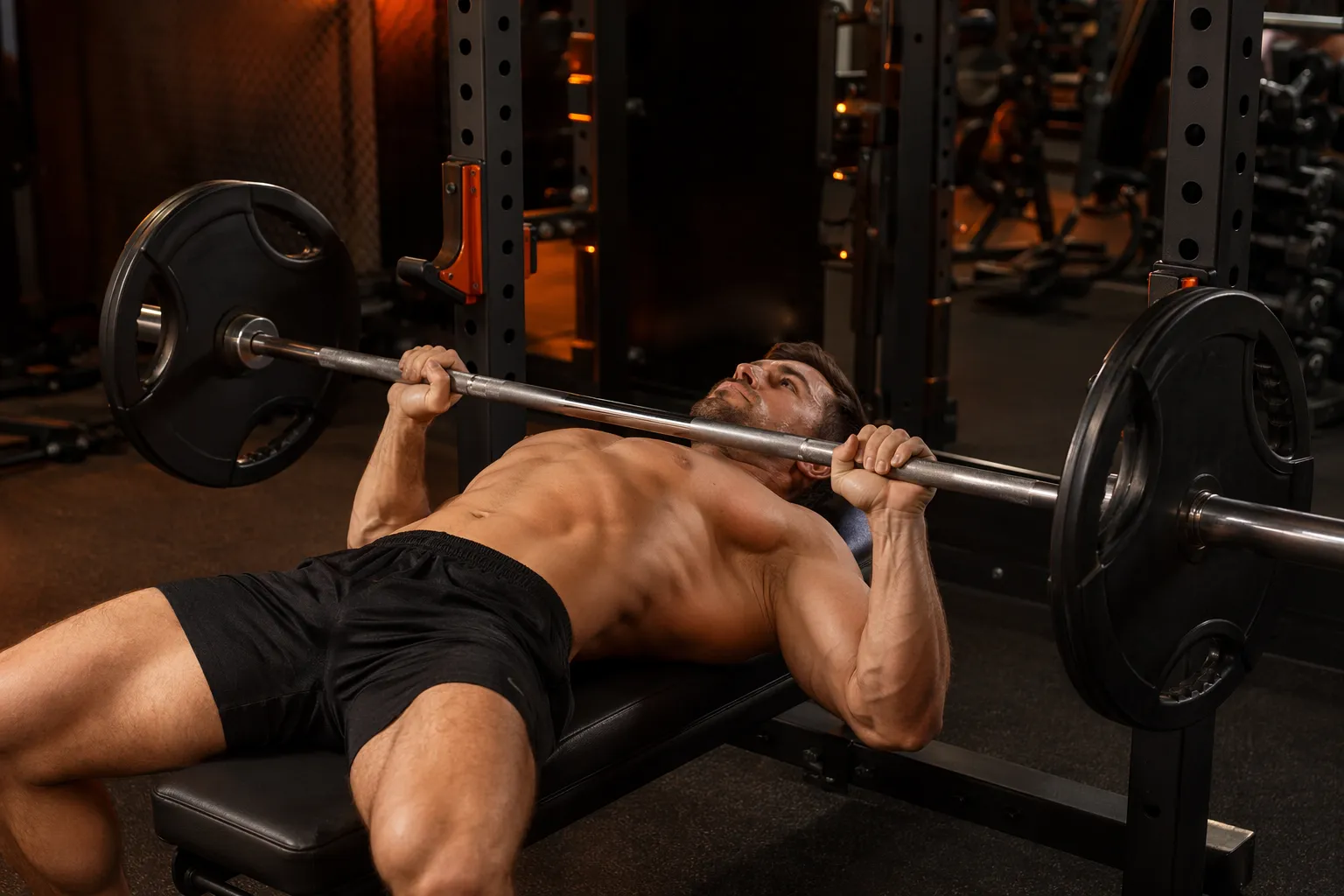
The flat bench press targets the sternal (mid-lower) head of the pectoralis major, along with the anterior deltoids and triceps. It is the single most effective exercise for building overall chest mass.
Step 1 — Setup and Grip
Lie flat on the bench with your eyes directly under the bar. Plant your feet firmly on the floor — not on the bench, not dangling. Grip the bar with your hands just outside shoulder width (around 1.5× shoulder width). Wrap your thumbs around the bar fully — never use a thumbless (suicide) grip. Pull your shoulder blades together and down, creating a slight arch in your upper back. This "retract and depress" position locks your shoulders in place and protects the rotator cuff.
Step 2 — Unrack and Lower (Eccentric)
With your shoulder blades locked, lift the bar off the hooks and hold it directly over your mid-chest with straight arms. Slowly lower the bar in a slight arc — it should travel from over your shoulders to your mid-chest (nipple line). Keep your elbows at roughly 45° from your torso — not flared out at 90° (shoulder strain) and not tucked tight to your ribs (turns it into a close-grip triceps press). Lower under control: a 2–3 second descent builds tension and sets up a stronger press.
Step 3 — Press (Concentric)
When the bar touches your chest, drive it back up in the same arc — from mid-chest back to over your shoulders. Push through your feet (leg drive) to transfer power from the ground into the press. Think about pushing yourself away from the bar, not just pushing the bar up. Lock out at the top with fully extended arms, but do not snap the elbows — keep a micro-bend to protect the joint.
Step 4 — Breathing Pattern
Take a deep breath before you unrack. Hold it as you lower the bar (Valsalva maneuver) — this braces your core and stabilizes your spine. Exhale after you pass the hardest point of the press, or at lockout if you prefer. Never hold your breath through multiple reps — re-breathe at the top between each rep.
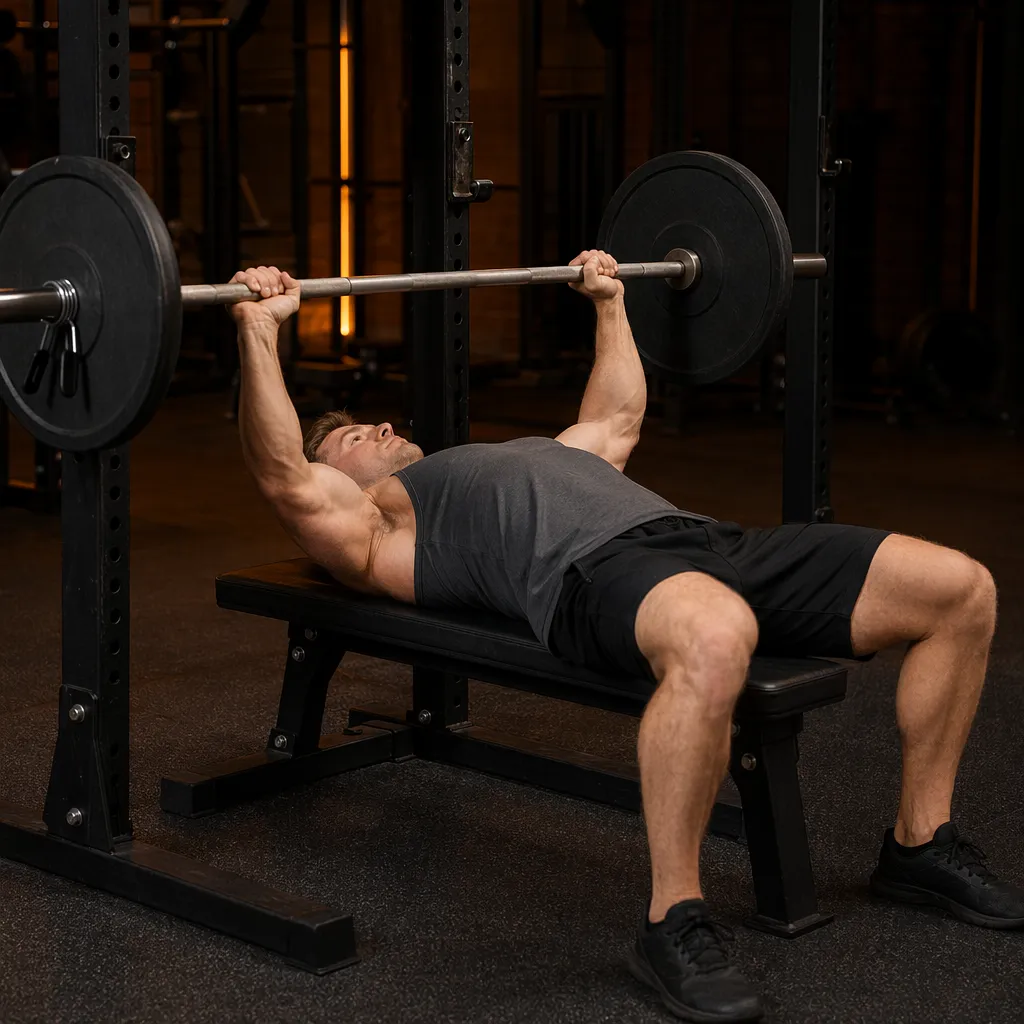
Flat bench press setup and grip position
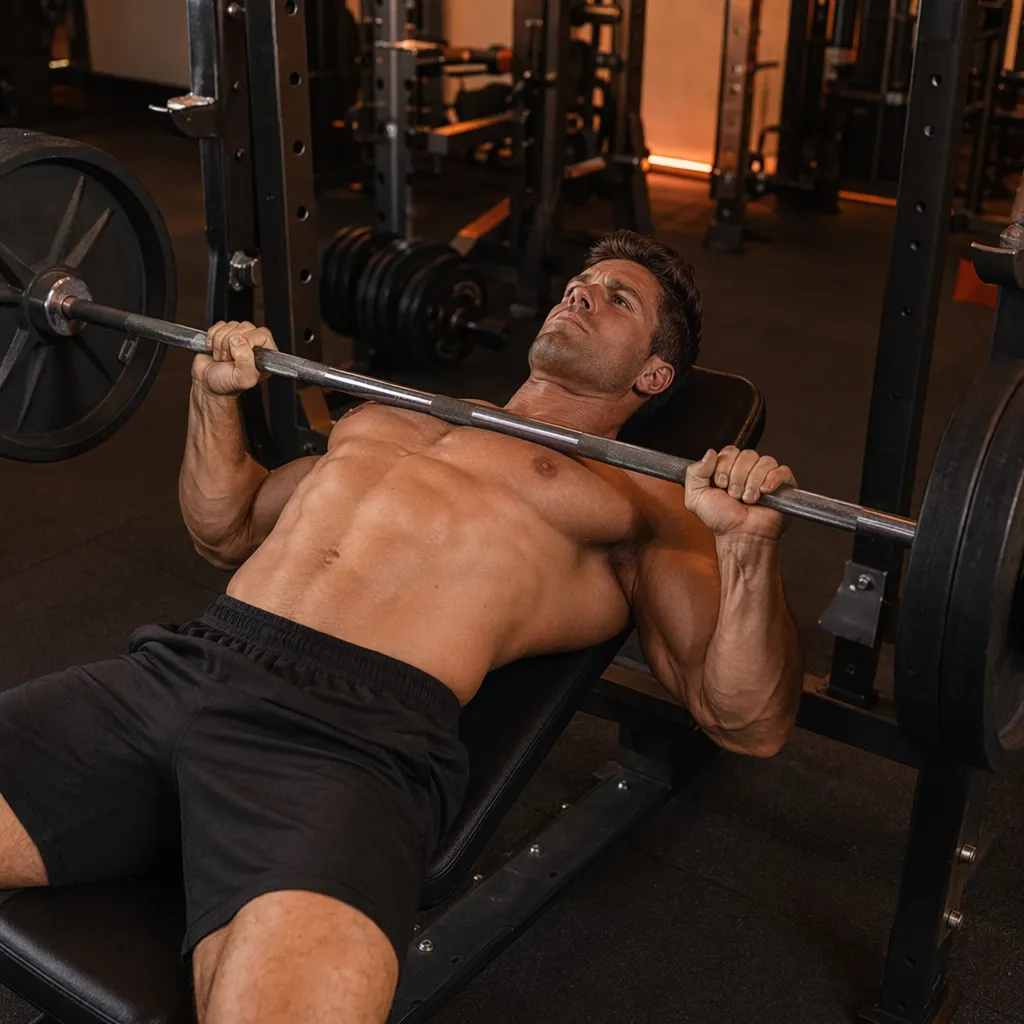
Flat bench press execution, bar at chest level
How to Do the Incline Barbell Bench Press with Proper Form
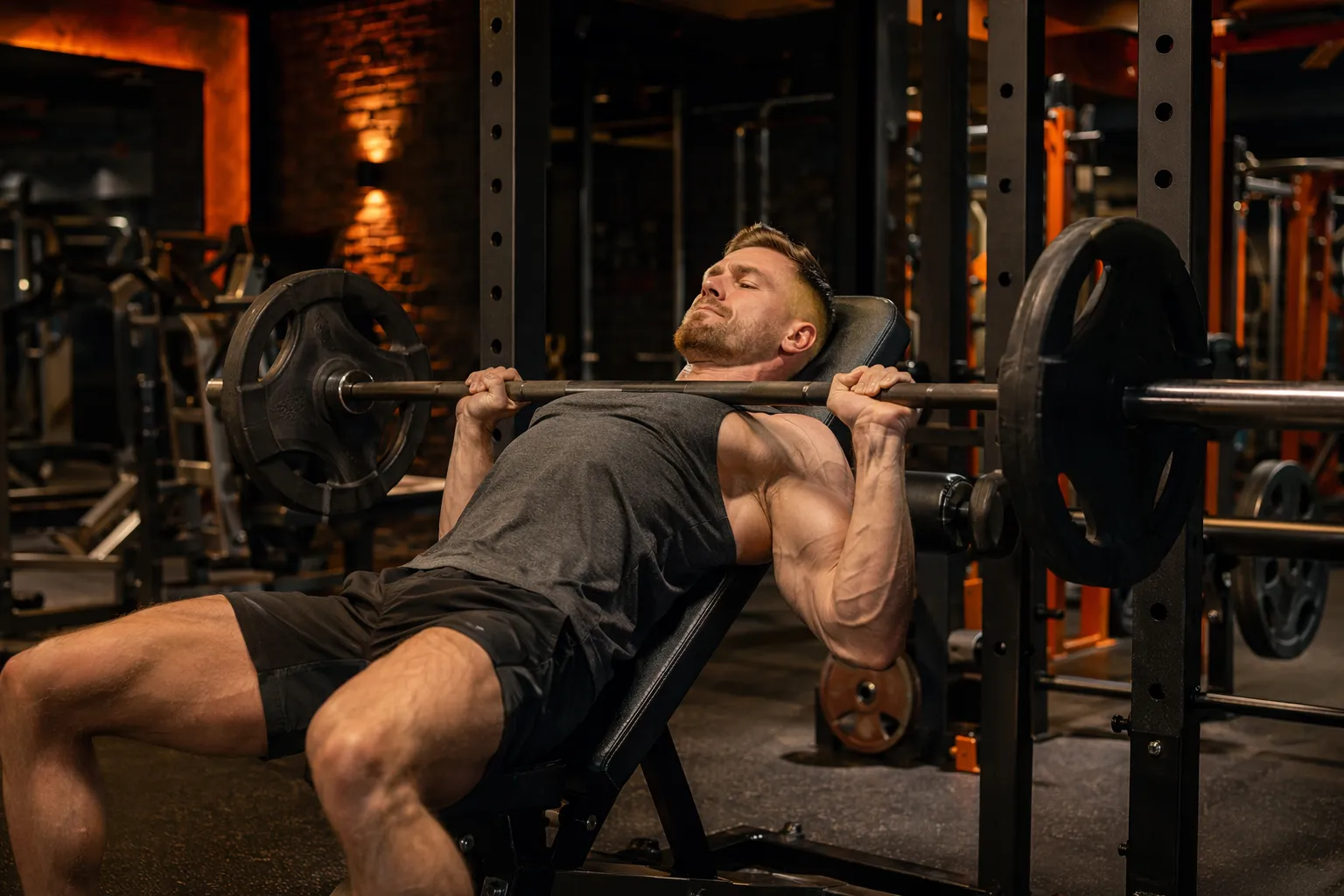
The incline bench press shifts emphasis to the clavicular (upper) head of the pectoralis major. A well-developed upper chest creates the "shelf" look that separates a good physique from a great one. Research from the European Journal of Sport Science (2021) showed that a 30–45° incline maximizes upper chest activation without excessive deltoid takeover.
Step 1 — Bench Angle and Setup
Set the bench to 30–45° — steeper angles turn the movement into a shoulder press. Sit back so your upper chest is directly under the bar. Grip the bar at the same width as your flat bench, or slightly narrower if it feels more natural. Retract and depress your shoulder blades the same way as the flat press — this is even more important on incline because your shoulders want to roll forward.
Step 2 — Lower (Eccentric)
Unrack the bar and hold it over your upper chest (collarbone area). Lower the bar in a straight line to the upper chest — just below the collarbone. The bar path is shorter and more vertical than the flat press. Keep your elbows at 45–60° from your torso — slightly wider than flat bench is fine, but never 90°. Control the descent: 2–3 seconds.
Step 3 — Press (Concentric)
Drive the bar back up to the starting position over your upper chest. Use leg drive the same way — your feet are your foundation even on an incline. The sticking point on incline is lower than flat bench (right off the chest), so focus on exploding through that first few inches. Lock out smoothly at the top.
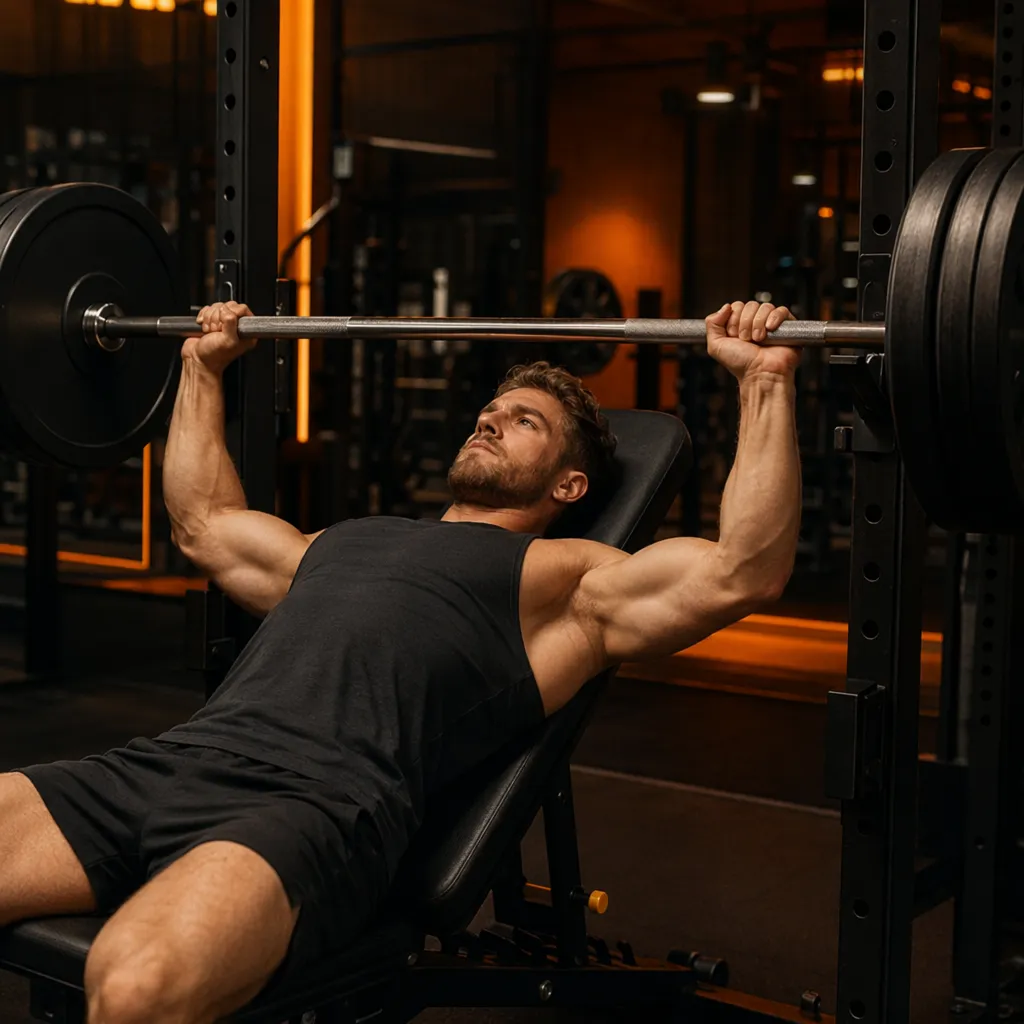
Incline bench press setup and grip position
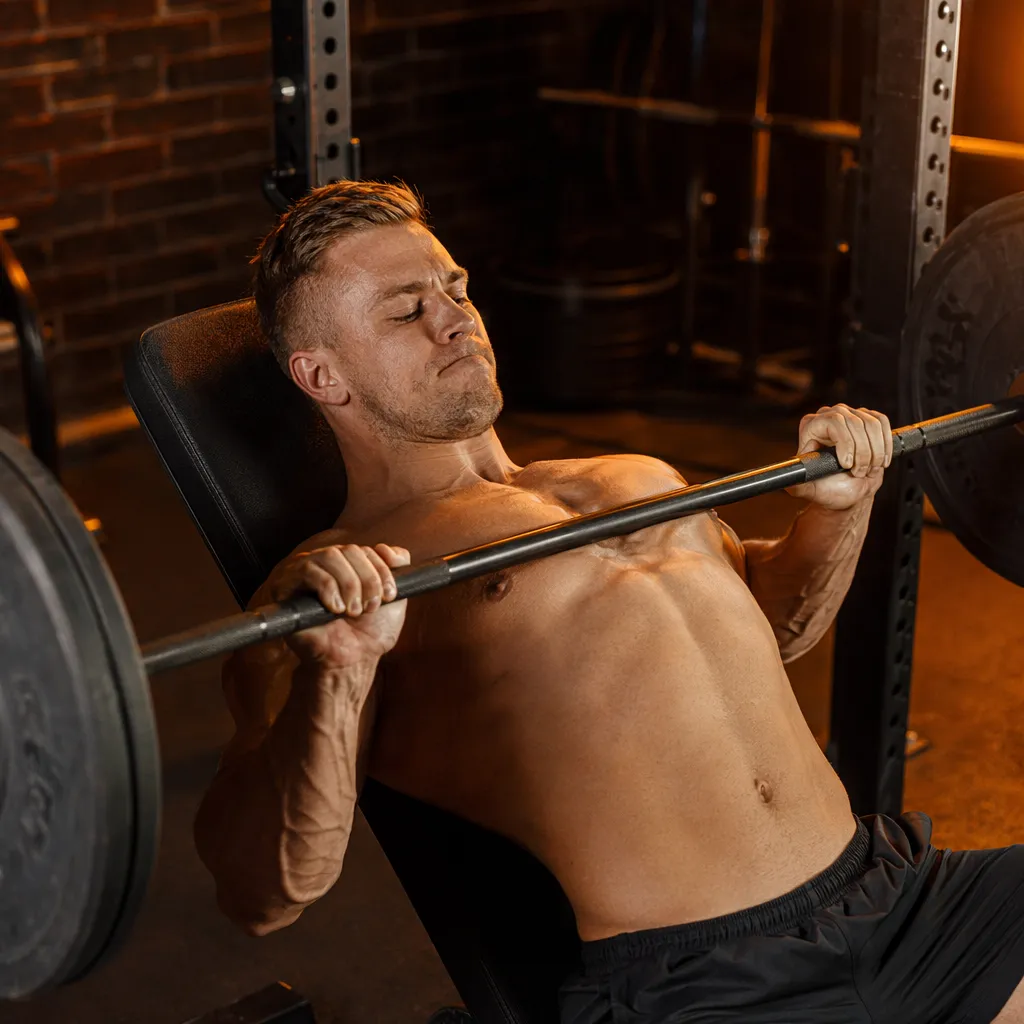
Incline bench press execution, bar at upper chest level
What Are the Most Common Bench Press Mistakes
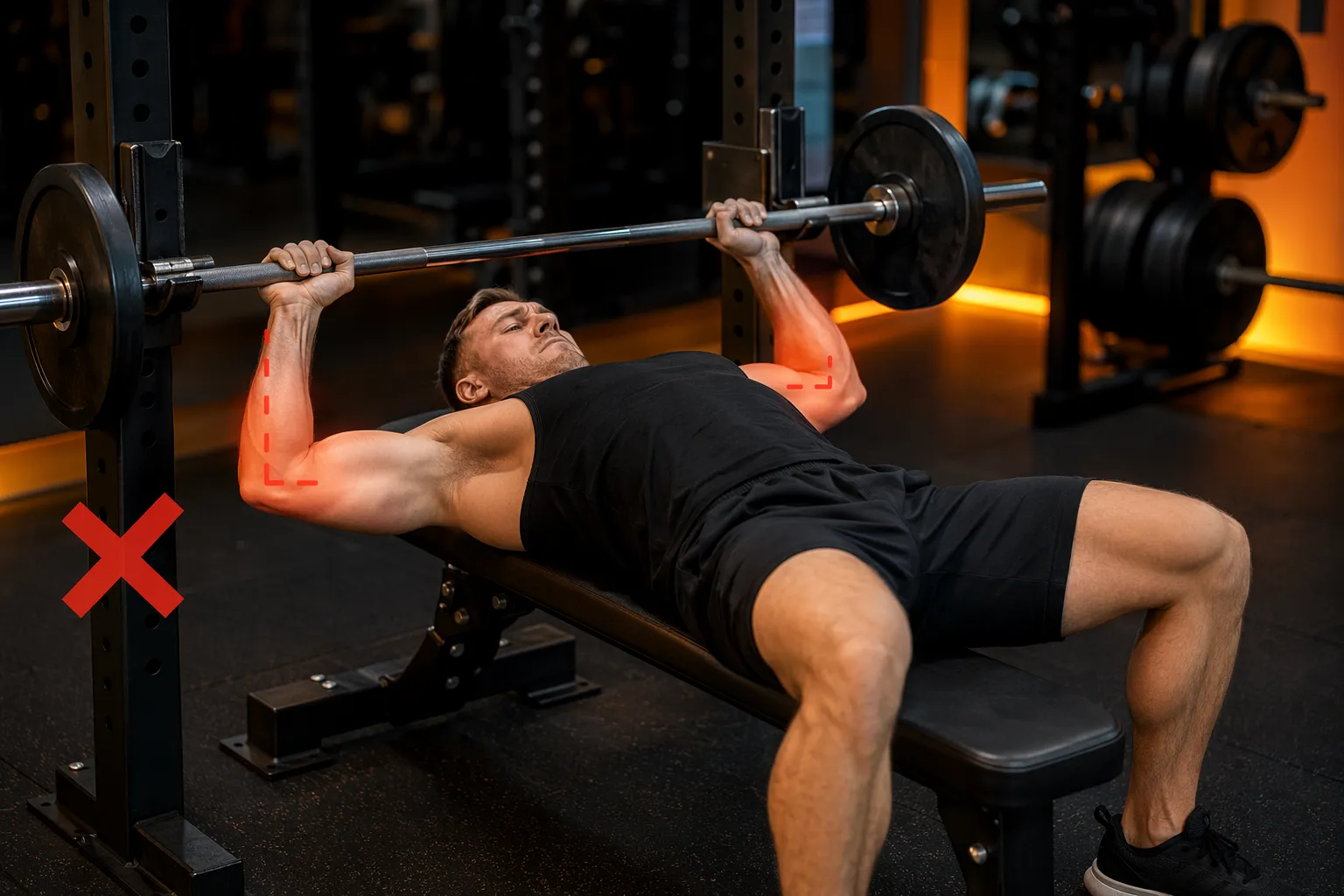
Even experienced lifters make these errors. Fix them and your chest will grow faster — with fewer shoulder problems.
Bouncing the bar off your chest: This uses momentum, not muscle. The bar should touch your chest and pause for a beat before you press. If you need momentum to get the weight up, it is too heavy.
Flaring elbows to 90°: This puts the rotator cuff under maximum strain. Keep elbows at roughly 45° — your shoulders will thank you for years.
Lifting your butt off the bench: This turns a chest exercise into a decline press and loads your lower spine. Keep your glutes on the bench at all times.
Using a thumbless grip: The bar can roll out of your hands and drop on your chest or face. Always wrap your thumbs around the bar. This is non-negotiable.
Skipping the scapular retraction: Without packed shoulders, the chest cannot fully activate and the anterior deltoid takes over. Set your shoulders before every set, not just the first rep.
What Are the Key Takeaways
| Point | Recommendation |
|---|---|
| Why barbell for chest | Heaviest loads + most fiber recruitment = best mass builder |
| Flat bench grip | 1.5× shoulder width, elbows at 45°, thumbs wrapped |
| Flat bench bar path | Slight arc: over shoulders → mid-chest → over shoulders |
| Incline bench angle | 30–45° — steeper shifts work to shoulders |
| Both exercises | Retract + depress scapulae, use leg drive, control the eccentric |
Quick mistake checklist:
- Bar bounces off chest — reduce the weight and pause at the bottom
- Elbows flared at 90° — tuck to 45° to protect shoulders
- Butt lifts off bench — lighten the load and focus on tight setup
- Thumbless grip — always wrap thumbs, no exceptions
- Shoulders rolled forward — retract and depress before every set
Recommended chest day combination: Barbell flat bench press 4×8 + Incline barbell press 3×10 + Dumbbell flyes 3×12 + Cable crossovers 3×15. This hits all three chest regions with both compound and isolation work.
Frequently Asked Questions
How wide should my grip be for the barbell bench press?
Grip the bar about 1.5 times your shoulder width. This puts your forearms vertical at the bottom of the press and keeps elbows at roughly 45 degrees from your torso.
Why do my shoulders hurt during bench press?
Flaring your elbows to 90 degrees is the usual culprit. Tuck them to about 45 degrees and retract your shoulder blades before every set — this takes the strain off the rotator cuff and shifts load to the chest.
What incline angle is best for upper chest?
Research shows 30-45 degrees maximizes upper chest activation. Going steeper than that turns the movement into a shoulder press.
Should I pause the bar on my chest during bench press?
Yes, a brief pause eliminates momentum and forces the chest to do the work. If you need to bounce the bar to complete the rep, the weight is too heavy.