
How to Do the Glute Bridge: Form Guide, Muscles & Hip Thrust Comparison
The glute bridge is a bodyweight hip-extension exercise that targets the gluteus maximus. Lie on your back with knees bent and feet flat, drive through your heels to lift your hips until they form a straight line from knees to shoulders, squeeze your glutes at the top, then lower slowly without arching your back.
Why the Glute Bridge Deserves a Spot in Your Routine
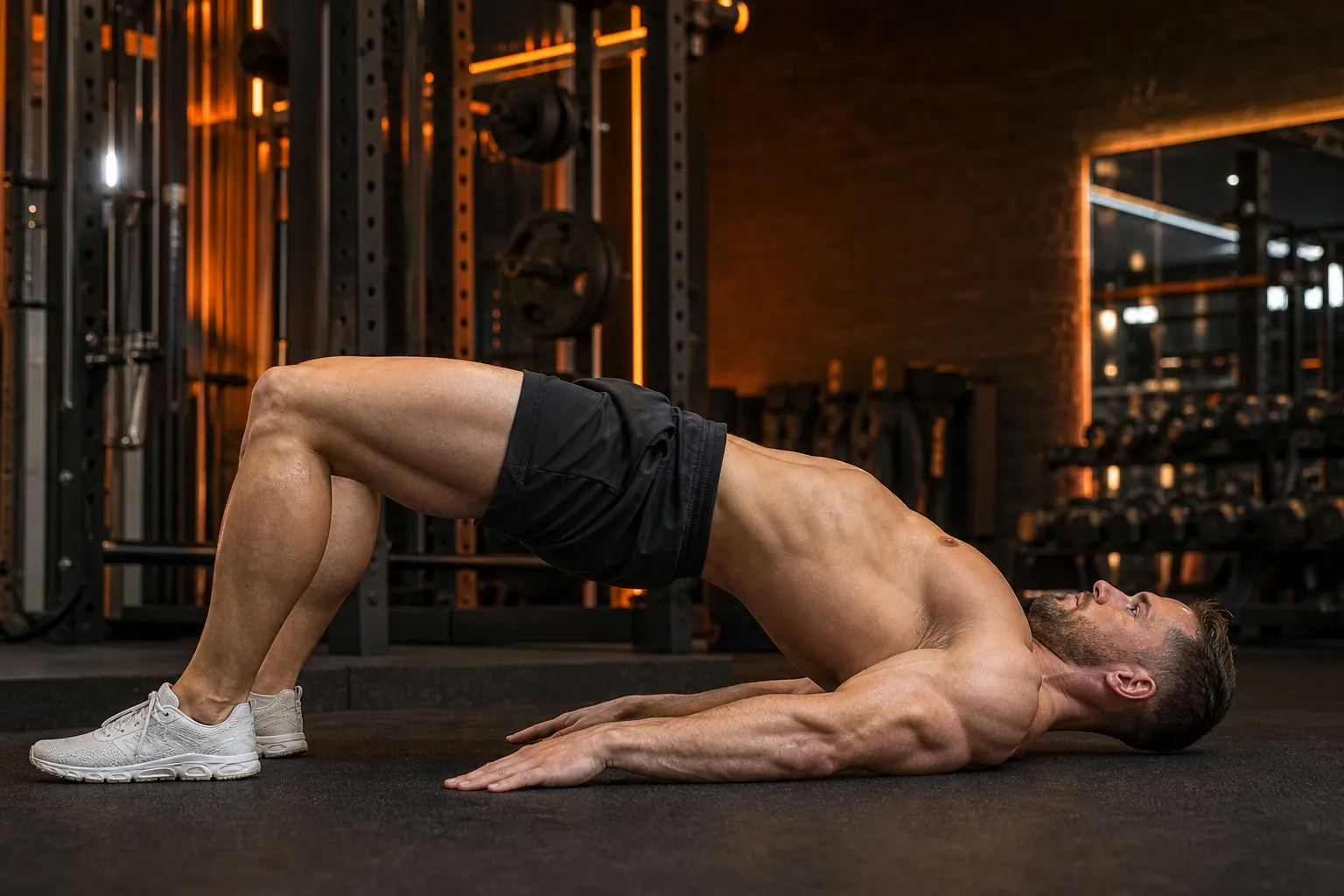
The glute bridge is the most direct way to train the gluteus maximus - the largest and most powerful muscle in your body. By lying on your back and driving your hips toward the ceiling, you isolate the glutes through hip extension while keeping the lower back in a safe, neutral position. It is the foundation of every hip-thrust-style movement that follows.
Most people do not use their glutes enough. Long hours of sitting leave the glutes stretched and underactive - a pattern researchers and clinicians often call "glute amnesia," where the hip flexors become tight, the glutes forget how to fire, and the lower back picks up the slack. Spine biomechanist Dr. Stuart McGill has argued for decades that weak, inactive glutes are a leading contributor to lower-back pain. The glute bridge is the simplest corrective: it wakes the glutes up, strengthens them, and teaches them to do their job so your spine does not have to.
This guide covers five things: perfect form, the muscles worked, how the glute bridge compares to the hip thrust, the mistakes that cause back pain, and how to program it. Pair it with the squat for the quads and the plank for the core, and you have a complete no-equipment lower-body workout.
How to Do the Glute Bridge with Perfect Form
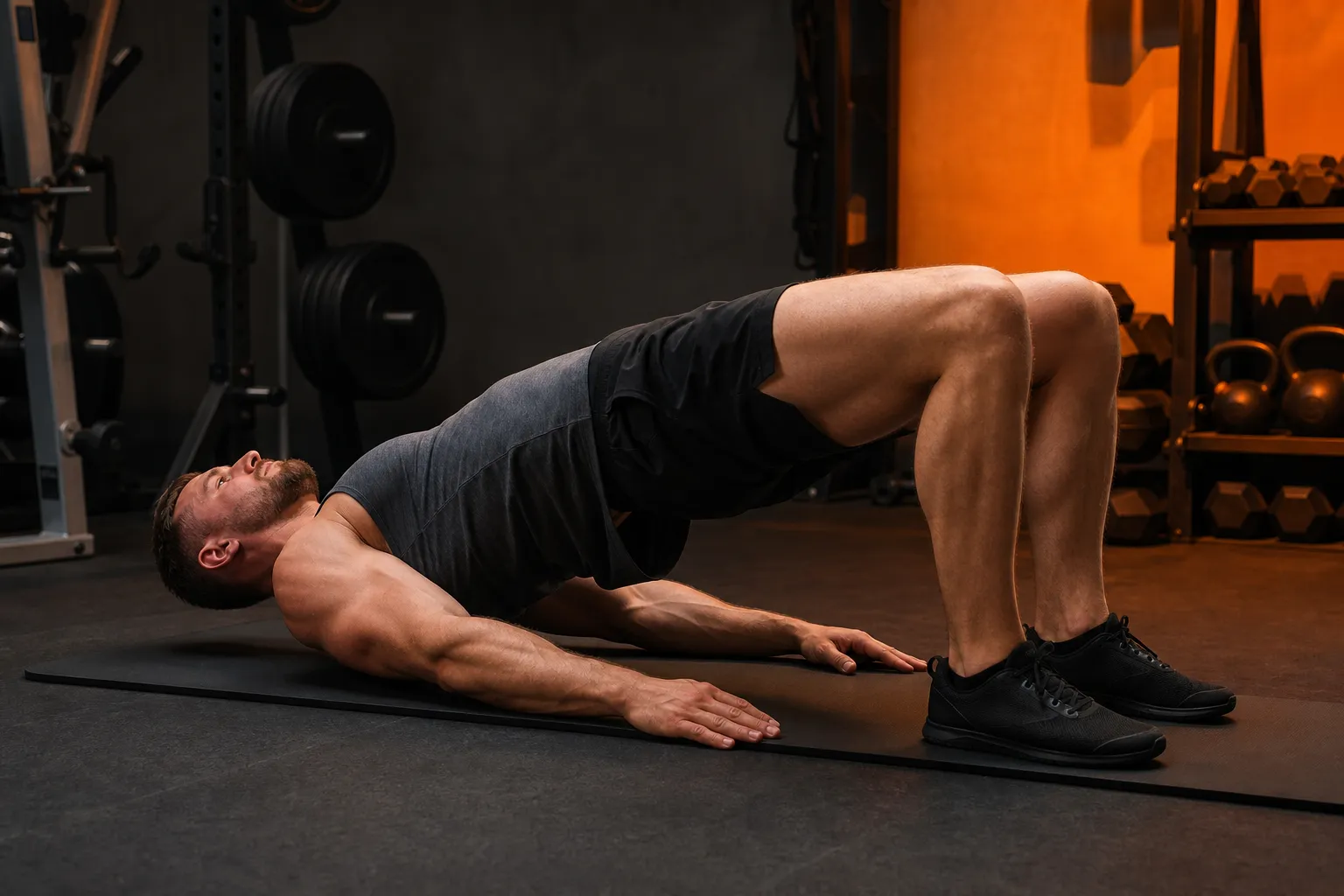
The glute bridge looks simple, which is exactly why most people rush it and feel the move in their hamstrings or lower back instead of their glutes. Slow down and follow these four steps.
Step 1 - Setup: Lie on your back with your knees bent at roughly 90 degrees and your feet flat on the floor, hip-width apart. Your heels should be close enough that you can brush them with your fingertips when your arms rest at your sides. Rest your arms palms-down beside you. Tuck your chin slightly and flatten your lower back against the floor - this is the neutral spine you will hold for the entire rep.
Step 2 - Drive through the heels: Push down through your heels - not your toes - and lift your hips toward the ceiling. Think about pushing the floor away rather than lifting your hips, and let the movement come from a squeeze of the glutes, not a pull from the hamstrings. Drive until your hips form a straight line from your knees through your shoulders at the top.
Step 3 - Squeeze and hold (top): At the top, finish the rep with a posterior pelvic tilt - tuck your tailbone slightly toward the ceiling - and squeeze your glutes hard for a full second. This tilt is what shifts the load from your lower back onto the glutes. Do not push past neutral into lower-back hyperextension; once your hips are in line with your knees and shoulders, you are done going up.
Step 4 - Lower with control: Inhale and lower your hips back to the floor over 2-3 seconds, uncurling one vertebra at a time. Do not let your hips drop or rest fully between reps - keep tension on the glutes throughout the set. A controlled tempo is what turns 15 good reps into more glute work than 50 sloppy ones.
What Muscles Does the Glute Bridge Work?
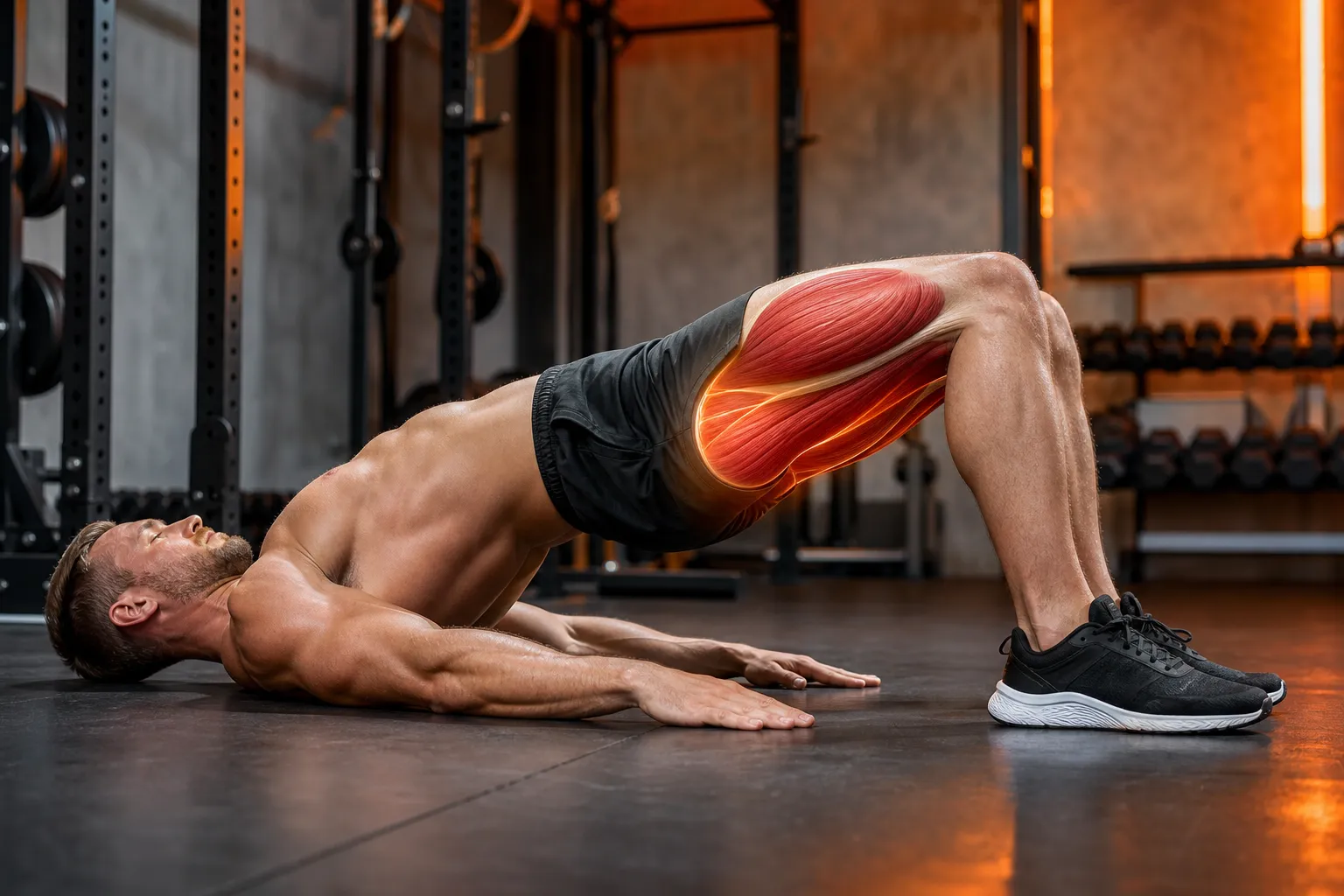
The glute bridge is a hip-extension exercise, which makes it a posterior-chain movement. Because the knees stay bent and the feet stay planted, the quads do very little - the load falls on the muscles that extend the hip.
Muscles Worked
- Primary mover: Gluteus maximus - the largest glute muscle, responsible for extending the hip and locking it out at the top. This is the muscle the glute bridge is built to target.
- Synergists: Hamstrings (biceps femoris, semitendinosus, semimembranosus) - assist hip extension. With bent knees they help, but they cannot dominate the way they would in a straight-leg movement.
- Stabilizers: Core (rectus abdominis and transverse abdominis brace to hold the ribcage down and keep the spine neutral), gluteus medius and minimus (stabilize the pelvis so it does not tilt or rotate).
- Minimal involvement: Quadriceps - the whole point of the bent-knee, heels-down setup is to keep the quads quiet and shift the work to the back of the body.
Glutes vs Hamstrings: Who Is Doing the Work?
If your glute bridge burns the back of your thighs instead of your backside, your hamstrings are taking over. Research by Bret Contreras - the strength coach whose EMG work earned him the nickname "the Glute Guy" - showed that glute activation during a bridge depends heavily on setup: feet closer to the hips bias the glutes, feet farther away bias the hamstrings, and finishing each rep with a hard squeeze and a posterior pelvic tilt is what maximizes gluteus maximus EMG. If you still feel it mostly in the hamstrings, you may simply have stronger hamstrings than glutes - keep training the bridge with perfect form and the balance will shift over time.
Glute Bridge vs Hip Thrust: Which Should You Do?
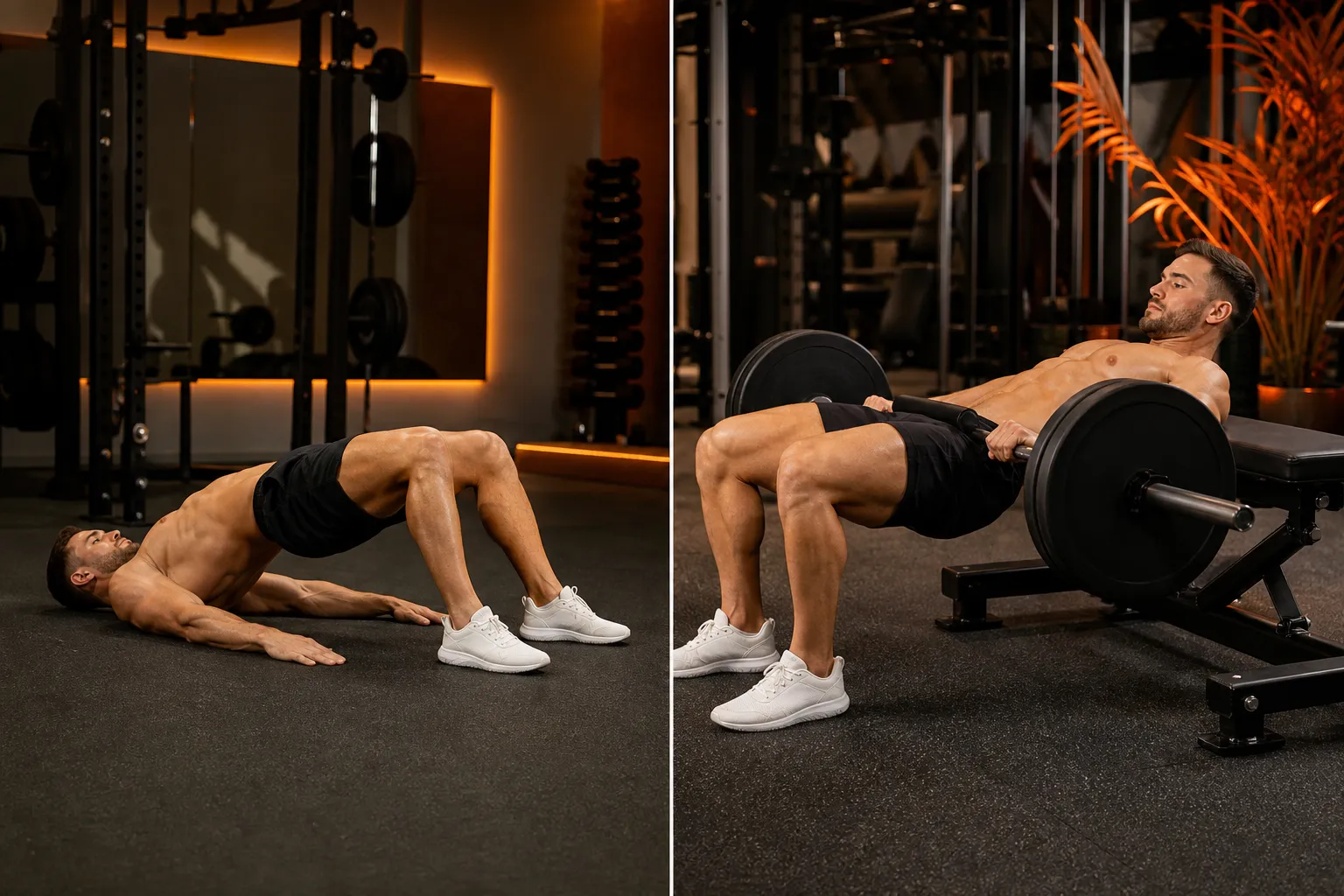
The glute bridge and the hip thrust are the same movement pattern - hip extension - performed from different setups. The difference comes down to range of motion and how much load the glutes can handle.
| Factor | Glute Bridge | Hip Thrust |
|---|---|---|
| Setup | Lying flat on the floor | Upper back elevated on a bench |
| Range of motion | Shorter (floor limits the bottom) | Longer (hips travel through a larger arc) |
| Load | Bodyweight or light weight | Barbell, heavy loads possible |
| Glute stretch | Smaller at the bottom | Greater stretch under load |
| Skill level | Beginner-friendly | Requires bench setup and bracing |
| Best for | Activation, warm-up, home training | Maximal glute hypertrophy and strength |
Because the hip thrust elevates the shoulders, the hips can drop below the knees at the bottom, which gives the glutes a deeper stretch under load - the combination most associated with muscle growth. The floor glute bridge cannot match that range, but it does not need to. Use the glute bridge to learn the hip-hinge pattern, activate sleepy glutes, and train effectively at home with zero equipment. Once you can lock out 3 sets of 20 clean bodyweight bridges, progress to the single-leg version, then to the loaded barbell hip thrust when you want serious size. They are stages of the same progression, not competitors - and unlike a lunge, neither demands balance or knee-dominant strength.
The Most Common Glute Bridge Mistakes (and How They Cause Back Pain)
Most glute-bridge discomfort is not the exercise's fault - it is how people perform it. Fix these four errors and your lower back will thank you.
1. Hyperextending the lower back: Pushing your hips too high and arching through the lumbar spine at the top shifts the load from the glutes onto the lower back. Fix: Finish each rep by tucking your tailbone toward the ceiling (a posterior pelvic tilt) and squeezing the glutes. Stop the moment your hips reach a straight line from knees to shoulders - do not push past neutral.
2. Pushing through the toes: Driving through the balls of your feet turns on the quads and reduces glute activation. Fix: Push through the heels. Lift your toes slightly off the floor if it helps you find the heel drive - this single cue often moves the burn from the thighs to the glutes.
3. Letting the ribs flare: If your ribcage flares up toward the ceiling and your lower back arches, you have lost core control and your spine is doing the glutes' job. Fix: Brace your abs, keep your ribs down, and maintain the flat lower-back position you set at the start of every rep.
4. Rushing the reps: Bouncing quickly off the floor uses momentum and lets the hamstrings and lower back take over. Fix: Pause for a full second at the top with a hard squeeze, and take 2-3 seconds on the way down. If you cannot control the tempo, you are not really working the glutes - slow down and own every rep.
What Are the Key Takeaways?
| Point | Recommendation |
|---|---|
| Primary muscle | Gluteus maximus (posterior chain) |
| Form cue | Drive through heels, finish with glute squeeze and posterior tilt |
| Top position | Hips in line with knees and shoulders - do not hyperextend |
| Tempo | 2 sec up, 1 sec squeeze, 2-3 sec down |
| Volume | 3 sets of 12-20 reps, 2-3x per week |
| Progression | Single-leg → weighted bridge → barbell hip thrust |
Quick checklist - fix these before your next set:
- Heels drive the floor, toes relaxed
- Lower back stays neutral the entire rep
- Hips finish in a straight line - no lower-back arch at the top
- One-second glute squeeze with a slight tailbone tuck
- Slow, controlled lowering - no bouncing
Next steps: Once 3 sets of 20 clean glute bridges feel easy, do not just add reps - make it harder. Move to the single-leg glute bridge to challenge each side and iron out imbalances, then add weight across the hips or progress to the barbell hip thrust. For a complete no-equipment lower-body session, pair this posterior-chain work with the squat and lunges for the quads, the plank for core stability, and finish with crunches for the anterior core - that covers every major muscle group with nothing but your body weight.
Frequently Asked Questions
What muscles does the glute bridge work?
The glute bridge primarily targets the gluteus maximus - the largest muscle in your buttocks and the main driver of hip extension. The hamstrings (the muscles along the back of your thighs) assist the movement, and the core - rectus abdominis and transverse abdominis - braces to keep your torso stable and your lower back neutral. The adductors and the small gluteus medius and minimus also contribute as stabilizers. Because your knees are bent and your feet drive down into the floor, the quad-dominant pattern of a squat is largely avoided, which is what makes the glute bridge such an effective isolation tool for the posterior chain.
How many glute bridges should I do?
Quality and full range beat endless reps. For most people, 3 sets of 12-20 controlled glute bridges, 2-3 times per week, is the sweet spot - hold a one-second squeeze at the top of every rep and take 2-3 seconds on the way down. Once you can complete 3 sets of 20 clean reps with a full hip lockout, the answer is not more reps; it is a harder variation. Progress to the single-leg glute bridge, a weighted glute bridge with a dumbbell or barbell across the hips, or the barbell hip thrust. Grinding out hundreds of sloppy bridges mainly trains your hamstrings and lower back, not your glutes.
Glute bridge vs hip thrust - which is better?
They train the same muscle through the same movement (hip extension), but they are not the same exercise. The glute bridge is performed lying flat on the floor, usually with bodyweight, and is beginner-friendly with a shorter range of motion. The hip thrust elevates the upper back on a bench so the hips can travel through a much larger range, which produces greater glute stretch and - once loaded - far higher muscle activation and strength gains. Use the glute bridge to learn the pattern, activate the glutes, and train at home with no equipment; progress to the loaded hip thrust when your goal is serious glute hypertrophy and strength.
Are glute bridges bad for your lower back?
No, when performed correctly the glute bridge is one of the lower-back-friendliest hip exercises - it strengthens the glutes, which takes load off the lumbar spine. The problems come from form errors: hyperextending the lower back at the top instead of finishing with the hips, pushing through the toes rather than the heels, and letting the ribs flare. Each of these shifts the load from the glutes onto the lumbar extensors. Fix them by driving through the heels, finishing each rep with a posterior pelvic tilt and a hard glute squeeze, and stopping the moment your hips reach full extension - do not push past neutral.
Do glute bridges actually grow your glutes?
Yes, but only if you apply progressive overload - the same rule that governs every muscle. A bodyweight glute bridge is an excellent starting point that will build initial strength and neural drive, especially for beginners or anyone with underactive glutes. But the gluteus maximus is a powerful muscle that adapts quickly, so to keep growing it you must increase the challenge over time: move to single-leg bridges, add weight across the hips, or progress to the barbell hip thrust. Done with progressive overload and enough total weekly volume and protein, the glute bridge and its progressions reliably build the glutes - they just will not stay bodyweight-only forever.
References & Sources
TDEE Calculator (Daily Calories)
Calculate your Total Daily Energy Expenditure (TDEE) - the number of calories you burn each day. The calculator uses the Mifflin-St Jeor equation for your basal metabolic rate, multiplied by your activity level.
Protein Intake Calculator
Calculate how much protein you need each day based on your body weight and training goal. This calculator uses the research-backed range of 1.6 to 2.2 grams of protein per kilogram of body weight for building muscle.