
Barbell Curl & Skull Crusher: The Complete Barbell Arm Training Guide
Barbell arm training centers on the barbell curl for biceps and the close-grip bench press for triceps. For curls, grip the bar shoulder-width and curl it toward your chest with your elbows fixed at your sides. For the close-grip press, bench with a narrow grip to bias the triceps. Both build dense arm strength and size.
Why the Barbell Is the Best Tool for Arm Training
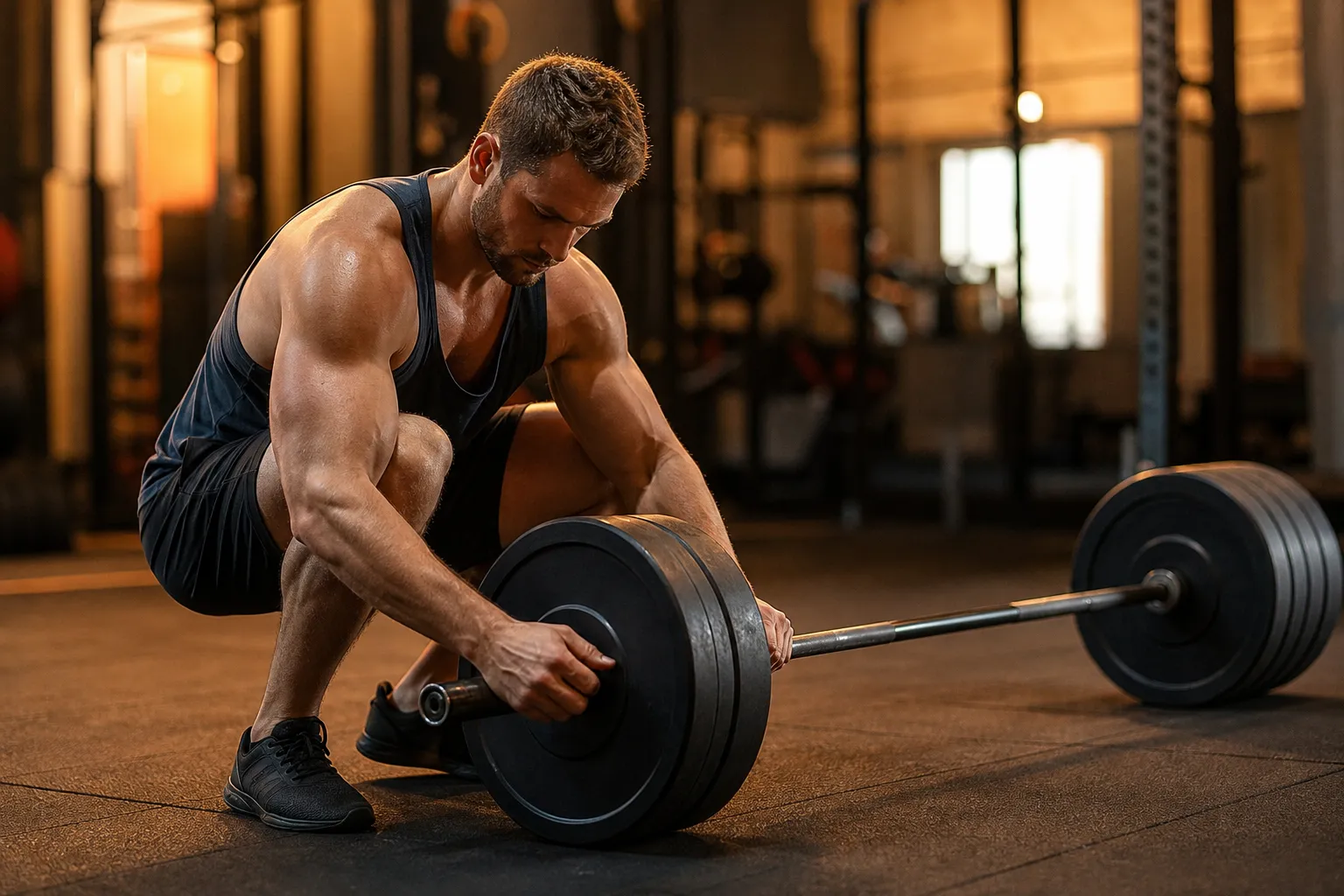
The barbell curl and skull crusher (lying triceps extension) are the two foundational barbell exercises for the arms. Together they train both sides of the upper arm — the biceps brachii on the front and the triceps brachii on the back — with the heaviest load any isolation movement can handle. Because the triceps makes up roughly two-thirds of your upper-arm mass, building it is the fastest route to bigger arms, and the barbell skull crusher is one of the most stimulating triceps exercises available.
Why choose a barbell for arms over dumbbells or cables? Two reasons. First, the barbell lets both arms work together to move a single implement, so you can load more weight than any unilateral alternative — and progressive overload is the primary driver of muscle growth. Second, the fixed hand position (full supination on the curl, fixed pronation on the skull crusher) keeps the working muscle under a consistent line of tension, which makes it easier to track progress rep-to-rep and week-to-week.
This guide breaks down both movements with step-by-step form, identifies the muscles each works, and ends with a beginner-friendly barbell arm workout you can run twice per week.
How to Do the Barbell Curl with Proper Form
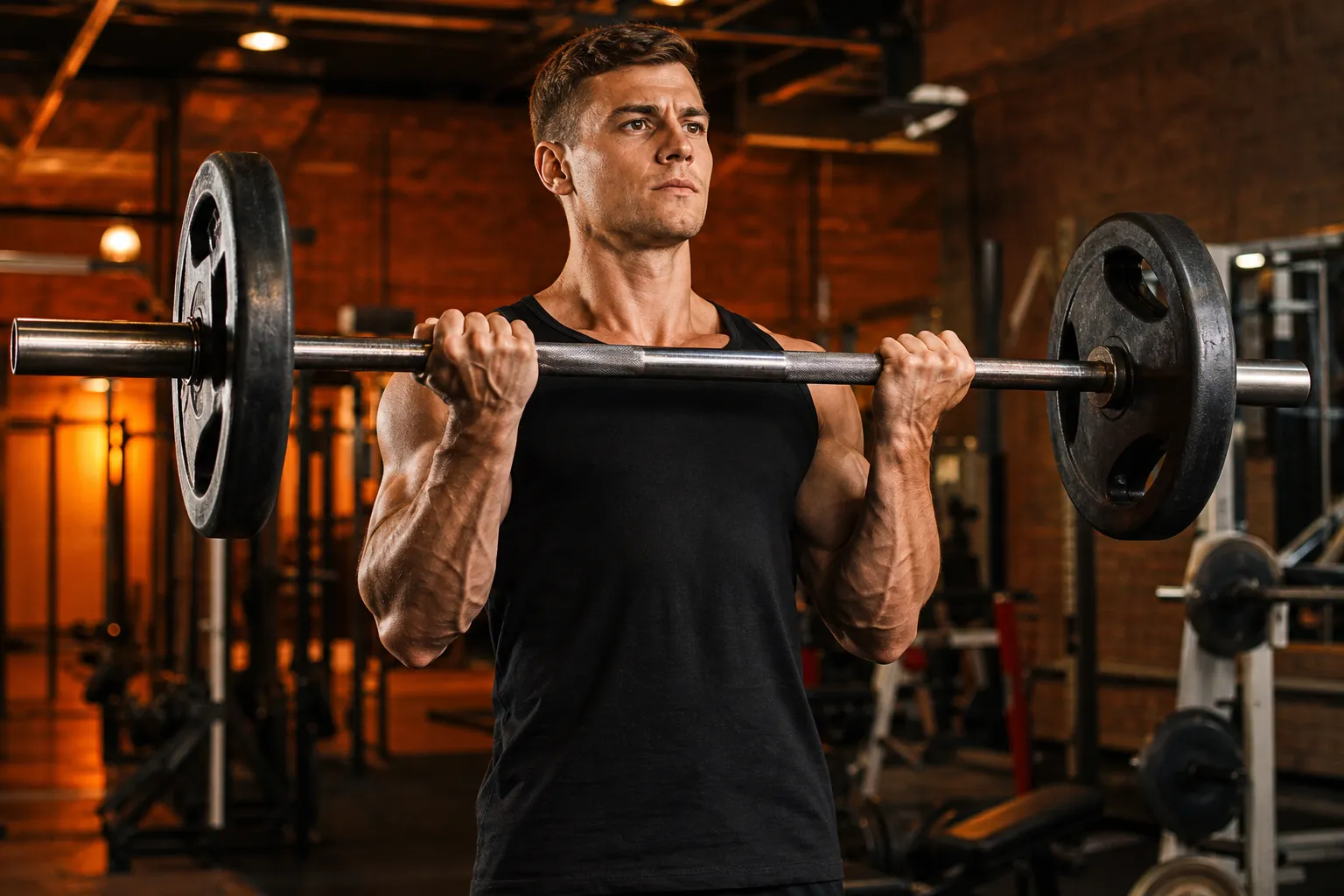
The barbell curl targets the biceps brachii (both the short and long heads), with strong assistance from the brachialis and brachioradialis. The brachialis sits beneath the biceps and, as it grows, pushes the biceps upward — this is what creates visible arm thickness when viewed from the side.
Step 1 — Stance and Grip
Stand with your feet shoulder-width apart, knees soft, torso upright. Grip the bar with a shoulder-width, underhand (supinated) grip — knuckles facing the floor, palms facing the ceiling. A narrower grip emphasizes the long head of the biceps; a wider grip emphasizes the short head. Shoulder-width hits both evenly. Let your arms hang fully straight at the bottom so the biceps starts in a fully lengthened position.
Step 2 — Curl (Concentric)
Keeping your elbows pinned to your sides, curl the bar upward in a smooth arc toward your upper chest. Squeeze your biceps hard at the top — the bar should reach roughly upper-chest height. Do not let your elbows travel forward; if they drift in front of your ribcage, your front deltoids take over and the biceps loses tension. The movement should come entirely from the elbow joint, not the shoulder.
Step 3 — Lower (Eccentric)
Lower the bar back to the starting position under control over 2-3 seconds. The eccentric is where much of the muscle-building stimulus happens, so do not drop the bar. Keep tension on the biceps all the way to the bottom — let your arms fully straighten at the end of each rep so you start the next rep from a stretched position.
Step 4 — Breathing and Bracing
Take a breath and brace your core before the first rep. Exhale as you curl the weight up, inhale as you lower it. Avoid rocking your torso to swing the weight up — if you need momentum, the bar is too heavy. A controlled tempo (2 seconds up, 3 seconds down) produces more biceps growth than a fast, loose tempo at the same load.
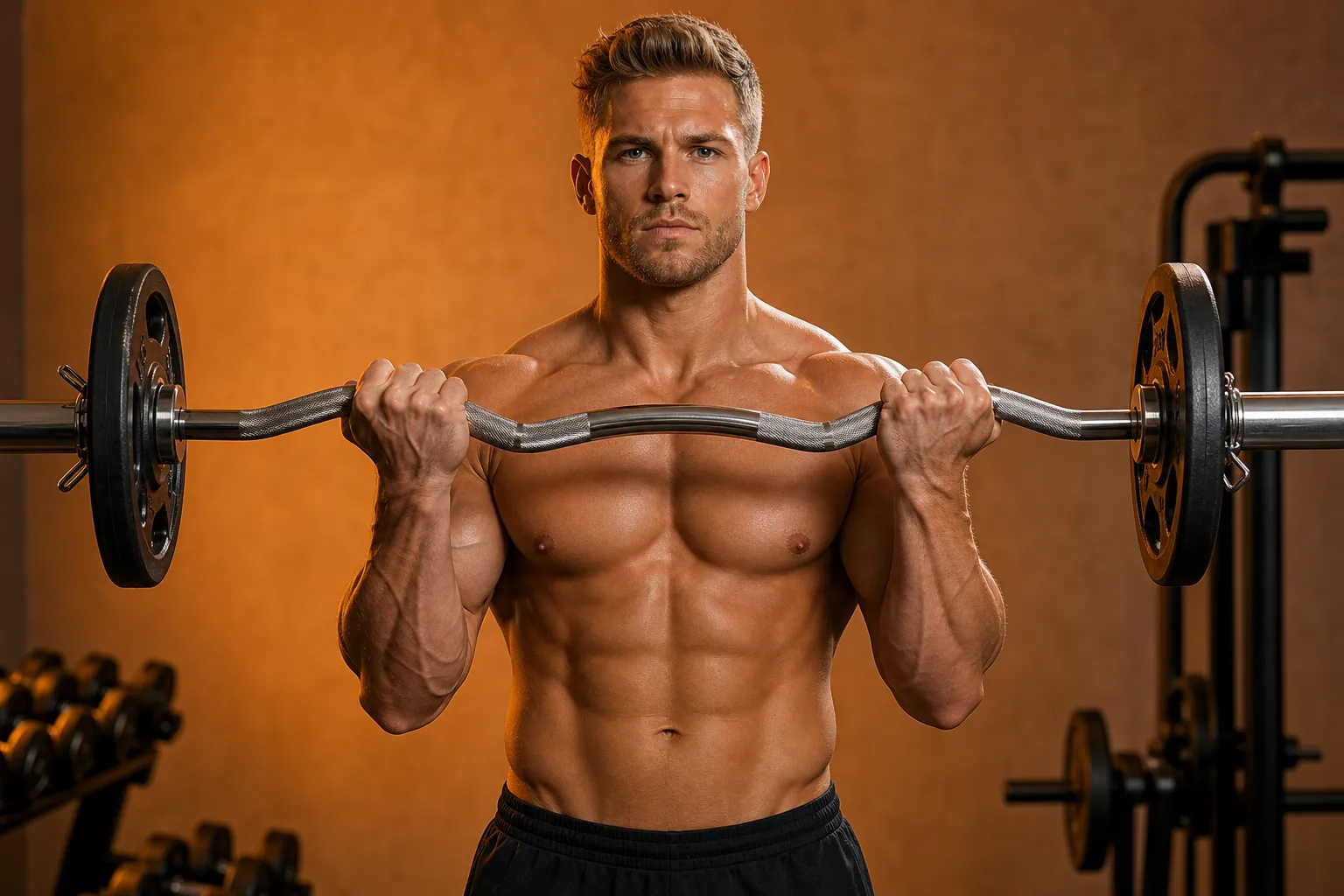
Barbell curl at the top of the movement, bar at upper chest, biceps contracted
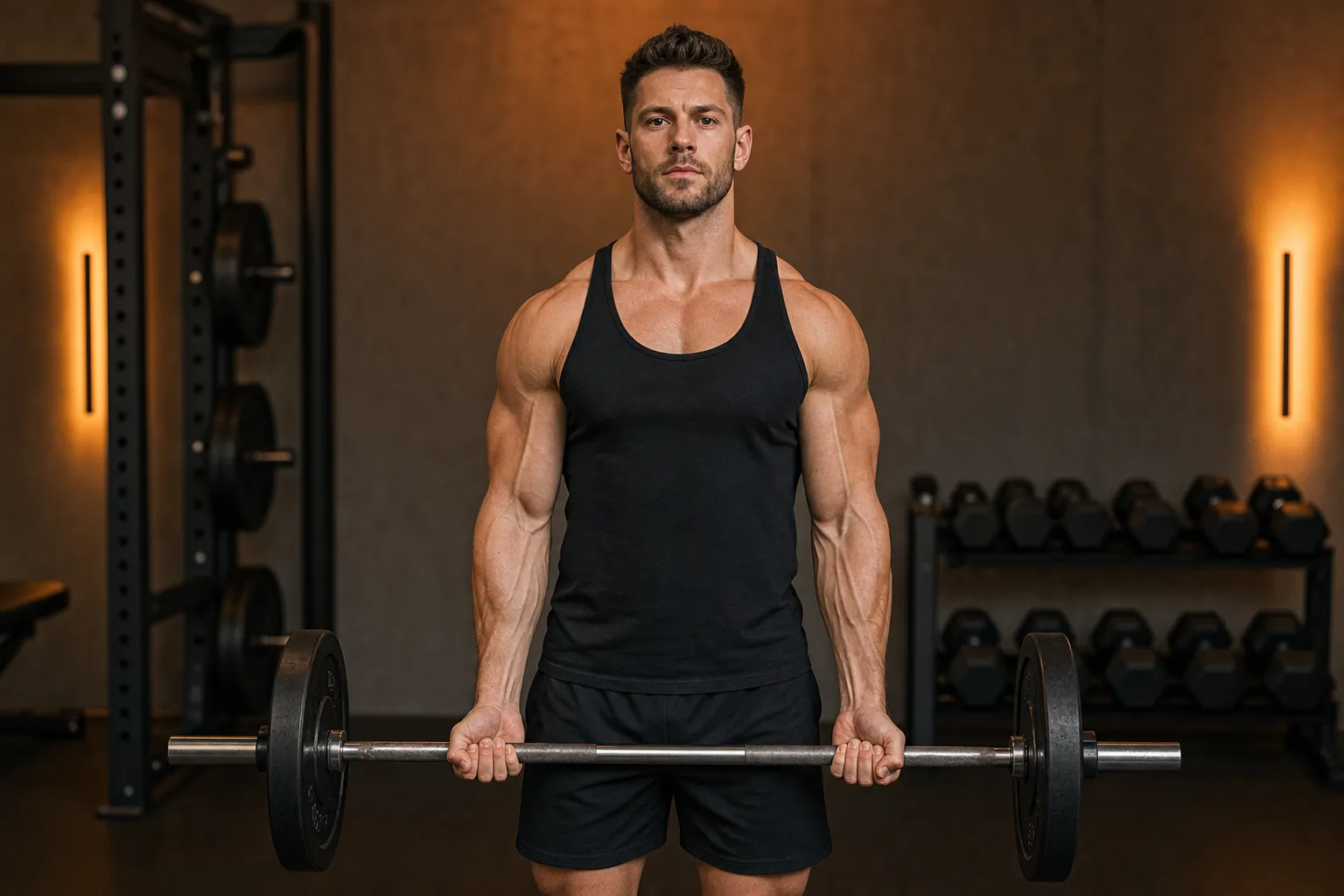
Barbell curl at the bottom of the movement, arms fully extended, bar at thigh level
How to Do the Skull Crusher with Proper Form
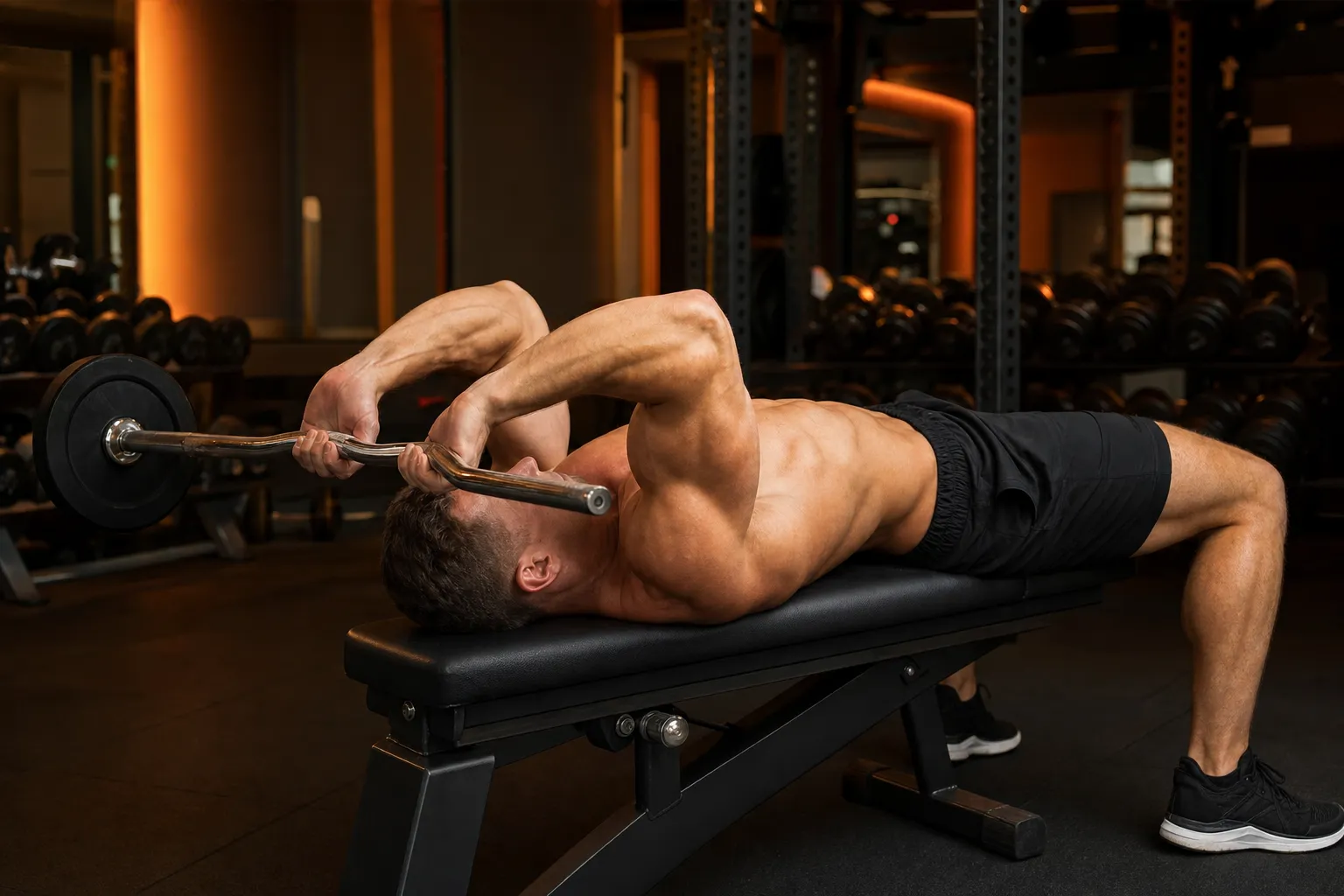
The skull crusher — also known as the lying triceps extension or French press — trains all three heads of the triceps brachii (long, lateral, and medial), with particular emphasis on the long head. Because the long head is the largest of the three and crosses both the elbow and shoulder joints, fully developing it is what makes the back of the arm look thick and horseshoe-shaped.
Step 1 — Setup and Bench Position
Lie flat on a bench with your feet planted on the floor. Grip the bar with a shoulder-width overhand (pronated) grip, or slightly narrower. Press the bar straight up so your arms are vertical and directly over your upper chest — this is the starting position. Throughout the entire movement, your upper arms should stay vertical and your elbows should point straight up at the ceiling. If using a straight bar feels uncomfortable on your wrists, an EZ-bar is an acceptable substitute that lets you use a semi-supinated grip.
Step 2 — Lower (Eccentric)
Bending only at the elbows, lower the bar in a smooth arc toward your forehead. Stop the bar just above your forehead or at the top of your head — do not lower it to your chin or chest, which turns the movement into a pullover and shifts load onto the lats. Lower under control over 2-3 seconds. Keep your elbows pointed straight up; if they drift backward toward the floor, the long head of the triceps loses tension and the exercise becomes easier for the wrong reasons.
Step 3 — Extend (Concentric)
Extend your elbows to push the bar back to the starting position directly over your upper chest. Squeeze your triceps hard at the top, fully straightening your arms without snapping the elbows past their natural range. The elbows are the only joint that should move — your shoulders stay locked in place.
Step 4 — Breathing and Setup Safety
Inhale as you lower the bar, exhale as you extend it back up. If you train to failure, use a spotter or a power rack with safety bars — the name "skull crusher" exists for a reason, and the bar is moving toward your face. Never use a thumbless grip on this exercise.
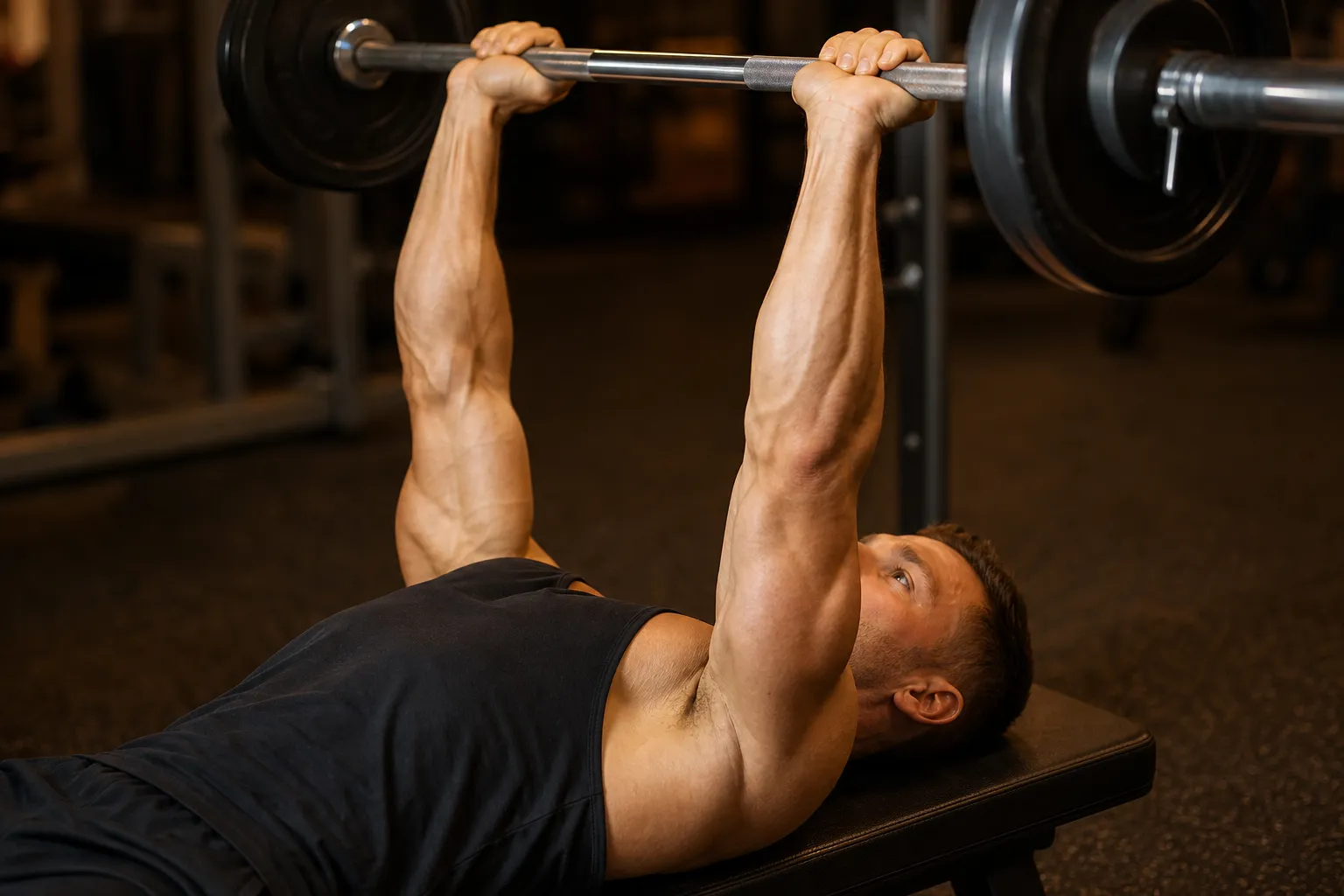
Skull crusher at the top of the movement, arms extended, bar over upper chest
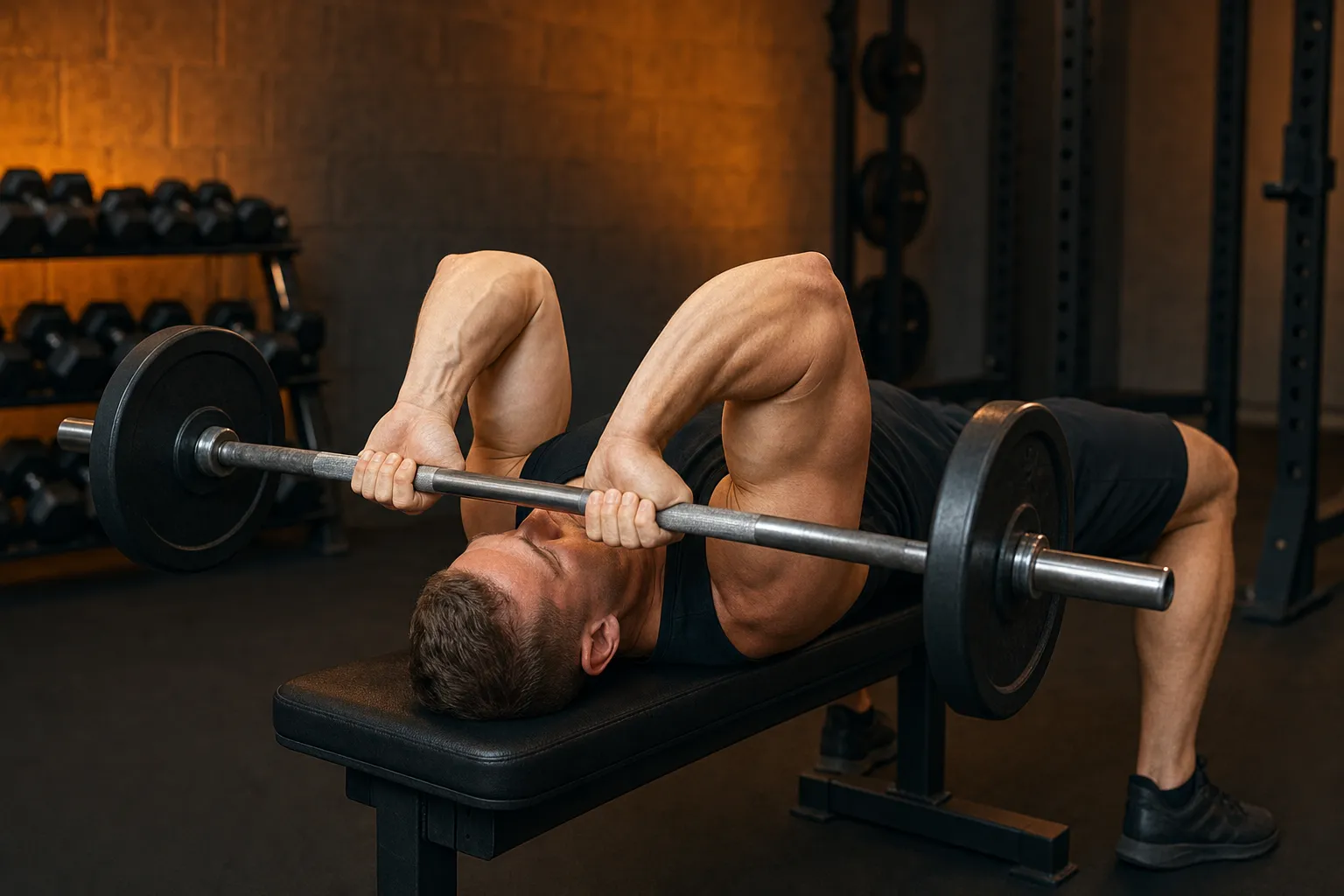
Skull crusher at the bottom of the movement, bar lowered near the forehead, elbows bent
What Are the Most Common Barbell Arm Training Mistakes
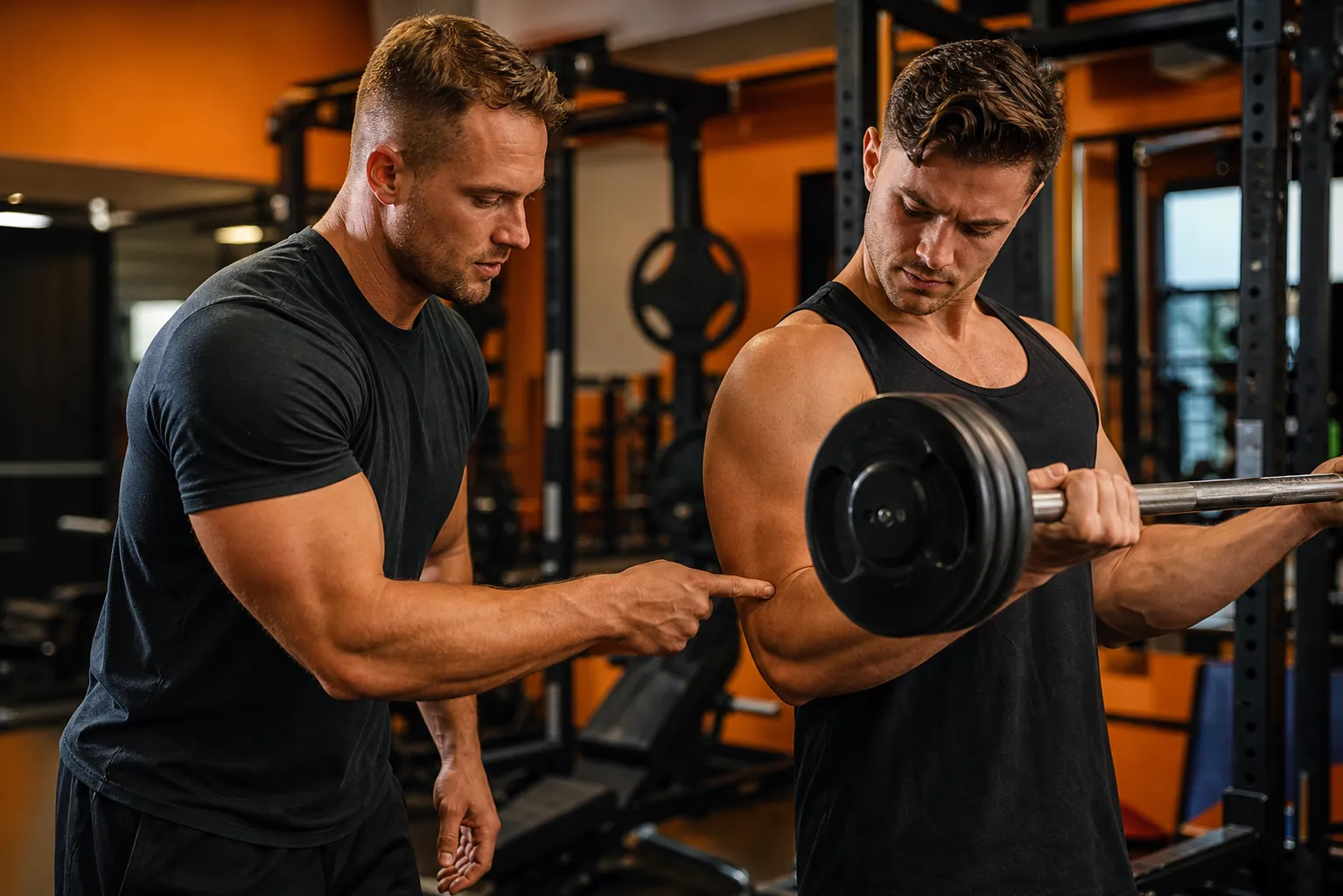
Even experienced lifters make these errors. Fix them and your arms will grow faster — with fewer elbow and wrist problems.
Swinging the torso on the barbell curl: Rocking your hips and lower back to throw the bar up uses momentum, not the biceps. If you need to swing, the bar is too heavy. Drop the weight by 10-20% and keep your torso still.
Letting the elbows drift forward on the curl: When your elbows come forward of your ribcage, the front deltoids take over and the biceps shortens without doing the work. Pin your elbows to your sides for the entire set.
Lowering the bar to the chin on skull crushers: This turns the triceps exercise into a pullover and shifts load onto the lats. Lower the bar toward your forehead or the top of your head, nowhere lower.
Elbows drifting backward on skull crushers: If your elbows drift toward the floor behind your head, the long head of the triceps loses tension. Keep your upper arms vertical and elbows pointed at the ceiling.
Going too heavy, too soon: Both exercises are isolation movements, not ego lifts. Curls and skull crushers build muscle best at 8-15 controlled reps. Loading the bar past what you can lower for 2-3 seconds recruits less muscle and taxes the tendons.
What Are the Key Takeaways
| Point | Recommendation |
|---|---|
| Why barbell for arms | Heaviest load + fixed grip path = best mass builder for biceps and triceps |
| Barbell curl grip | Shoulder-width underhand, elbows pinned to sides |
| Skull crusher grip | Shoulder-width overhand, upper arms stay vertical |
| Skull crusher bar path | Lower toward forehead, not chin — keep load on triceps |
| Rep range for both | 8-15 controlled reps, 2-3 second eccentric |
Quick mistake checklist:
- Torso swinging on the curl — reduce weight, keep torso still
- Elbows forward on the curl — pin elbows to ribs for the whole set
- Bar lowered to chin on skull crushers — lower toward forehead only
- Elbows drifting back on skull crushers — keep upper arms vertical
- Going too heavy — both lifts are isolation work, not max-effort lifts
Recommended barbell arm workout (run twice per week): Barbell curl 4×8-10 + Skull crusher 3×10-12 + Close-grip bench press 3×8 + Barbell reverse curl 2×12. This hits the biceps, all three triceps heads, and the brachialis/forearm flexors in a single session. For more on the biceps and triceps with a different tool, see our dumbbell arm training guide and cable arm training guide. For the back muscles that work alongside the biceps, see our barbell back training guide.
Frequently Asked Questions
What muscles does the barbell curl work?
The barbell curl primarily targets the biceps brachii (both heads), with significant secondary work from the brachialis and brachioradialis. The brachialis sits under the biceps and pushes it up as it grows, adding visible thickness. A 2018 EMG study in the Journal of Strength and Conditioning Research found the barbell curl produces higher biceps activation than the EZ-bar curl because the straight bar forces full supination.
Barbell curl vs dumbbell curl — which is better?
They serve different purposes. The barbell curl lets you lift more total weight because both arms move a single implement, making it better for raw strength and progressive overload. Dumbbells force each arm to work independently, which corrects strength imbalances and allows freer wrist rotation. The best approach is to use both: barbell curls as your heavy mass builder, dumbbell curls for unilateral balance and a freer range of motion.
How low should the bar go on skull crushers?
Lower the bar to just above your forehead, or to the top of your head if your shoulder mobility allows. Lowering to the chin or chest turns the movement into a pullover and shifts load off the triceps onto the lats. Keep your elbows pointing straight up toward the ceiling throughout — if they drift backward the long head of the triceps loses tension.
Are skull crushers bad for your elbows?
Skull crushers are safe for your elbows when performed with proper form and a weight you can control. The two errors that cause elbow pain are: lowering the bar too fast (the triceps tendon absorbs the brake force) and doing high reps every session (the triceps tendon needs recovery like any tissue). If your elbows ache, switch to an EZ-bar for a neutral grip or move to the cable overhead triceps extension, which provides constant tension with less joint stress.
Can you build big arms with just a barbell?
Yes. The barbell curl and skull crusher hit both the biceps and all three heads of the triceps (the skull crusher is one of the most stimulating exercises for the triceps overall). For the first 1-2 years of training, a simple barbell arm workout of curls 4×8-10 and skull crushers 3×10-12, done twice per week, will build a strong, muscular pair of arms. The eventual ceiling is weight availability — once you outgrow the plates you own, you need a heavier barbell or dumbbells for continued overload.
References & Sources
1RM Calculator (One-Rep Max)
Estimate your one-rep max (1RM) - the maximum weight you can lift for a single repetition - from a weight you can lift for multiple reps. The calculator uses the Epley and Brzycki equations and averages them.
Strength Standards Calculator
How strong are you compared to other lifters? Enter your bodyweight and best lift to see where you rank - from Beginner to Elite - on the bench press, squat, deadlift, and overhead press. Standards are scaled to your bodyweight, so a 60 kg lifter and a 100 kg lifter are judged fairly.
Protein Intake Calculator
Calculate how much protein you need each day based on your body weight and training goal. This calculator uses the research-backed range of 1.6 to 2.2 grams of protein per kilogram of body weight for building muscle.