
Cable Back Workout: Lat Pulldown and Seated Cable Row
Why Cable Machines Are Excellent for Back Training
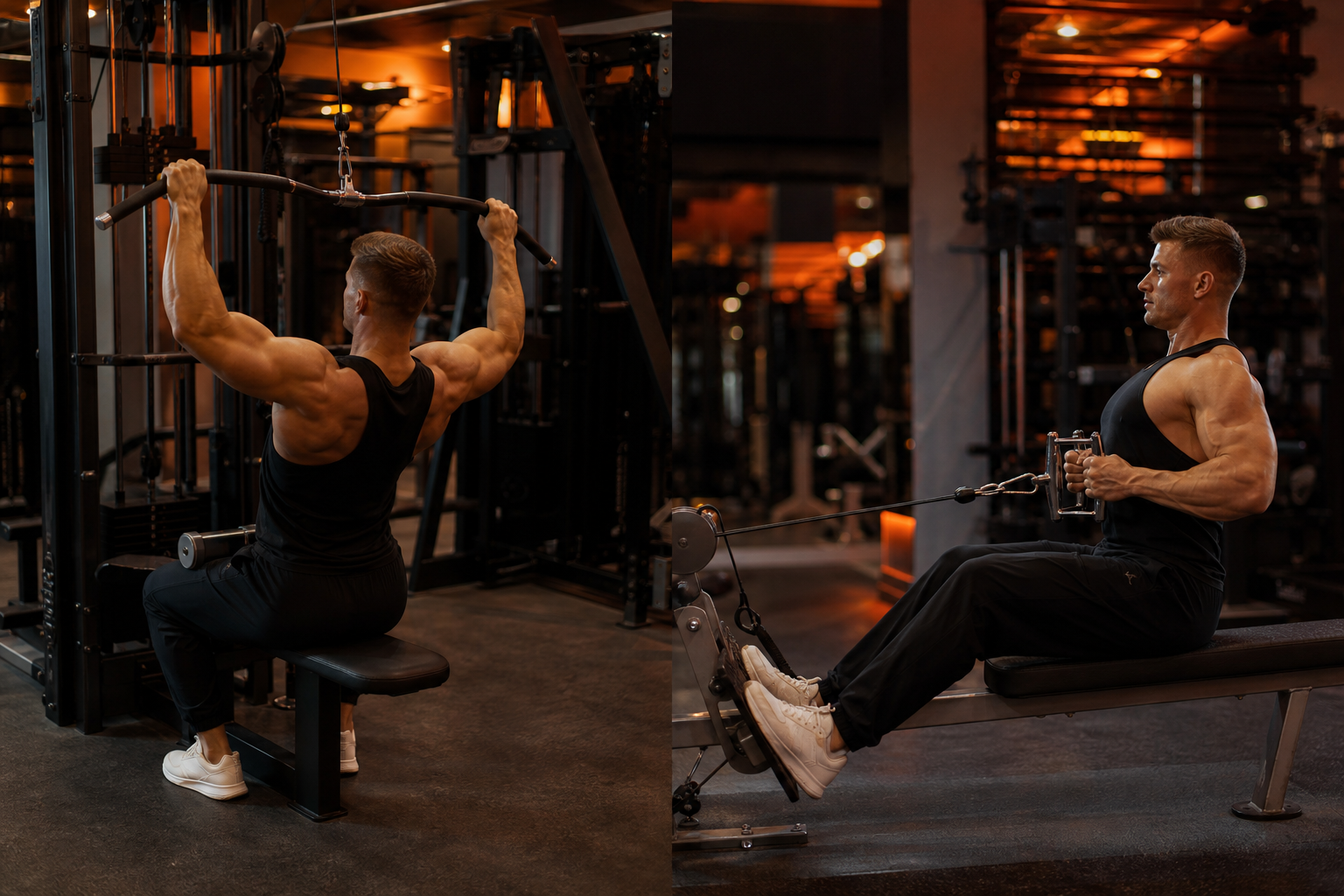
Cable machines provide something free weights cannot match: constant tension throughout the entire range of motion. Unlike dumbbells or barbells, where the resistance profile changes as gravity pulls vertically, the cable maintains a consistent pull from start to finish. A 2019 study in the Journal of Biomechanics demonstrated that cable-based exercises produced more uniform muscle activation across the full movement arc compared to free-weight equivalents.
This constant tension is especially valuable for the back, a muscle group that benefits from both the stretch under load at the top position and the peak contraction at the bottom. Cable machines are also inherently safer for the lower back — the seated or stabilized position eliminates the need to support your spine against heavy axial loading, making them ideal for lifters with lumbar concerns or those returning from injury.
Variety is another strength: you can switch grips (wide, narrow, overhand, underhand, neutral) with a simple attachment change, targeting different regions of the back without learning an entirely new movement pattern. Whether you are a beginner building your first back routine or an advanced lifter chasing detail work, cable exercises deserve a permanent place in your program.
This guide covers the two foundational cable back exercises: the lat pulldown and the seated cable row.
How to Do the Lat Pulldown with Proper Form
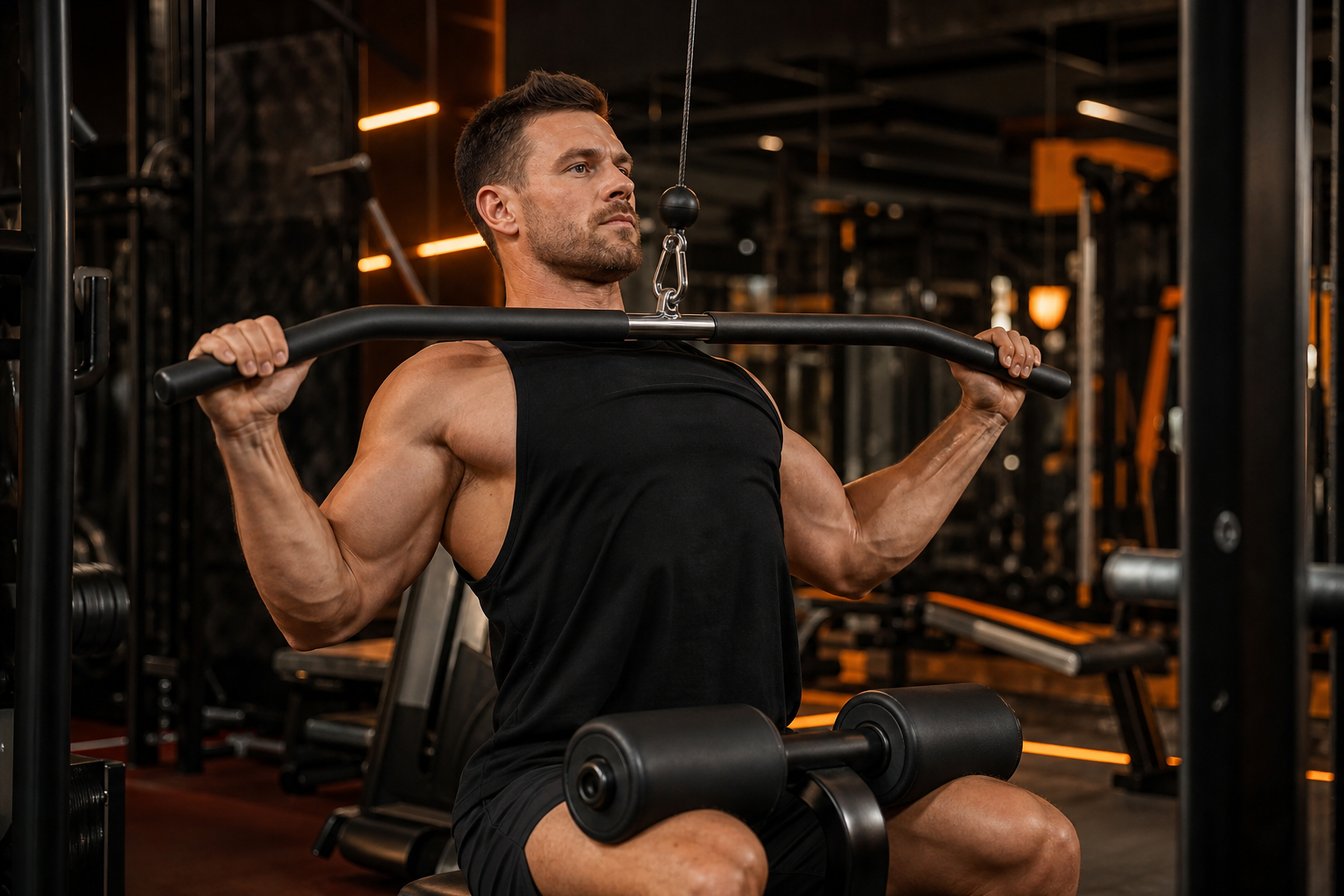
The lat pulldown is the primary lat builder for anyone who cannot yet do pull-ups, and even for those who can — it allows precise rep targeting and variable grip positions. It targets the latissimus dorsi, biceps brachii, and rear deltoids.
Step 1 — Grip and Setup
Attach a wide bar to the high cable. Stand and grasp the bar with a wide overhand grip (pronated), hands roughly 1.5× shoulder width. Sit down and secure your thighs under the leg pads — adjust the pad tightness so your body stays anchored. Lean back slightly (10–15°), puff your chest up, and look toward the bar. Your arms should be fully extended overhead with a slight stretch through your lats. This is your start position.
Step 2 — Stretch Position
From full arm extension, feel the stretch along your lats and teres major. Do not rush past this point — the stretch under tension is where muscle damage (the productive kind) begins. Keep your torso angled back slightly; pulling completely upright shifts emphasis to the upper traps rather than the lats. Your scapulae should be elevated and slightly protracted at the top — they will retract and depress as you pull.
Step 3 — Pull to Chest
Initiate the movement by pulling your shoulder blades down and back, then drive your elbows toward your ribcage. Pull the bar down to your upper chest — aim for the area just below the collarbones. Do not pull behind the neck — this places extreme shear on the shoulder joint and offers no additional lat benefit. At the bottom, squeeze your lats hard for a full second. Imagine trying to touch your elbows behind your back — that cue maximizes lat contraction.
Step 4 — Breathing and Return
Inhale at the top with arms extended, exhale as you pull the bar to your chest. On the return, resist the weight — do not let the bar yank your arms back up. A controlled 2–3 second negative keeps tension on the lats and protects the shoulder joint from sudden stretching. Return to the full stretch position and repeat.
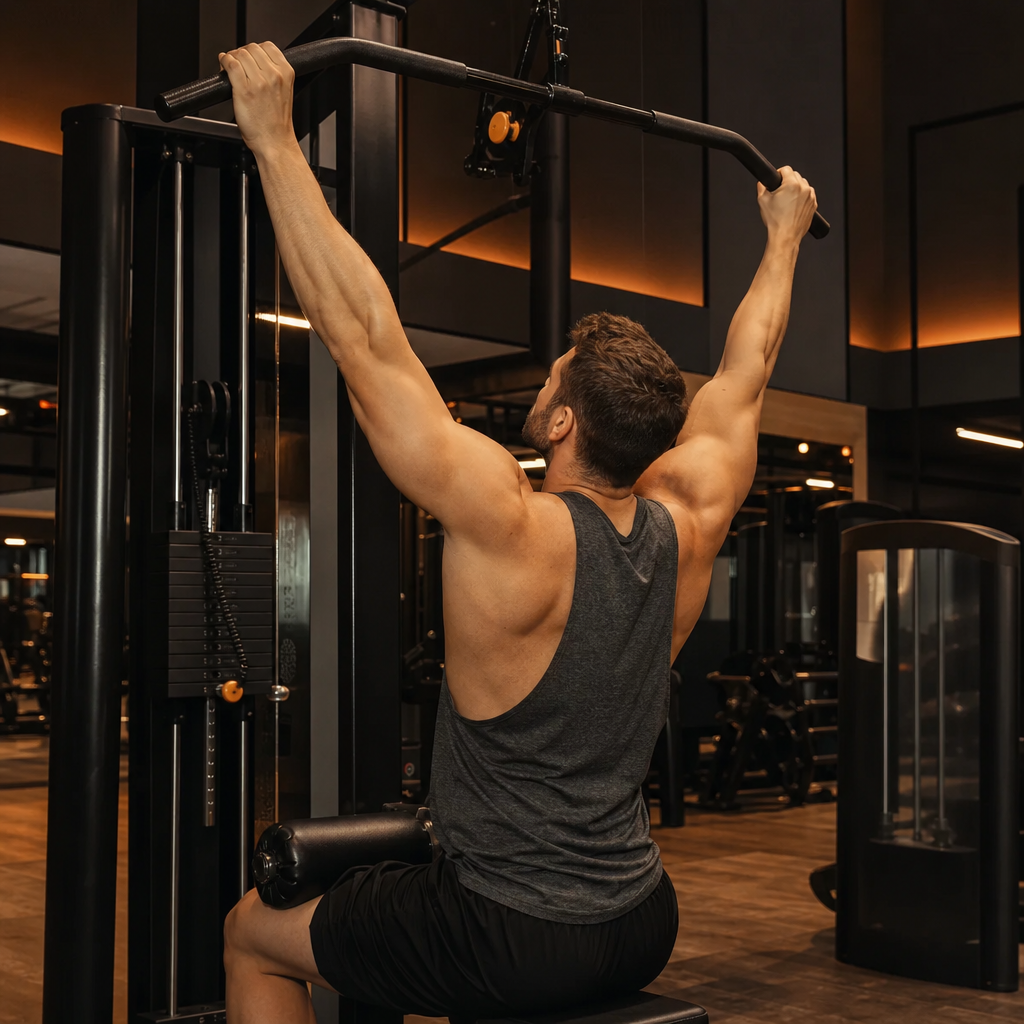
Lat pulldown setup and stretch position
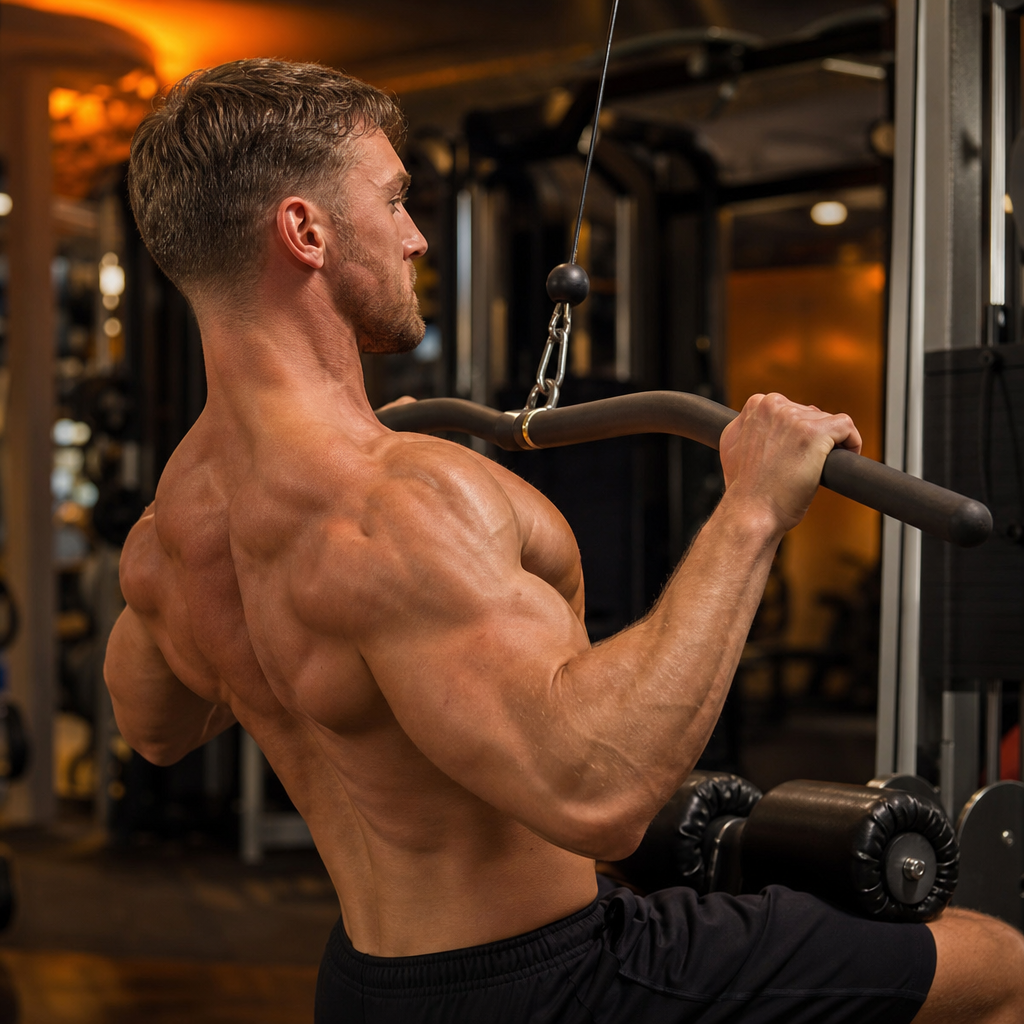
Lat pulldown pull to chest contraction
How to Do the Seated Cable Row with Proper Form
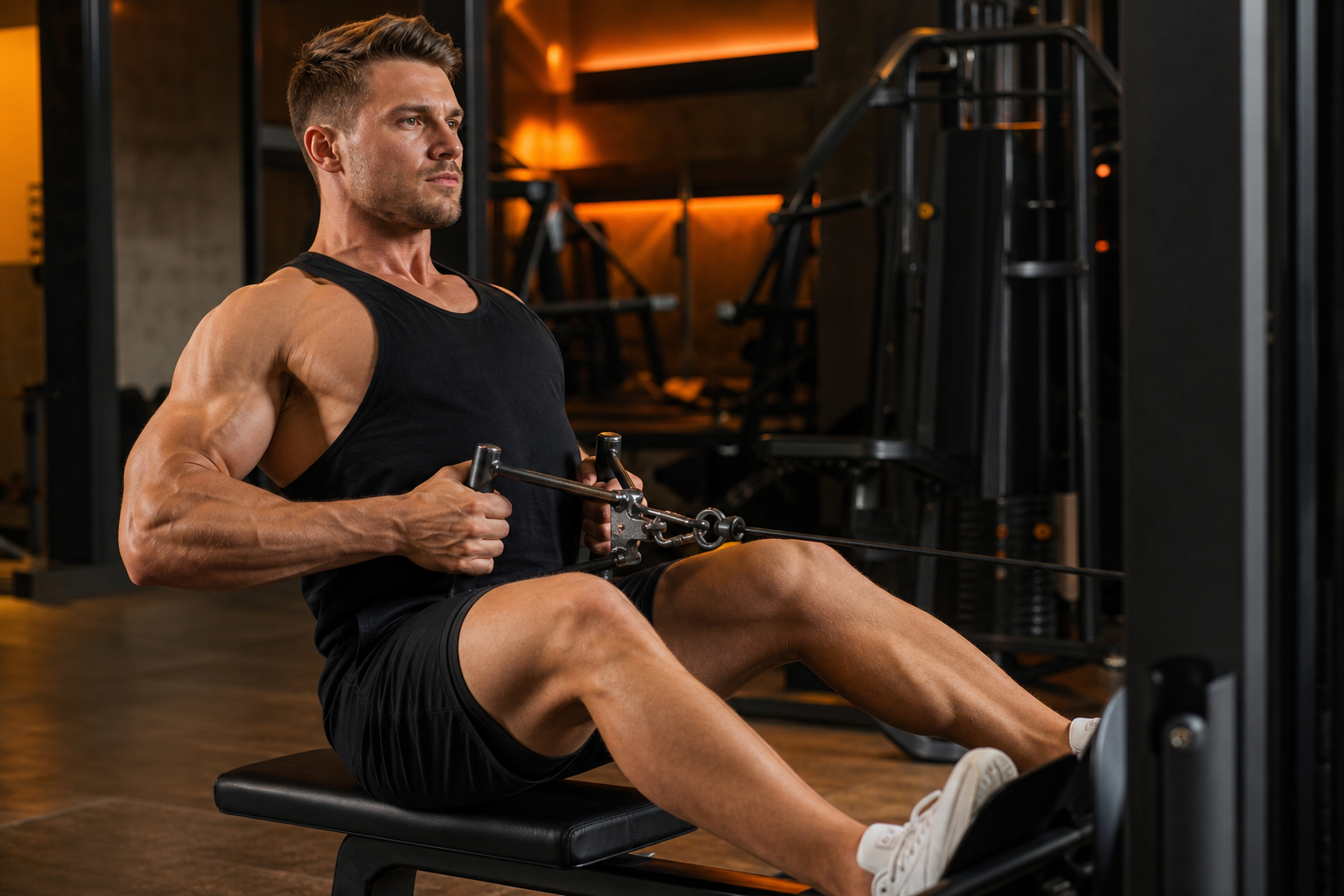
The seated cable row is the premier mid-back thickness builder. While the pulldown emphasizes lat width, the seated row targets rhomboids, mid-traps, rear deltoids, and the lower lats — the muscles that create a dense, three-dimensional back. A 2021 EMG study in the European Journal of Sport Science found that the seated cable row produced significantly higher rhomboid and middle trapezius activation than barbell rows.
Step 1 — Setup and Foot Position
Attach a V-bar (close neutral grip) or wide handle to the low cable. Sit on the bench with your feet placed firmly on the foot platform — knees slightly bent, never locked. Grasp the handle, sit tall with your chest lifted, and brace your core. Your torso should be upright or angled slightly forward (about 10°). Ensure the cable has slight tension before you begin — do not start from a slack position.
Step 2 — Stretch and Forward Lean
Allow the weight to pull your arms forward, stretching your lats and rhomboids. Lean forward slightly (15–20° from vertical) to increase the stretch through the mid-back. Keep your spine neutral — do not round your lower back. Your shoulders will protract and your scapulae will slide apart at the front. This stretch position is the starting point of every rep.
Step 3 — Pull to Abdomen
Drive the movement by retracting your shoulder blades first — squeeze them together — then pull the handle to your lower chest or upper abdomen. Your elbows should track close to your body, not flared out. At the peak contraction, your torso should be upright or slightly past vertical. Hold the squeeze for a full second, focusing on the mid-back muscles between your shoulder blades. The handle should touch your body — pulling to a point in front of you shifts the load to your arms rather than your back.
Step 4 — Breathing and Control
Inhale as you stretch forward, exhale as you pull back. The return must be controlled — resist the weight for 2–3 seconds as you let your arms extend and your torso leans forward. Do not let the stack crash down; a loud weight stack means you are losing tension. Every rep should begin from the stretched position and end at the contracted position with no momentum in between.
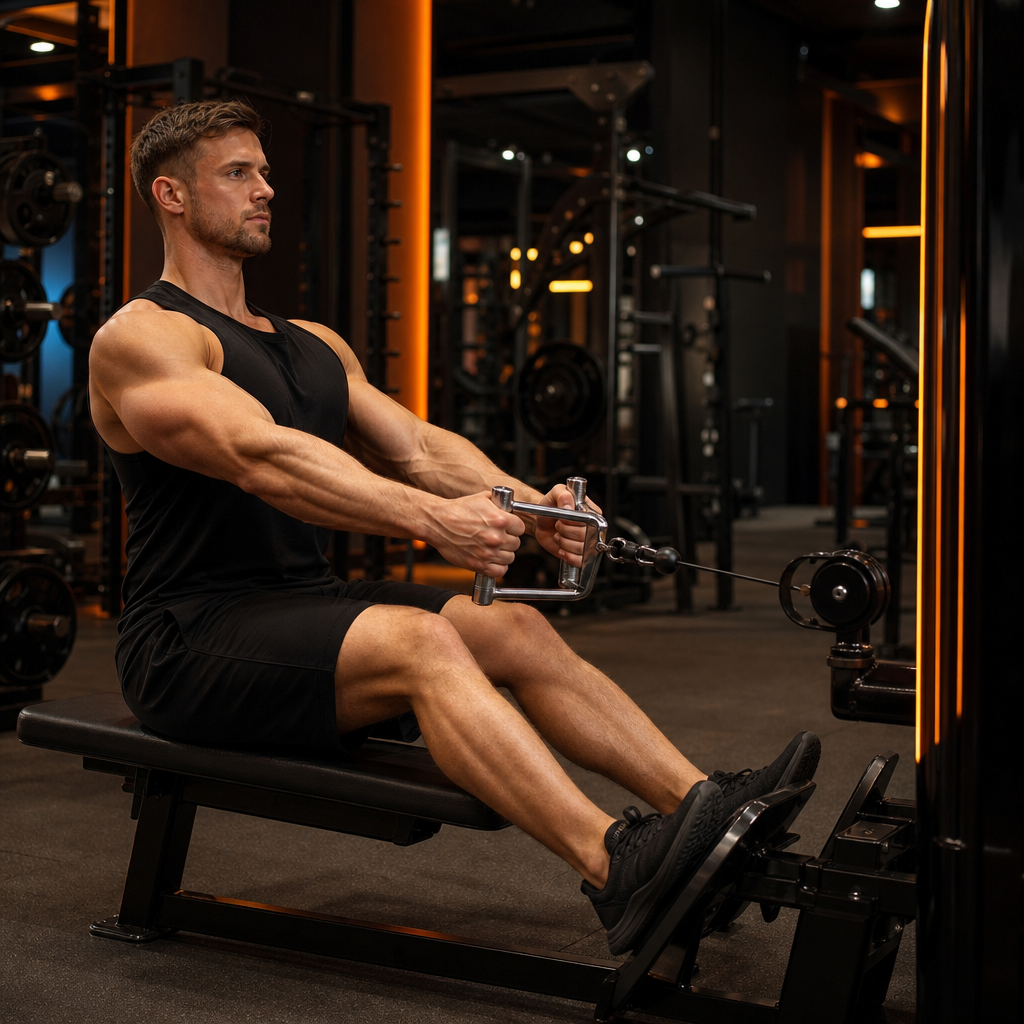
Seated cable row setup and stretch position
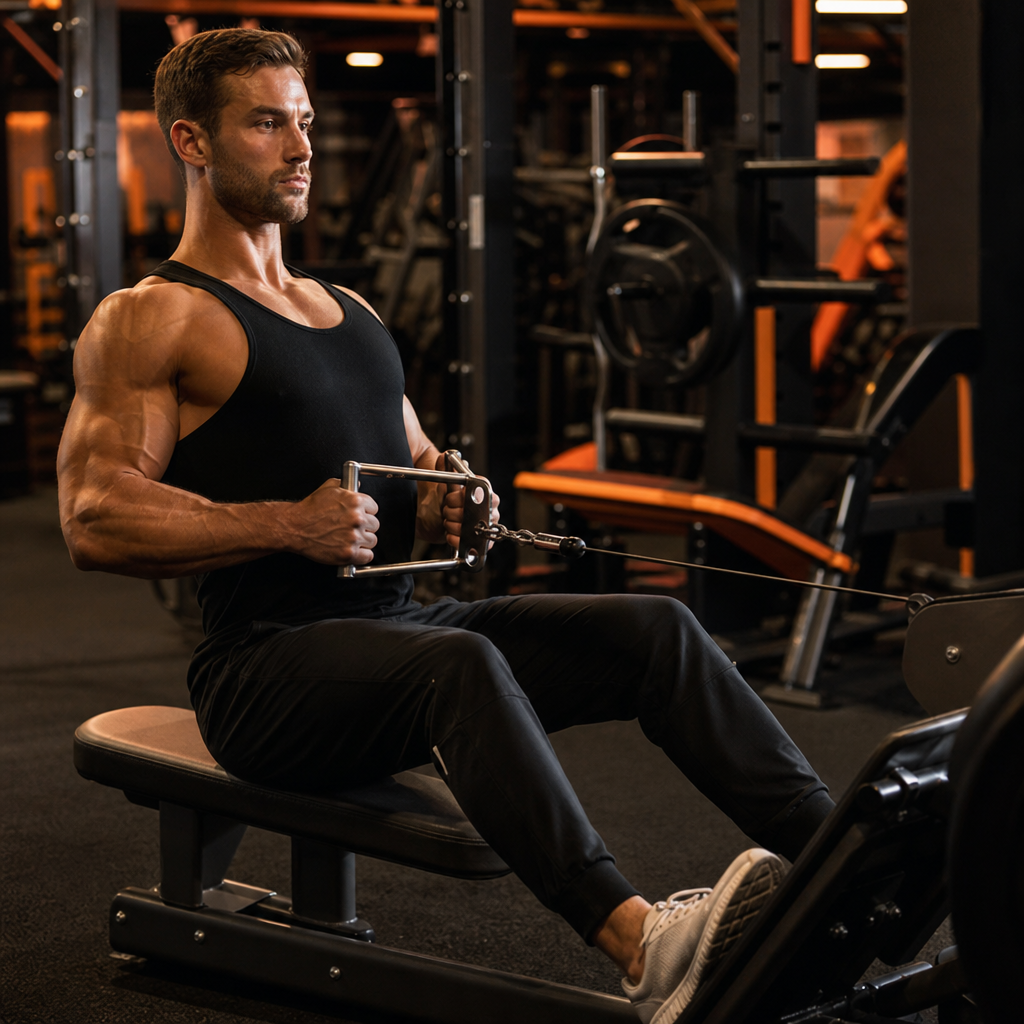
Seated cable row pull to abdomen contraction
What Are the Most Common Cable Back Mistakes

These errors reduce back activation and increase shoulder and spinal injury risk. Fix them to maximize your cable back training.
Pulling behind the neck on pulldowns: This places the shoulder in extreme external rotation under load — a recipe for impingement and rotator cuff damage. Studies consistently show behind-the-neck pulldowns produce no greater lat activation than front pulldowns. Pull to the upper chest, always.
Using too much biceps: If your arms fatigue before your back, you are pulling with your elbows rather than your shoulder blades. Initiate every rep by retracting and depressing the scapulae, then let the arms follow. Think of your hands as hooks — the back does the work.
Leaning back excessively: A slight lean (10–15°) on pulldowns is fine, but yanking the bar with a dramatic torso swing turns the movement into a mid-back row. On seated rows, leaning past 20° past vertical shifts load from the rhomboids to the spinal erectors and reduces mid-back activation.
Shrugging the shoulders: Letting your shoulders ride up to your ears — especially at the top of the pulldown or the stretch of the row — means your upper traps are taking over. Actively depress your shoulder blades before each rep: pull them down and away from your ears.
Not controlling the negative: Letting the weight stack crash on the return eliminates half the benefit of the exercise. The eccentric phase is where much of the mechanical tension and muscle damage occurs. A controlled 2–3 second negative is non-negotiable for back growth.
What Are the Key Takeaways
| Point | Recommendation |
|---|---|
| Why cables for back | Constant tension + lower back safe + variety of grips |
| Lat pulldown target | Lats (width), biceps, rear delts — pull to upper chest |
| Seated row target | Rhomboids, mid-traps, rear delts (thickness) — pull to lower chest/upper abs |
| Pulldown grip | Wide overhand, 1.5× shoulder width, never behind the neck |
| Seated row grip | V-bar neutral or wide — elbows close to body |
| Both exercises | Control the negative, squeeze at peak, scapulae drive the movement |
Quick mistake checklist:
- Behind-the-neck pulldowns — pull to the front, always
- Biceps doing the work — initiate from scapulae, hands are hooks
- Excessive lean — stay within 10–15° on pulldowns, 20° on rows
- Shrugging shoulders — depress scapulae before every rep
- Dropping the negative — 2–3 second controlled return is mandatory
Recommended back day combination: Lat pulldown 4×10 + Barbell row 4×8 + Seated cable row 3×12 + Face pull 3×15. Width + thickness + rear delt detail = complete back development.
Frequently Asked Questions
Should I pull the bar to my chest or behind the neck on lat pulldowns?
Always to the upper chest. Behind-the-neck pulldowns force your shoulders into extreme external rotation under load, which risks impingement and rotator cuff strain. Pulling to the front also activates the lats more effectively.
How do I feel my lats more during cable rows?
Two cues: pull with your elbows, not your hands — imagine your hands are just hooks. And squeeze your shoulder blades together for a full second at the end of each rep before letting the weight stretch your lats back out.
Are cable exercises enough for back width?
Cables are great for back detail and thickness, but for width you need vertical pulling under load. Lat pulldowns build width well, but pull-ups and chin-ups with added weight are even better once you can do them. Combine both.