
Barbell Overhead Press & Push Press: The Complete Shoulder Training Guide
The barbell overhead press builds the shoulders, triceps, and upper back. Stand with feet shoulder-width, grip the bar at shoulder width, brace your core and glutes, and press the bar from your shoulders overhead until your arms are straight, keeping your ribcage down and avoiding lower-back arch. Lower to your shoulders with control.
Why the Barbell Is the Best Tool for Shoulder Training
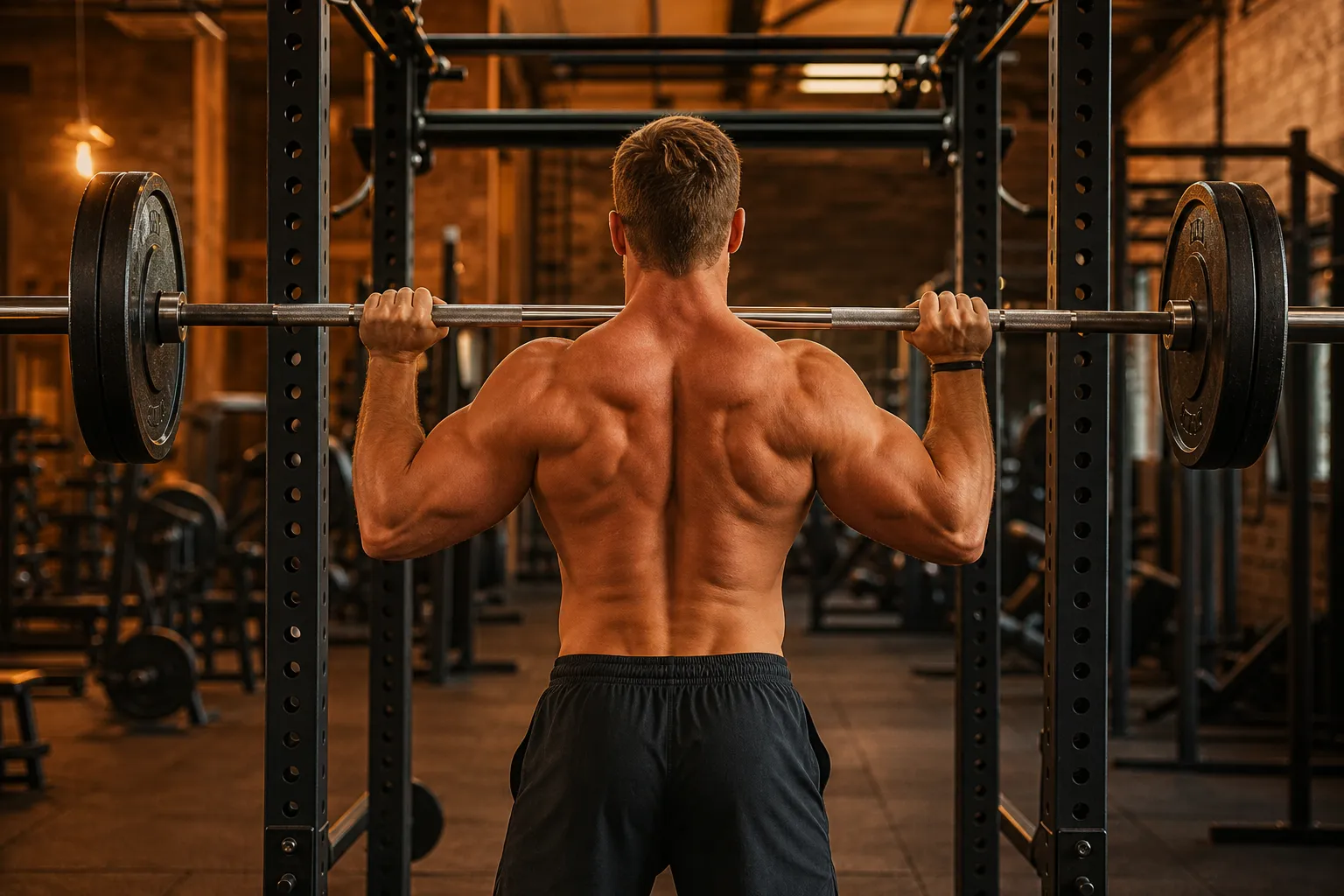
The barbell overhead press (OHP) — also called the military press or standing shoulder press — is the gold standard for building shoulder strength and size. Alongside the squat, bench press, deadlift, and barbell row, it is one of the five foundational barbell lifts, and it is the single best exercise for developing the deltoids. The push press, its explosive cousin, adds leg drive to overload the top of the movement with heavier weight.
Why choose a barbell for shoulders over dumbbells or machines? Two reasons. First, the barbell lets you press the heaviest load of any shoulder exercise — both arms work together to move a single implement, so you can overload the deltoids far beyond what dumbbells allow. Second, because the press is performed standing, your core, glutes, and upper back must stabilize your spine throughout the lift, which builds full-body tension and carries over to every other compound movement. A 2020 EMG analysis published in the Journal of Strength and Conditioning Research found the standing barbell OHP produces greater anterior deltoid activation than any seated machine press.
This guide breaks down both movements with step-by-step form, identifies the muscles each works, and ends with a beginner-friendly barbell shoulder workout you can run twice per week.
How to Do the Standing Barbell Overhead Press with Proper Form
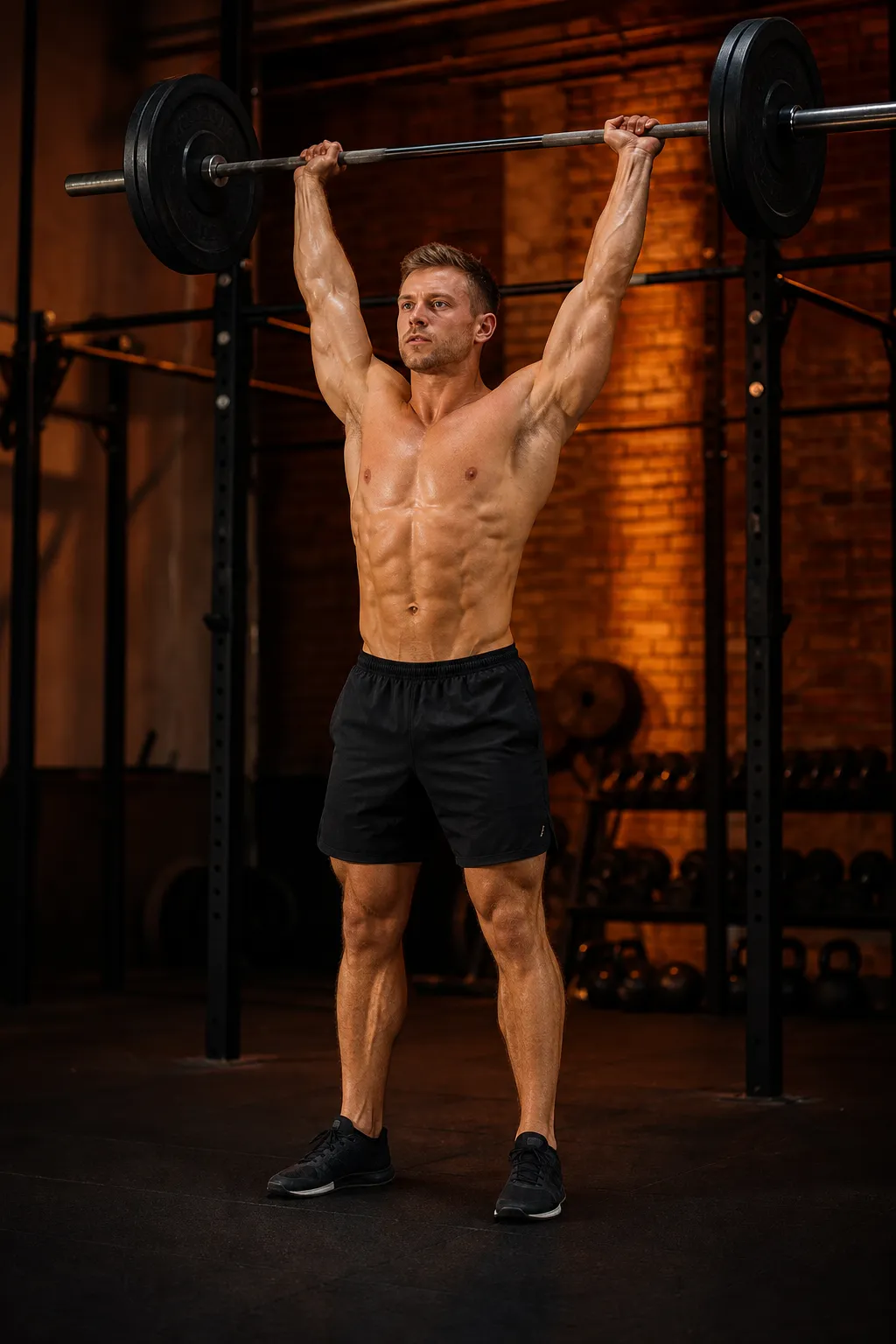
The standing barbell overhead press targets the anterior (front) and lateral (side) heads of the deltoids, with strong assistance from the triceps, upper trapezius, serratus anterior, and upper chest. Performed standing, it also forces the core, glutes, and lower back to work isometrically to keep the spine rigid.
Step 1 — Rack Setup and Grip
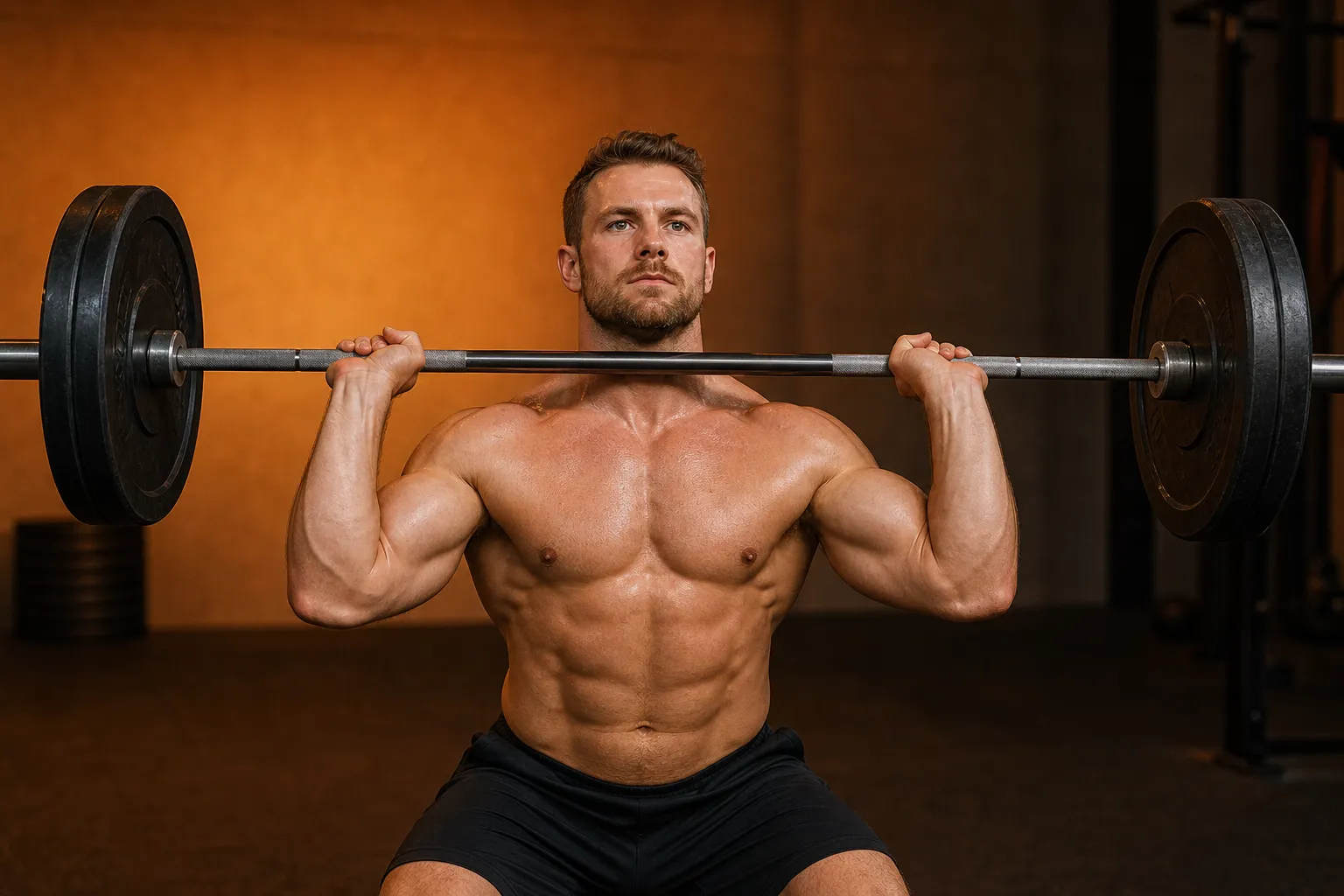
Set the bar in a power rack at about collarbone height. Grip the bar with a pronated (overhand) grip slightly wider than shoulder width — your forearms should be vertical when the bar is at your shoulders. Pull your shoulder blades back and down, brace your core, and squeeze your glutes. Step back from the rack with the bar resting on the front of your shoulders (front rack position), elbows pointed forward and slightly up.
Step 2 — Press (Concentric)
Drive the bar straight up. To clear your chin, shift your head slightly back (not your whole torso) as the bar passes your face, then push your head back through to neutral once the bar is above your head. The bar should travel in a straight vertical line — any forward drift turns the movement into an incline press and strains the lower back. Press until your arms are fully locked out overhead, with the bar directly over your mid-foot and your shoulders shrugged slightly up at the top to finish the scapular elevation.
Step 3 — Lower (Eccentric)
Lower the bar back to the front rack position under control over 2-3 seconds. Move your head back again to let the bar pass your face, then return to neutral. Keep your core braced and glutes squeezed the entire time — do not let your lower back arch as fatigue sets in. The eccentric is where much of the muscle-building stimulus happens, so do not drop the bar.
Step 4 — Breathing and Bracing
Take a deep breath and brace your core before unracking. Hold the breath through the press and the first half of the lowering phase (Valsalva maneuver) — this stabilizes your spine under load. Exhale at the bottom or between reps. Re-brace before every rep, not just the first. Squeezing your glutes hard throughout the set prevents the lower back from hyperextending, which is the most common cause of OHP lower-back pain.
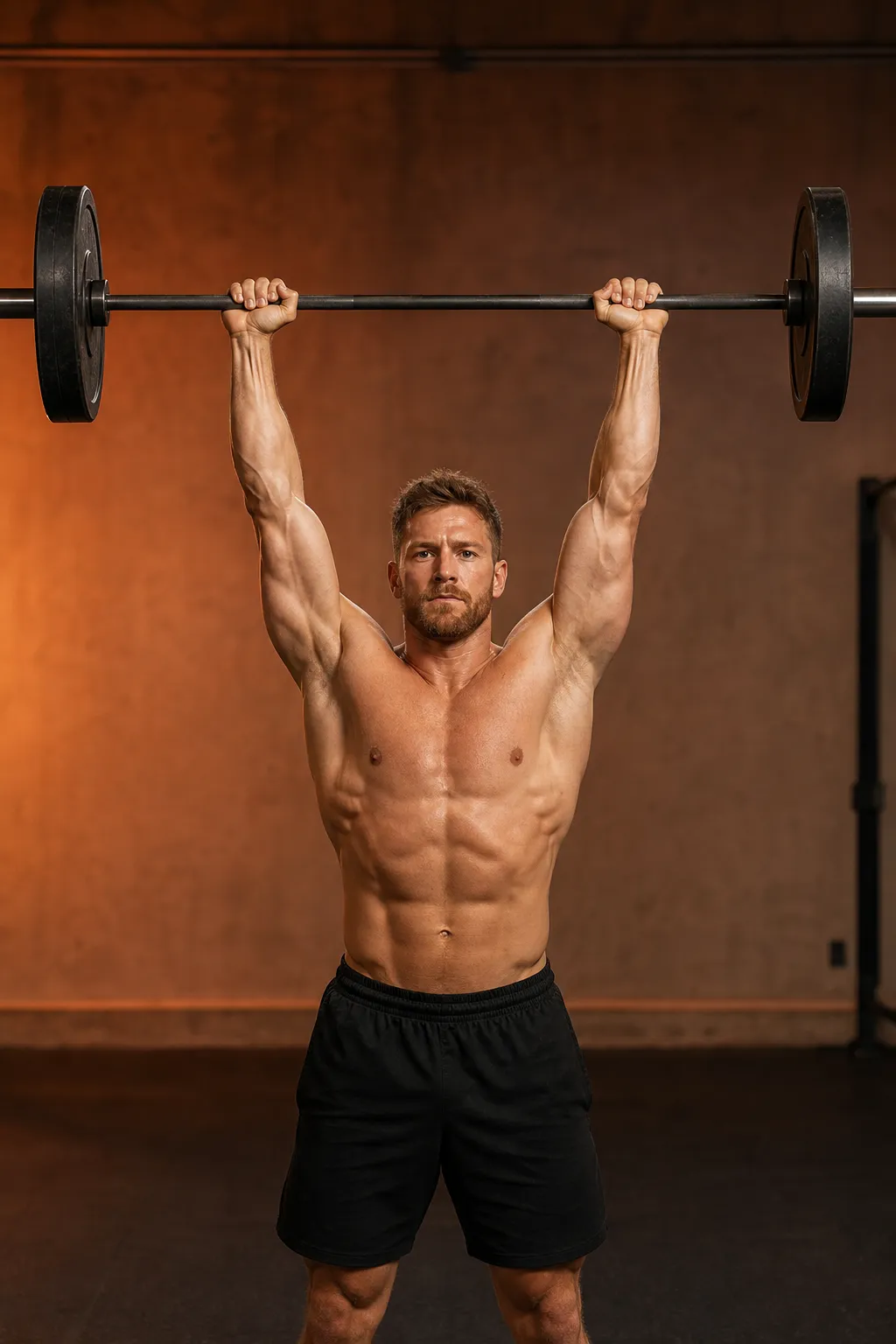
Overhead press at the top of the movement, bar locked out overhead, arms fully extended
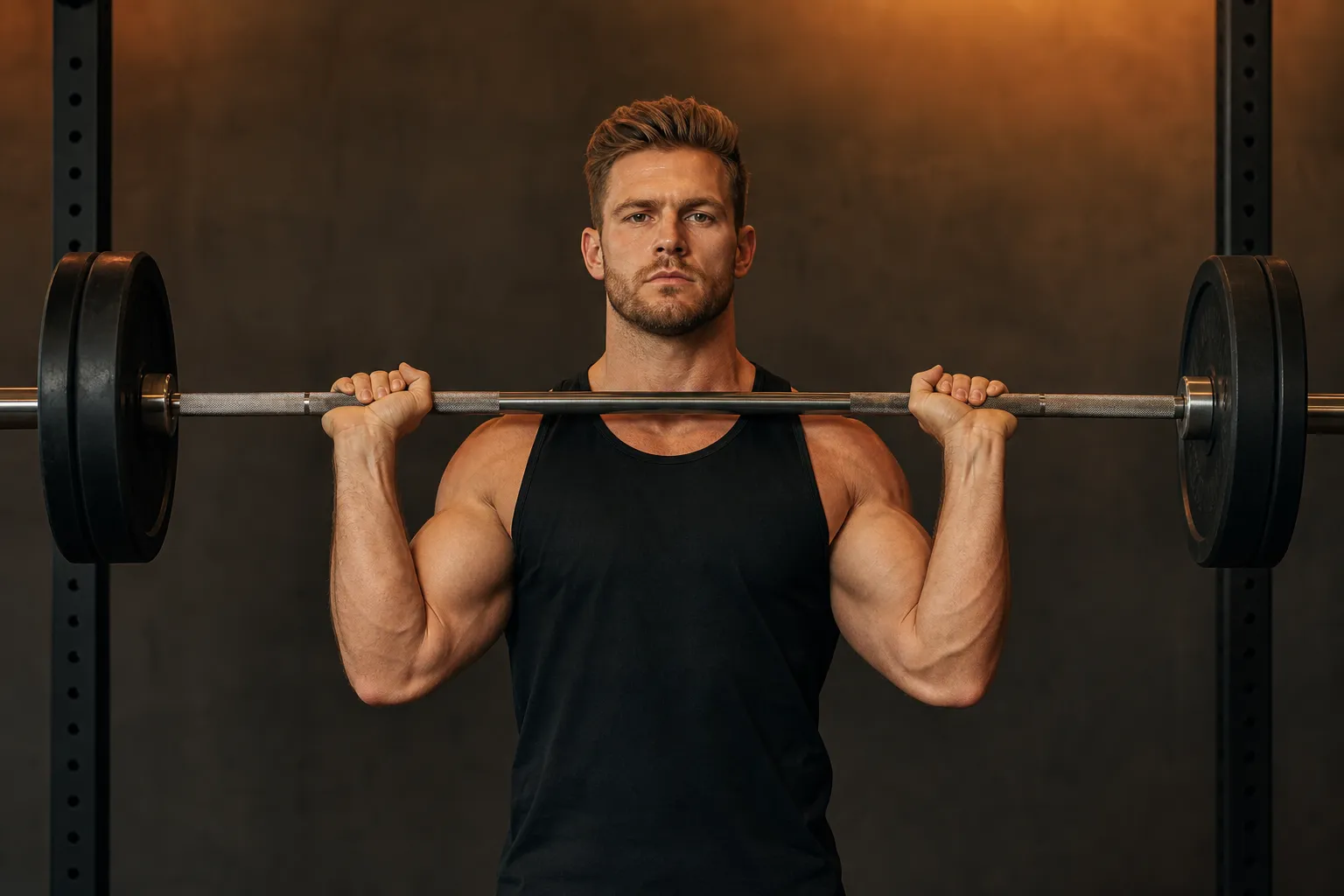
Overhead press at the bottom of the movement, bar resting on the front of the shoulders, elbows bent
How to Do the Barbell Push Press with Proper Form
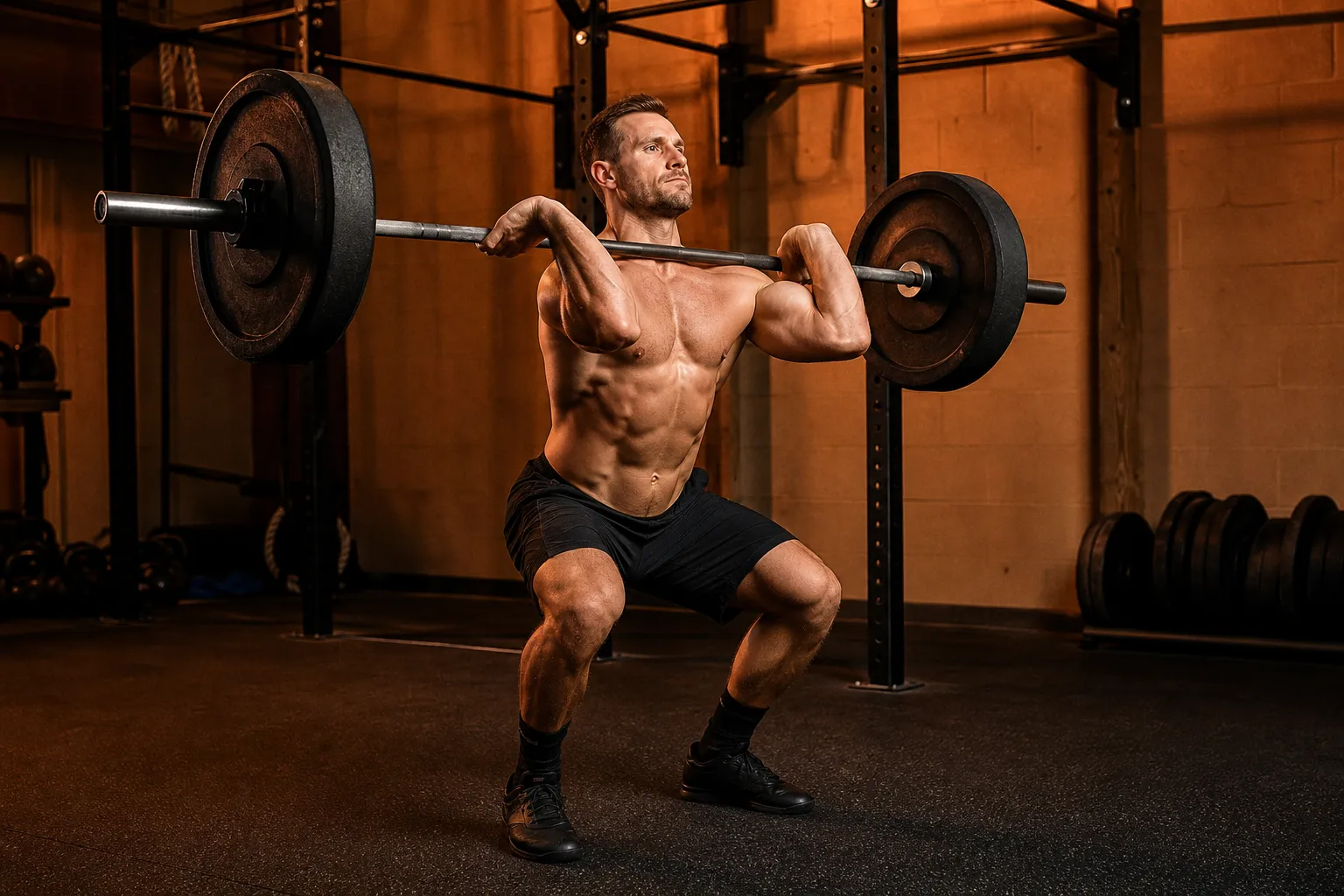
The push press uses a dip-and-drive from the legs to start the bar moving upward, which lets you load 20-30% more weight than a strict overhead press. This heavier load overloads the lockout portion of the movement, building the triceps, upper traps, and the top half of the shoulder press range. It is also the bridge between strict pressing and the jerk used in Olympic weightlifting.
Step 1 — Rack Setup and Stance
Set up exactly like the strict overhead press: bar in the front rack position, grip slightly wider than shoulder width, core braced, glutes squeezed. The only difference is your foot position — stand with feet shoulder-width apart and your weight balanced mid-foot. Your knees should be soft, not locked.
Step 2 — The Dip
Bend your knees and hips slightly to dip straight down — about 3-5 inches, no more. The dip must be straight down, not forward, so the bar stays over your mid-foot. Keep your torso upright and your elbows in the front rack position. The dip is quick but controlled: think of it as loading a spring.
Step 3 — The Drive and Press
Immediately reverse the dip — drive aggressively up through your legs and hips, then press the bar overhead as the leg drive transfers momentum into the bar. The leg drive does the first third of the press; your shoulders and triceps finish the lockout. Press the bar to full lockout overhead, shrugging your shoulders up at the top, exactly like the top of a strict OHP.
Step 4 — Lower and Reset
Lower the bar back to the front rack under control, absorbing the descent with a slight knee bend (a partial dip) to protect your shoulders and elbows. Reset your brace between every rep — the push press is not a touch-and-go movement. Each rep should be a deliberate dip, drive, and press, not a continuous cycle.
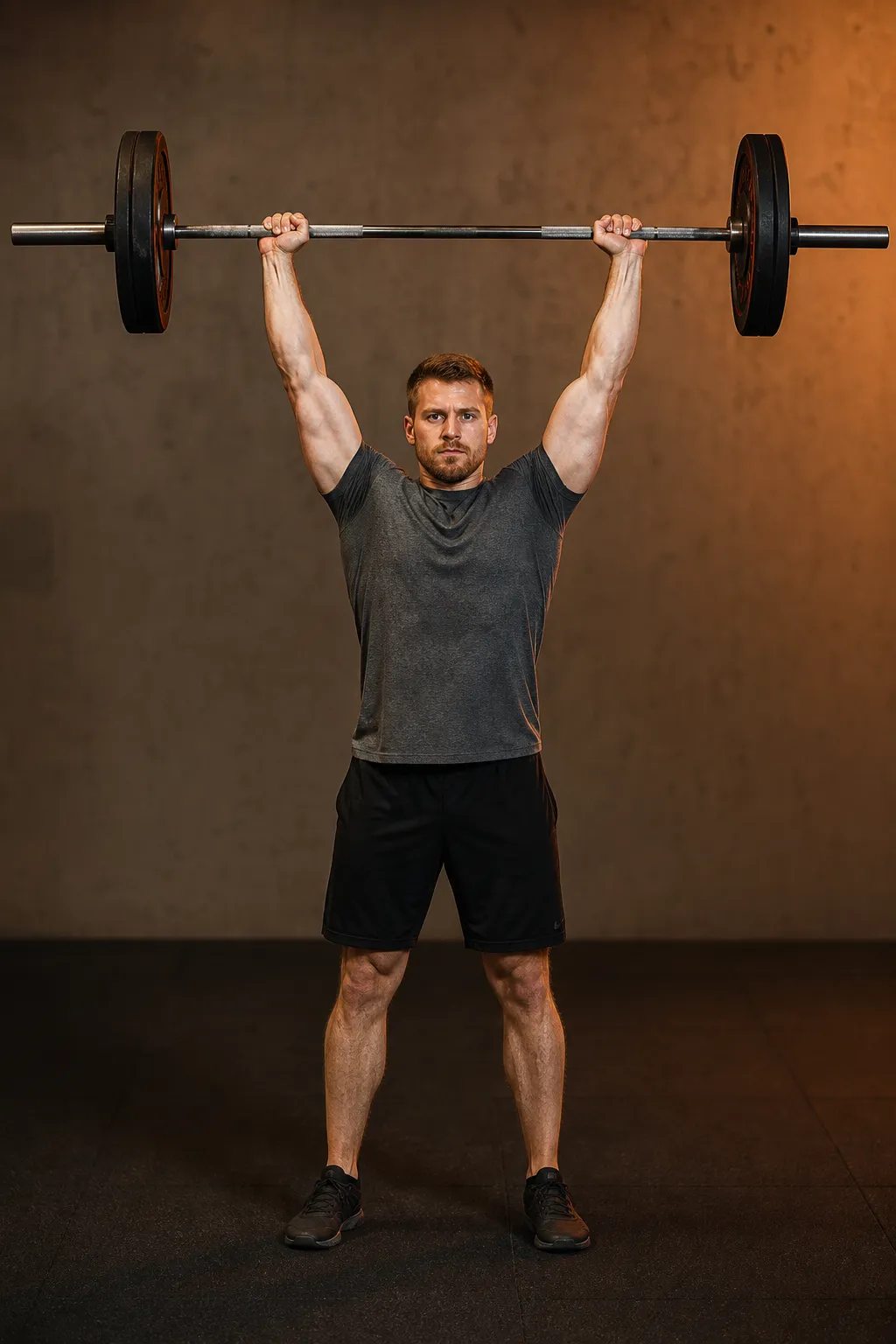
Push press at the top of the movement, bar locked out overhead, legs straight
Push press at the dip position, knees bent, bar on the front of the shoulders
What Are the Most Common Overhead Press Mistakes
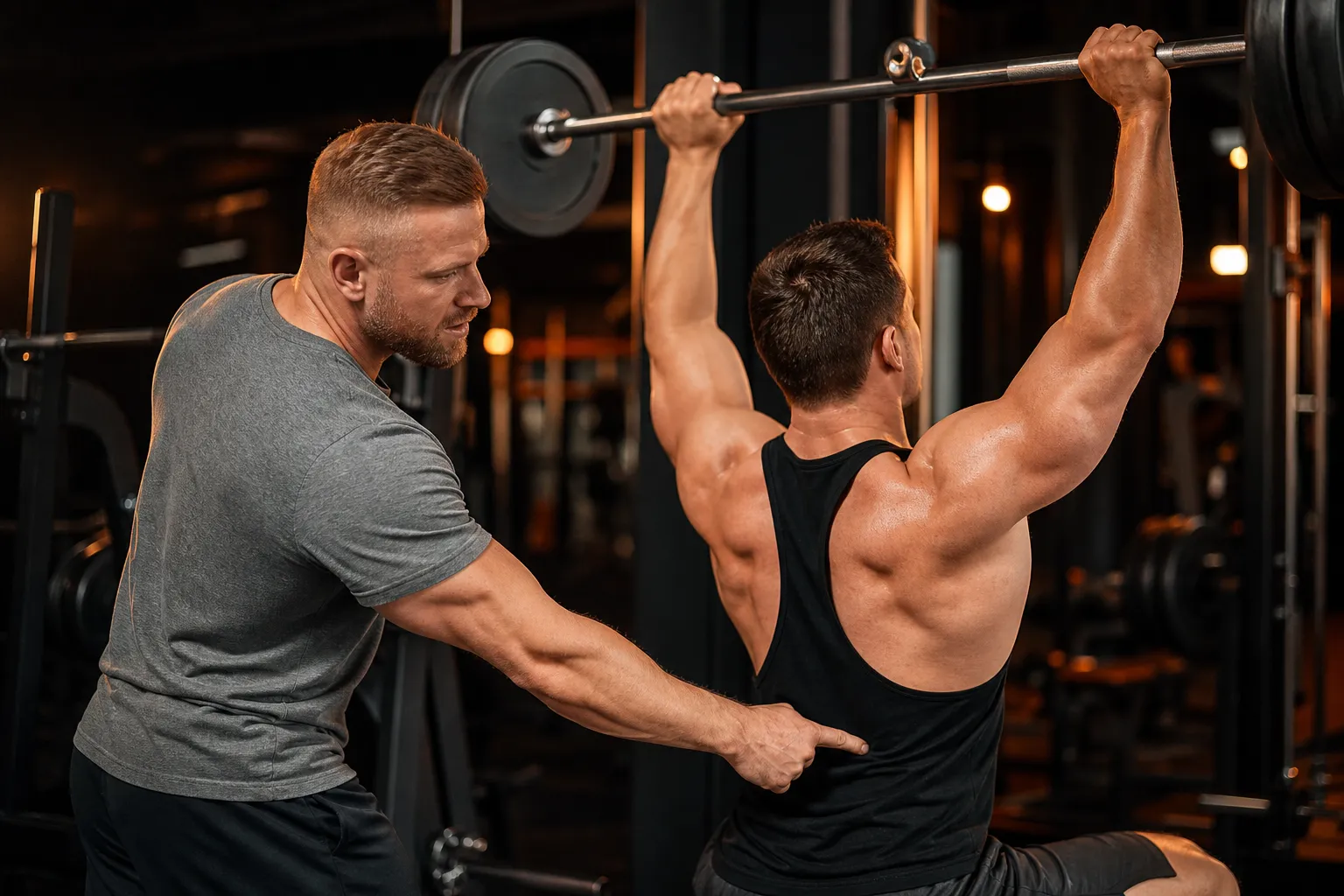
Even experienced lifters make these errors. Fix them and your shoulders will grow faster — with fewer lower-back and shoulder problems.
Arching the lower back to press: When the weight gets heavy, the most common compensation is hyperextending the lower back to turn the overhead press into an incline press. This strains the lumbar spine and takes tension off the deltoids. Squeeze your glutes hard and brace your core before every rep to keep your spine neutral.
Letting the bar drift forward: The bar must travel in a straight vertical line over your mid-foot. If it drifts forward of your face, you lose leverage and the shoulders do less work. Move your head back to clear the bar, then push it back through to neutral as soon as the bar passes.
Flaring the elbows out wide: Elbows pointed straight out to the sides puts the rotator cuff under strain and reduces pressing power. Keep your elbows pointed forward and slightly up, with your forearms vertical — this is the strongest pressing position.
Using leg drive on a "strict" press: If your goal is a strict overhead press, do not let your knees dip to start the bar. A small knee bend turns the lift into a push press and removes the deltoid stimulus. Save the leg drive for the push press, where it belongs.
Pressing the bar behind the neck: Behind-the-neck presses force the shoulders into extreme external rotation under load, which is a common cause of shoulder impingement. Press from the front rack position — it is safer and just as effective for deltoid development.
What Are the Key Takeaways
| Point | Recommendation |
|---|---|
| Why barbell for shoulders | Heaviest load + standing stability = best deltoid builder |
| OHP grip | Slightly wider than shoulder width, forearms vertical, elbows forward |
| OHP bar path | Straight vertical line over mid-foot — move head, not torso |
| Push press | 3-5 inch dip, then drive and press — overload the lockout |
| Both exercises | Squeeze glutes, brace core, never arch the lower back |
Quick mistake checklist:
- Lower back arching — squeeze glutes and brace before every rep
- Bar drifting forward — move head back, keep bar over mid-foot
- Elbows flared wide — point elbows forward, forearms vertical
- Knee dip on strict press — keep legs locked, save drive for push press
- Behind-the-neck pressing — press from the front rack only
Recommended barbell shoulder workout (run twice per week): Barbell overhead press 4×6-8 + Push press 3×5 + Barbell row 3×10 (for rear delts) + Upright row 2×12. This hits the front, side, and rear deltoids with both strict and explosive pressing. For more on the shoulders with a different tool, see our dumbbell shoulder training guide and cable shoulder training guide. For the back muscles that stabilize the press, see our barbell back training guide.
Frequently Asked Questions
What muscles does the overhead press work?
The barbell overhead press primarily targets the anterior and lateral heads of the deltoids, with significant assistance from the triceps (which extend the elbow), the upper trapezius and serratus anterior (which stabilize and upwardly rotate the scapula), and the upper chest. Because the movement is performed standing, your core, glutes, and lower back also work isometrically to keep your spine rigid. A 2020 EMG analysis in the Journal of Strength and Conditioning Research found the standing barbell OHP produces greater anterior deltoid activation than any seated machine press.
Overhead press vs military press — what is the difference?
Strictly speaking, the military press is a variation of the overhead press performed with the heels together (an attention stance), which forces more core and stabilizer work. The overhead press is the broader category — any standing barbell press overhead qualifies. In practice, most lifters today use the terms interchangeably to mean a standing barbell press with the feet shoulder-width apart, and that is the version covered in this guide.
Why is my overhead press so weak compared to my bench press?
The OHP uses smaller muscles (deltoids vs pectorals) and lacks the leg drive and back support that the bench press enjoys, so it is naturally a lighter lift — most lifters OHP roughly 60-70% of their bench press. The deltoids also recover slowly and are already fatigued from every chest and back session, so they are often undertrained. To bring it up, press first in your shoulder workout, add frequency (2x per week), and track progressive overload in the 4-8 rep range.
Is the push press cheating on the overhead press?
No — it is a different exercise, not a cheat. The push press uses a dip-and-drive from the legs to start the bar moving, which lets you load 20-30% more weight than a strict press. This heavier load overloads the lockout portion of the movement and builds the triceps and upper traps. Use the strict OHP to build raw shoulder strength and the push press to overload the top half of the range; both belong in a complete shoulder program.
Can you build big shoulders with just a barbell?
Yes. The standing overhead press builds the anterior and lateral deltoids with heavier loads than any dumbbell alternative, and the push press lets you overload the lockout. For the first 1-2 years of training, an overhead press 4×6-8 and a push press 3×5, done twice per week, will build strong, visible shoulders. The one limitation is the rear deltoids — the OHP does not train them effectively, so adding barbell rows (which hit the rear delts as secondary movers) rounds out the program.
References & Sources
1RM Calculator (One-Rep Max)
Estimate your one-rep max (1RM) - the maximum weight you can lift for a single repetition - from a weight you can lift for multiple reps. The calculator uses the Epley and Brzycki equations and averages them.
Strength Standards Calculator
How strong are you compared to other lifters? Enter your bodyweight and best lift to see where you rank - from Beginner to Elite - on the bench press, squat, deadlift, and overhead press. Standards are scaled to your bodyweight, so a 60 kg lifter and a 100 kg lifter are judged fairly.
Protein Intake Calculator
Calculate how much protein you need each day based on your body weight and training goal. This calculator uses the research-backed range of 1.6 to 2.2 grams of protein per kilogram of body weight for building muscle.