
Dumbbell Shoulder Workout: How to Dumbbell Press and Lateral Raise
Why Dumbbells Are the Best Tool for Shoulder Training
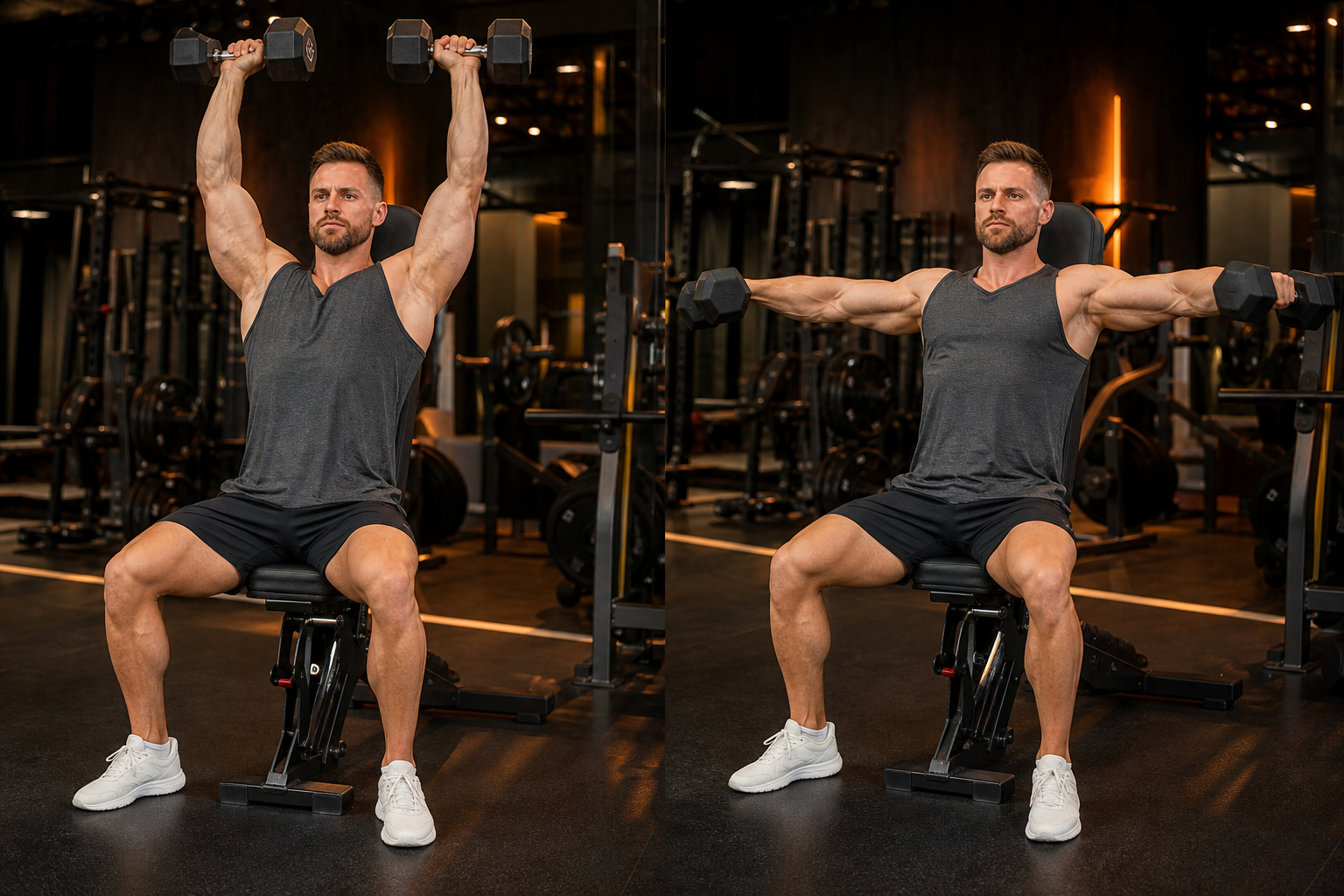
Dumbbells offer a unique advantage for shoulder training: each arm moves independently, which forces both sides to work equally and corrects strength imbalances that a barbell can mask. A 2020 study in the Journal of Strength and Conditioning Research showed that the dumbbell shoulder press produced greater deltoid activation than the barbell overhead press when normalized to the same relative load, largely because the dumbbells allow a more natural arc of movement and a greater range of motion at the bottom.
The dumbbell also lets you train the lateral deltoid in isolation through the lateral raise — an exercise that no barbell variation can replicate. The lateral deltoid is the muscle most responsible for the visual width of your shoulders, making it a critical target for anyone seeking a broader frame. For both compound pressing and isolation work, dumbbells give you control, range, and balance that no other tool matches.
This guide covers the two foundational dumbbell shoulder exercises: the dumbbell shoulder press and the lateral raise.
How to Do the Dumbbell Shoulder Press with Proper Form
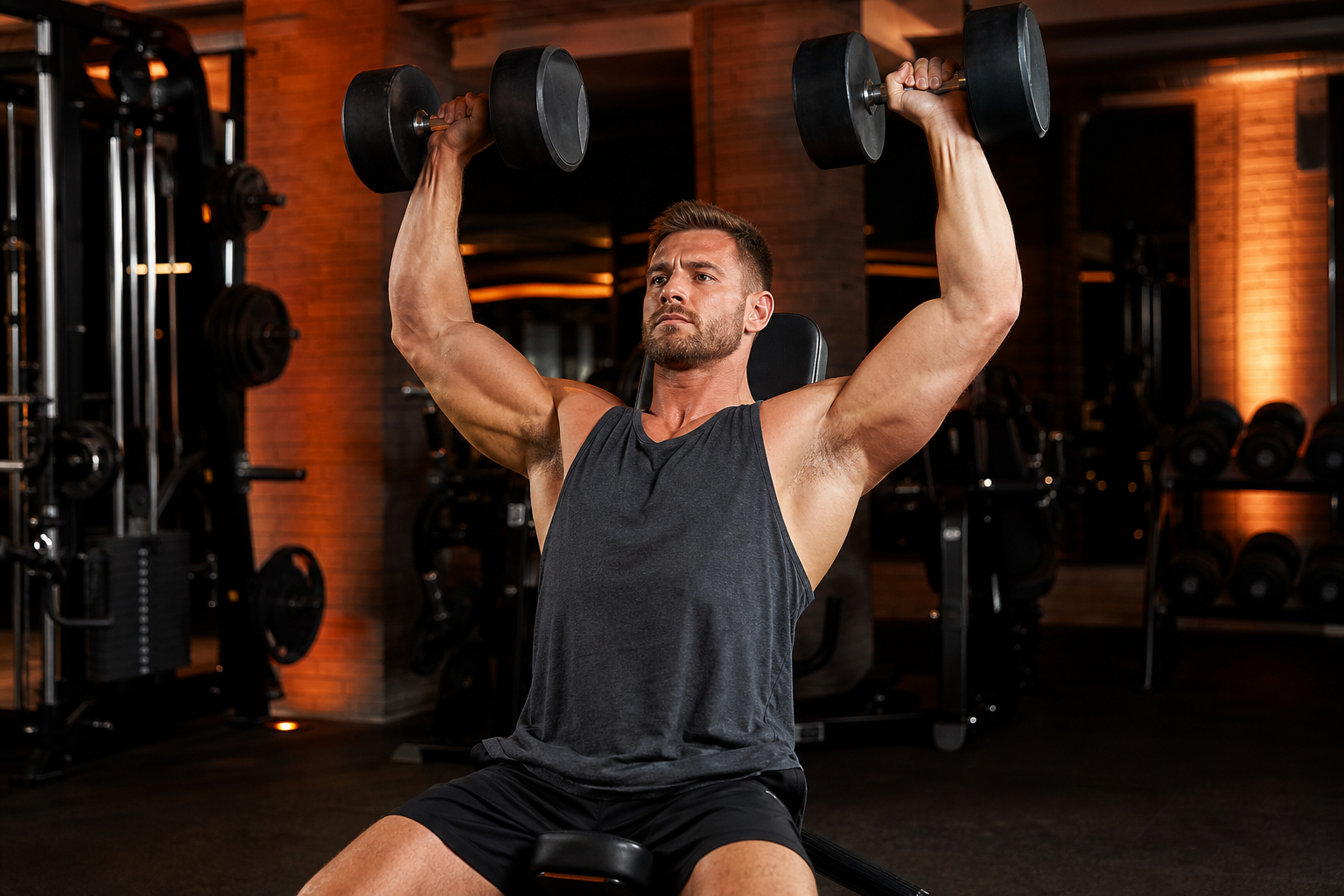
The dumbbell shoulder press targets the anterior and lateral deltoids, with significant involvement from the upper trapezius and triceps. Compared to the barbell overhead press, the dumbbell version allows a deeper stretch at the bottom and forces each arm to stabilize independently — fixing left-right imbalances.
Step 1 — Setup and Starting Position
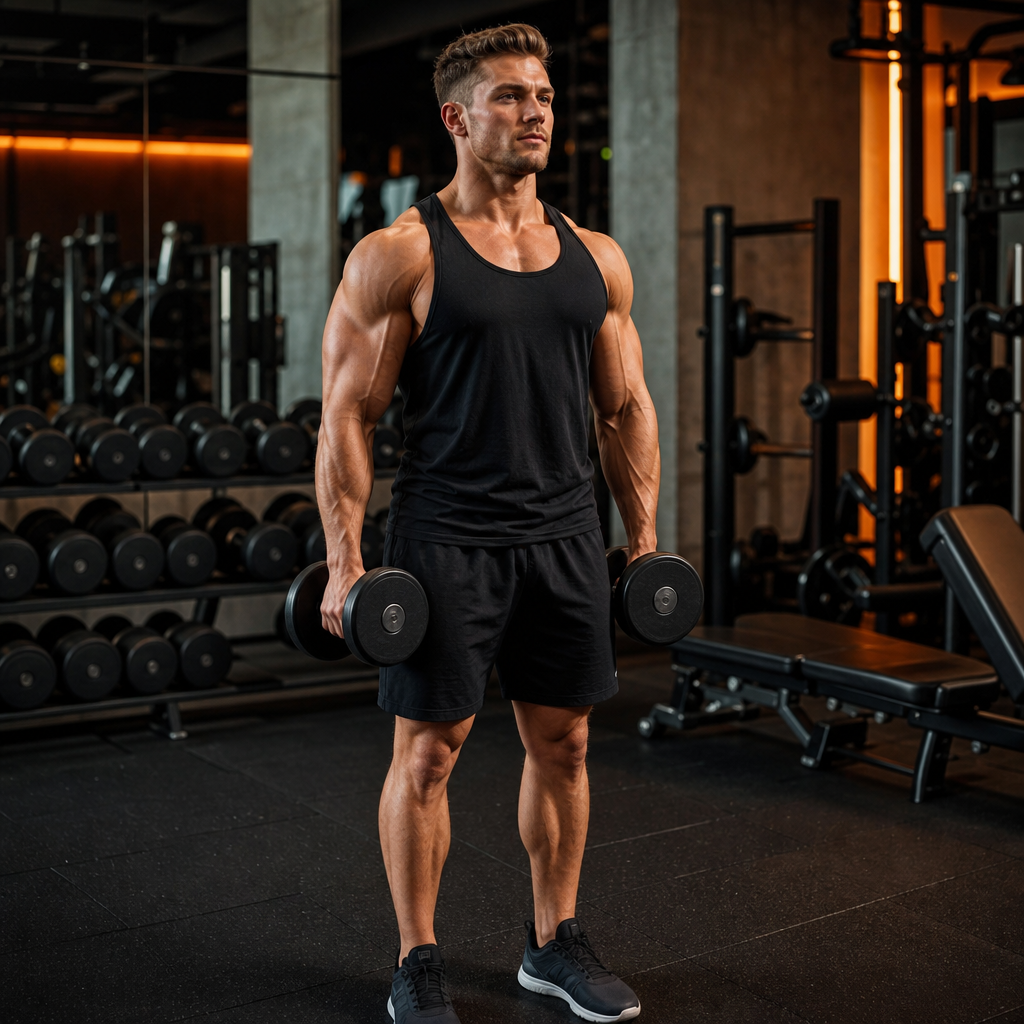
Sit on a bench with back support (or stand with feet shoulder-width apart for the standing version). Clean a dumbbell to each shoulder, or kick them up one at a time from your thighs. Position the dumbbells at ear level with palms facing forward (pronated grip) or slightly angled inward. Your elbows should be at roughly 75–90° and pointing slightly forward — not flared straight out to the sides. Brace your core, pull your ribs down, and keep your chest up.
Step 2 — Lower and Press
Lower the dumbbells in a controlled arc until you feel a deep stretch in your deltoids — typically when your upper arms are just below parallel. Take 2–3 seconds on the descent. Then drive the dumbbells upward along a slight inward arc, bringing them together overhead. The path is not perfectly vertical — the dumbbells travel in a slight A-shape: wide at the bottom, closer together at the top.
Step 3 — Top Position
At the top, fully extend your elbows without aggressively locking them out. The dumbbells should be directly over your ears or slightly behind — not way out in front of your face. Do not shrug your shoulders at the top; keep your scapulae depressed. A soft lockout keeps tension on the delts and protects the elbow joint.
Step 4 — Breathing and Racking
Inhale as you lower the dumbbells, exhale as you press past the sticking point. To rerack, lower the dumbbells to your shoulders, then to your thighs — never drop them from overhead while sitting or standing. This protects your rotator cuff and the gym floor.
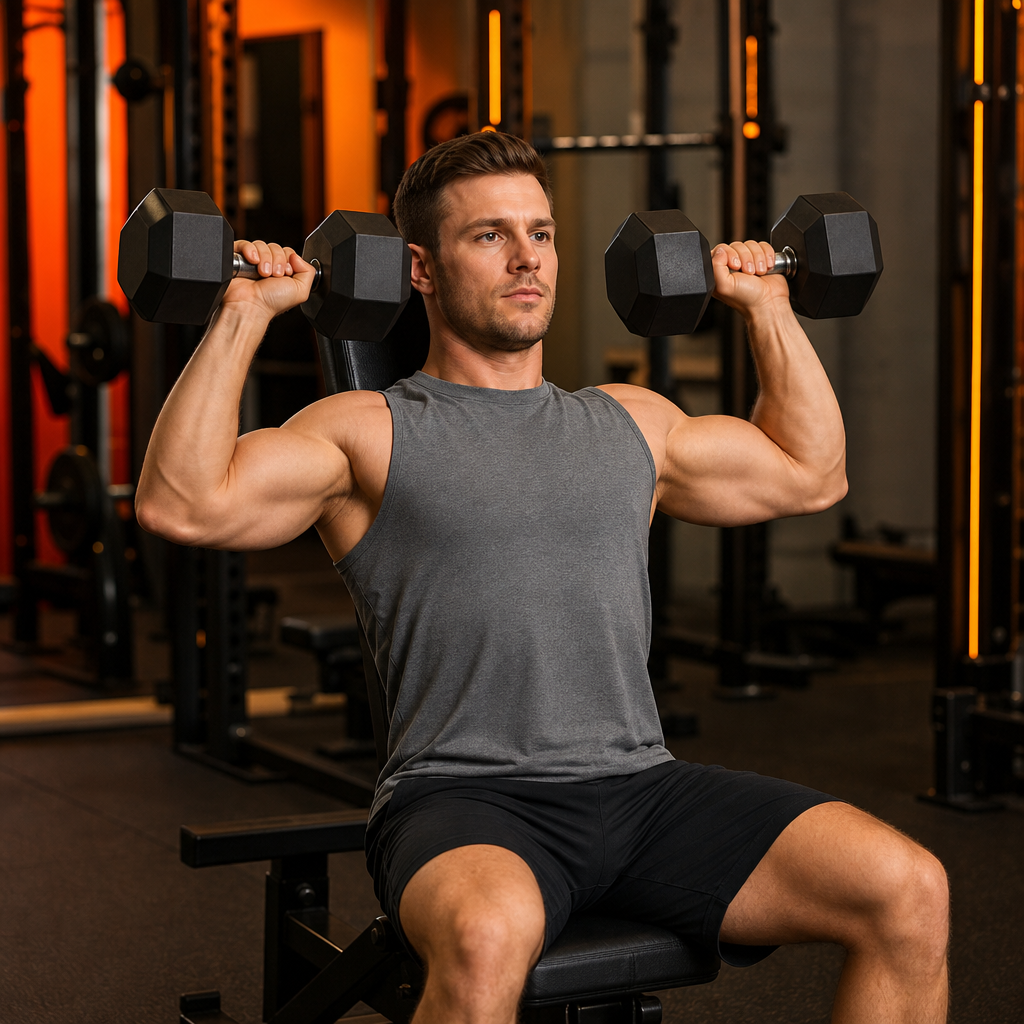
Dumbbell shoulder press setup and starting position

Dumbbell shoulder press execution at bottom position
How to Do the Lateral Raise with Proper Form
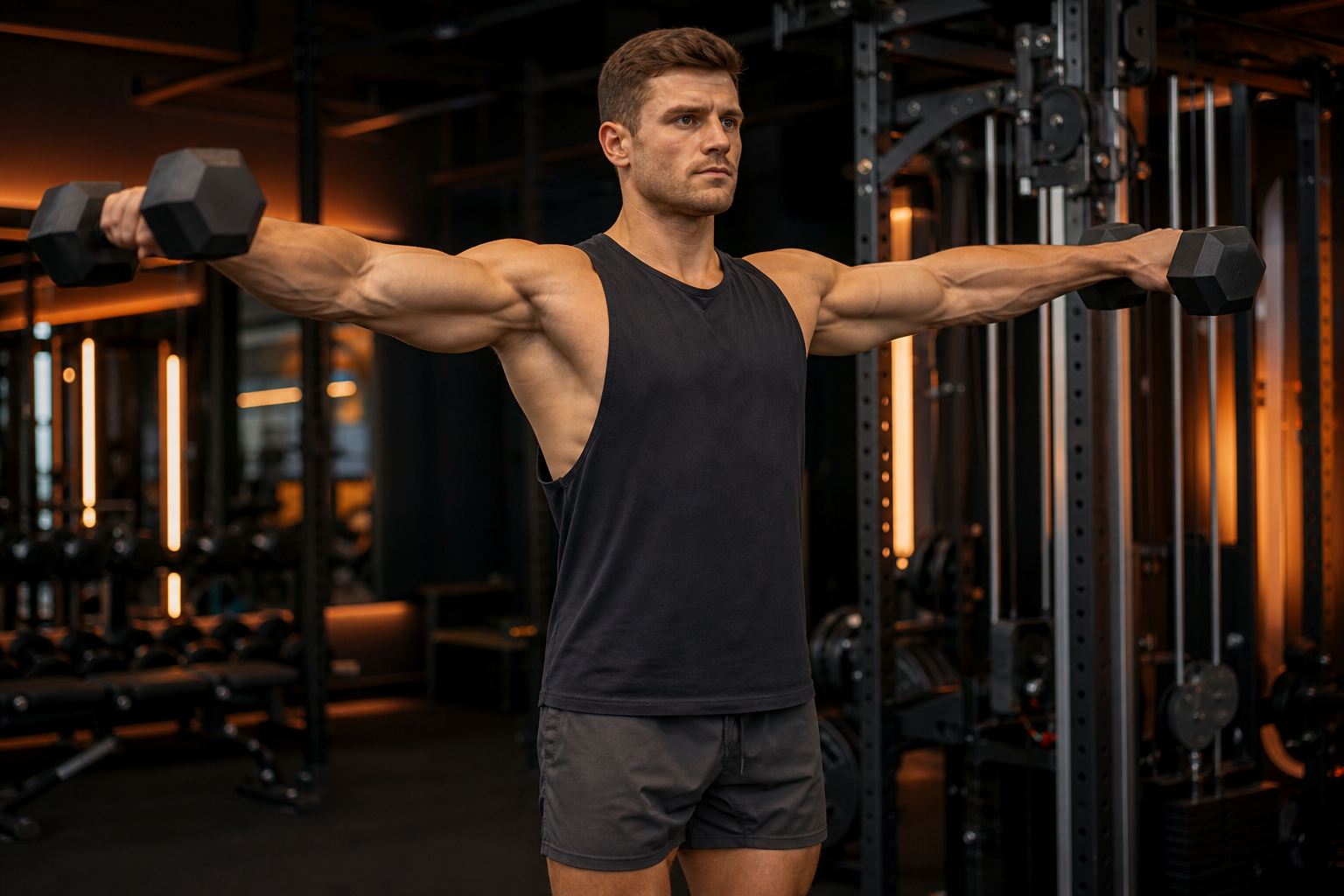
The lateral raise is an isolation movement that targets the lateral deltoid — the muscle most responsible for shoulder width. It requires light weight and high control. According to a 2023 review in Sports Medicine, focused isolation of the lateral deltoid under controlled eccentric loading is a key driver of shoulder hypertrophy.
Step 1 — Setup and Arm Position
Stand with feet hip-width apart, holding a dumbbell in each hand at your sides. Turn the dumbbells slightly forward so they are angled about 20–30° in front of your body — this aligns the resistance with the lateral deltoid fiber direction (the "scarecrow" position). Keep a slight bend in your elbows — this angle stays fixed throughout. Lean very slightly forward from the hips.
Step 2 — Raise (Concentric)
Raise the dumbbells out to your sides in a smooth, controlled arc. Lead with your elbows, not your hands — imagine pouring water from a pitcher at the top. Raise until your upper arms are at shoulder height (parallel to the floor). Going higher shifts the work to the upper traps, which defeats the purpose. Take 2 seconds to reach the top.
Step 3 — Top Position
At the top, pause for a beat and squeeze your lateral deltoids. Your elbows should be at the same height as your shoulders, slightly in front of your body — not behind you. This is a small movement with a big payoff: even a one-second pause dramatically increases time under tension for the lateral head.
Step 4 — Breathing and Negative
Inhale before you raise, exhale as you lift past the hardest point. Lower the dumbbells slowly — 3 seconds on the way down. The negative is where much of the muscle damage (and therefore growth) occurs. Do not let gravity do the work. This breathing pattern — air before the lift, controlled exhale during — keeps your core braced and your movement smooth.
Lateral raise at bottom starting position
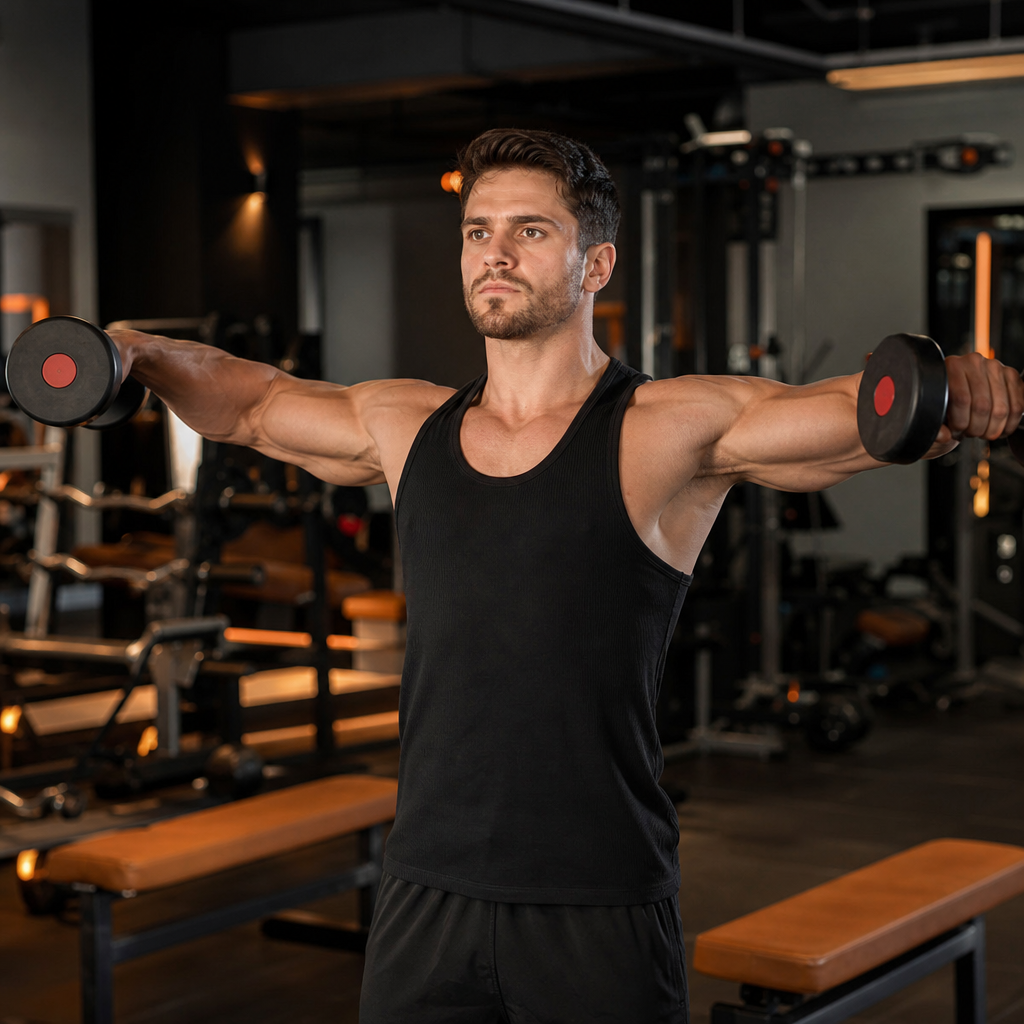
Lateral raise at top contracted position
What Are the Most Common Dumbbell Shoulder Mistakes

These errors reduce effectiveness and increase injury risk. Fix them to get the most out of your dumbbell shoulder training.
Using momentum on lateral raises: Swinging your torso or using body English turns a lateral raise into a full-body cheat. The lateral deltoid responds to controlled isolation, not momentum. If you need to swing, the weight is too heavy — drop it and control the 3-second negative.
Shrugging during the press: Elevating your shoulders (shrugging) at the top of the press shifts the load from your delts to your upper traps. Keep your scapulae depressed throughout. Shrugging also narrows the subacromial space, increasing impingement risk.
Elbows too high or too low on lateral raises: Raising your elbows above shoulder height recruits the upper traps. Keeping them too low fails to fully engage the lateral deltoid. Aim for upper arms parallel to the floor — no higher.
Going too heavy on lateral raises: The lateral deltoid is a small muscle. Using 20 kg dumbbells for lateral raises almost guarantees form breakdown and trap takeover. Use a weight you can control for 3-second negatives and a full pause at the top.
Not controlling the negative: Dropping the dumbbells back down after each rep wastes half the growth stimulus. Research consistently shows that the eccentric phase drives more muscle damage and hypertrophy than the concentric. Control every rep on the way down.
What Are the Key Takeaways
| Point | Recommendation |
|---|---|
| Why dumbbells for shoulders | Independent arm action + greater ROM + fixes imbalances |
| Dumbbell press elbow angle | 75–90° at bottom, slight A-shaped path |
| Dumbbell press depth | Lower until deep deltoid stretch, below barbell range |
| Lateral raise elbow height | Upper arms parallel to floor, no higher |
| Both exercises | Control the eccentric, no shrugging, brace the core |
Quick mistake checklist:
- Using momentum on lateral raises — reduce weight, control the 3-second negative
- Shrugging during press — keep scapulae depressed, delts do the work
- Elbows above shoulders on lateral raises — stop at parallel to avoid trap takeover
- Going too heavy on lateral raises — use weight you can pause and control
- Not controlling the negative — the eccentric drives growth, respect every rep
Recommended shoulder day combination: Dumbbell shoulder press 4×8 + Lateral raise 3×15 + Face pull 3×15 + Rear delt fly 3×12. Compound strength + lateral isolation + rear balance = complete shoulder development.
Frequently Asked Questions
How do I improve my dumbbell shoulder press form?
Keep your elbows at 75-90° and slightly forward at the bottom, press along an A-shaped arc, and never shrug your shoulders at the top. Lower until you feel a deep deltoid stretch, and control the 2-3 second descent.
What is the proper technique for dumbbell lateral raises?
Lead with your elbows, not your hands, and raise only to shoulder height — going higher recruits the upper traps. Keep a slight bend in your elbows and take 3 seconds on the way down for maximum growth stimulus.
How can I prevent shoulder injuries during dumbbell training?
Avoid shrugging at the top of the press and stop lateral raises at shoulder height — both mistakes narrow the subacromial space. Always depress your scapulae, control the eccentric, and use a weight you can handle for strict reps.
Should I do front raises or lateral raises for bigger shoulders?
Lateral raises are more valuable for shoulder width because the lateral deltoid creates visual breadth. Your anterior deltoid already gets heavy work from pressing, so prioritize lateral raises in your training.