
Dumbbell Chest Workout: How to Dumbbell Press and Fly
Why Dumbbells Are Essential for Chest Training
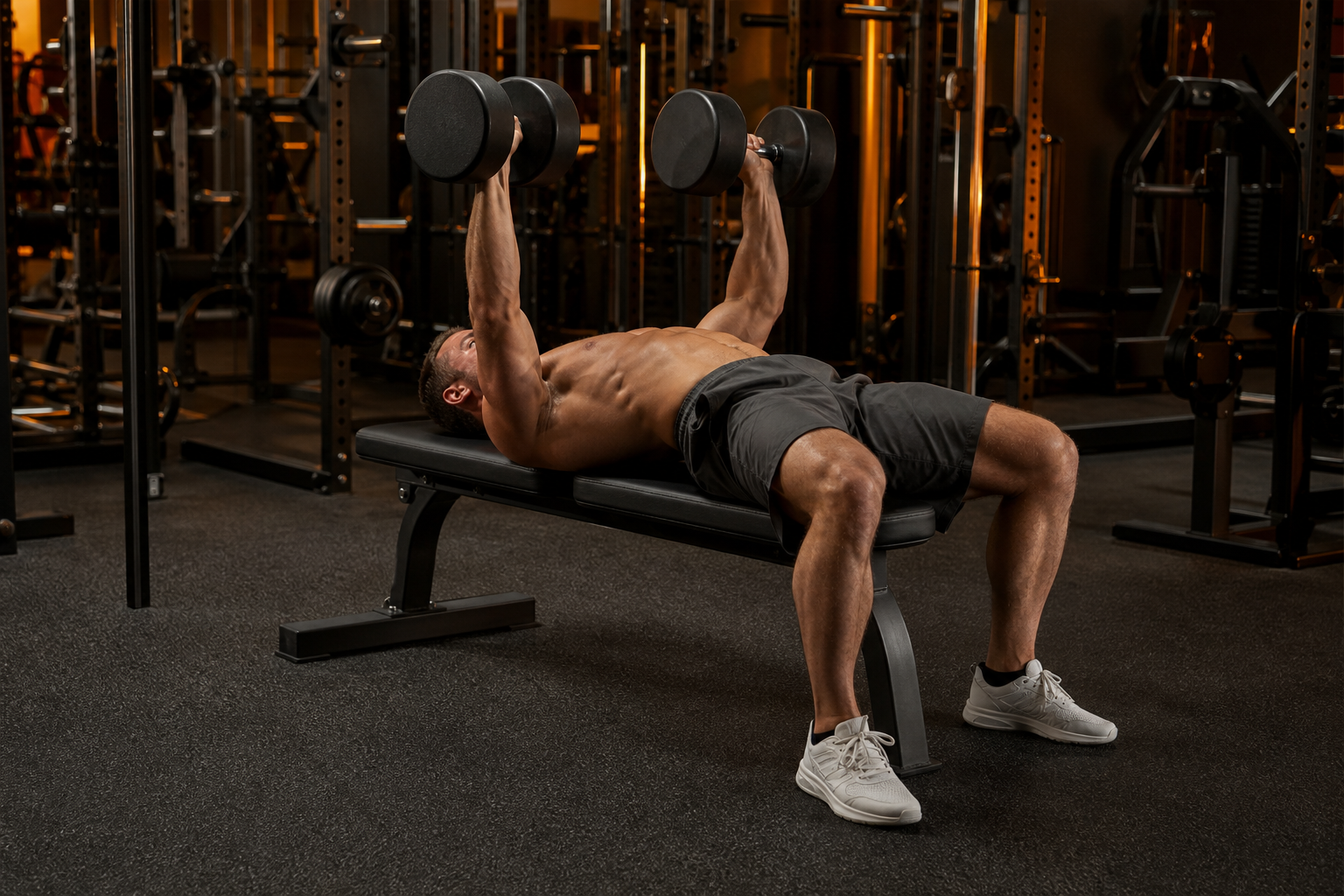
Dumbbells offer something the barbell cannot: independent arm movement. Each side must stabilize and press on its own, which eliminates strength imbalances and activates more stabilizer fibers. A 2020 study in the Journal of Strength and Conditioning Research found that the dumbbell bench press produced greater pectoral activation than the barbell bench press when normalized to the same relative load.
The dumbbell also allows a deeper stretch at the bottom of the press — your hands can travel lower than a barbell allows, increasing the range of motion and time under tension. And for fly variations, dumbbells are the only practical tool — the movement requires the arms to move independently along an arc that no barbell or machine can replicate.
This guide covers the two foundational dumbbell chest exercises: the dumbbell bench press and the dumbbell fly.
How to Do the Dumbbell Bench Press with Proper Form
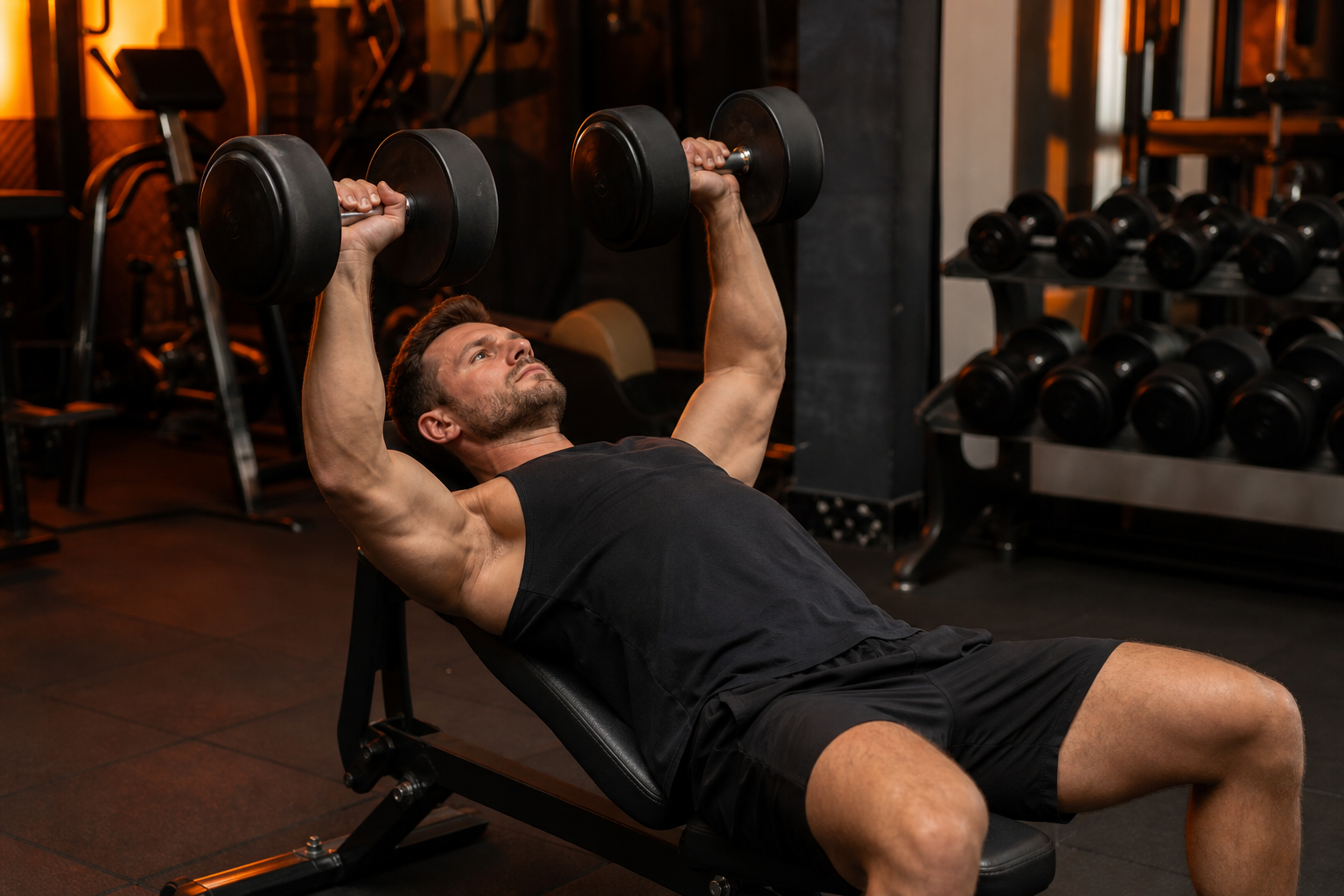
The dumbbell bench press targets the pectoralis major, anterior deltoids, and triceps — similar to the barbell press, but with greater range of motion and independent arm action.
Step 1 — Setup and Starting Position
Sit on the edge of a flat bench with a dumbbell in each hand, resting on your thighs. Kick each dumbbell up to shoulder level one at a time as you lean back onto the bench. Plant your feet firmly on the floor. Position the dumbbells at chest level with palms facing forward (pronated grip), elbows bent at roughly 75° and slightly below the bench plane. Retract and depress your shoulder blades — the same packed-shoulder position as the barbell press.
Step 2 — Lower (Eccentric)
Press the dumbbells up to arm's length over your mid-chest, then lower them in a controlled arc. Keep your elbows at roughly 45–60° from your torso — not flared to 90°. Lower the dumbbells until you feel a deep stretch across your chest, typically when your upper arms are just below parallel to the floor. The key advantage over barbell: you can go deeper. Take 2–3 seconds on the descent.
Step 3 — Press (Concentric)
Drive the dumbbells back up along the same arc, bringing them together at the top over your mid-chest. Do not let them clang together — a soft lockout protects the elbow and keeps tension on the chest. Squeeze your pectorals hard at the top for a beat. The dumbbells should follow a slight V-shaped path: wide at the bottom, narrow at the top.
Step 4 — Breathing and Racking
Inhale as you lower, exhale as you press past the sticking point. To rerack, lower the dumbbells to your chest, then rock forward and place them on your thighs — never drop them from arm's length while lying flat. This protects your rotator cuff and the gym floor.
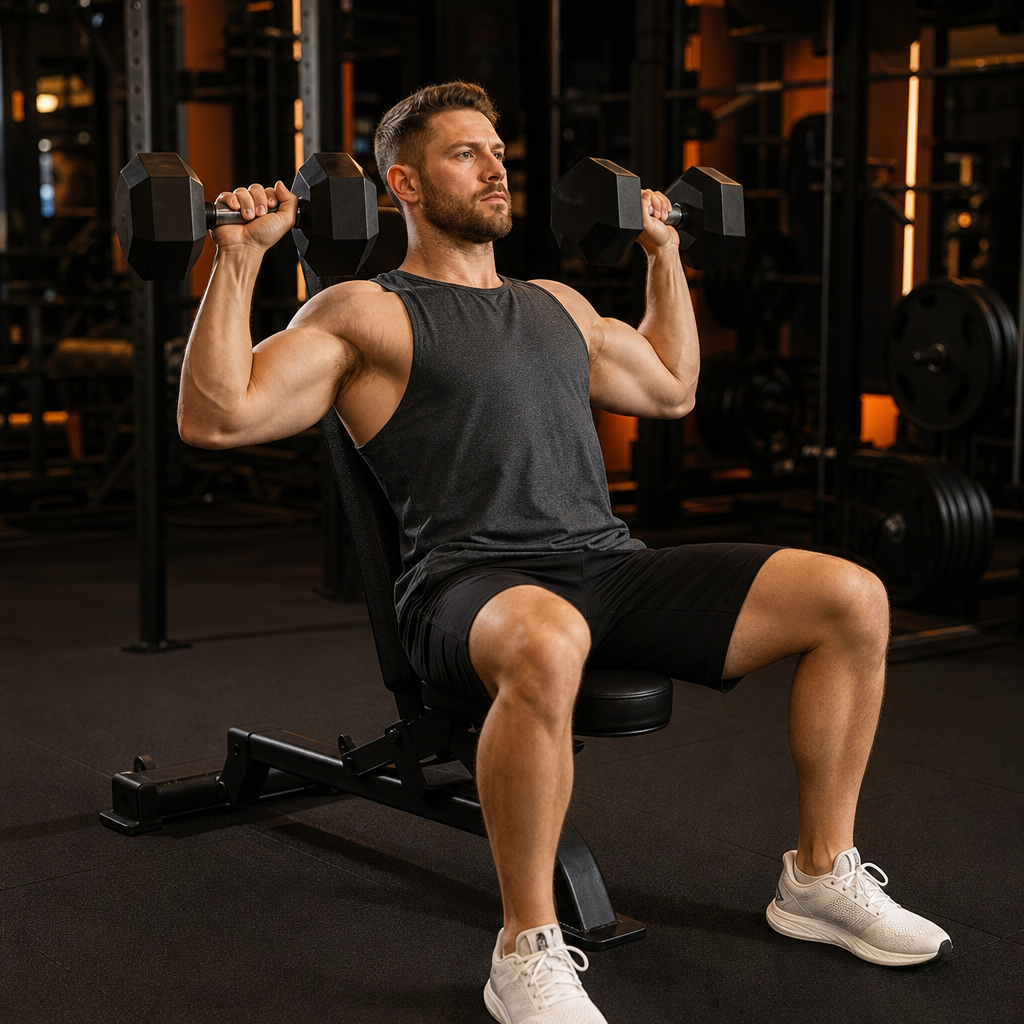
Dumbbell bench press setup and starting position
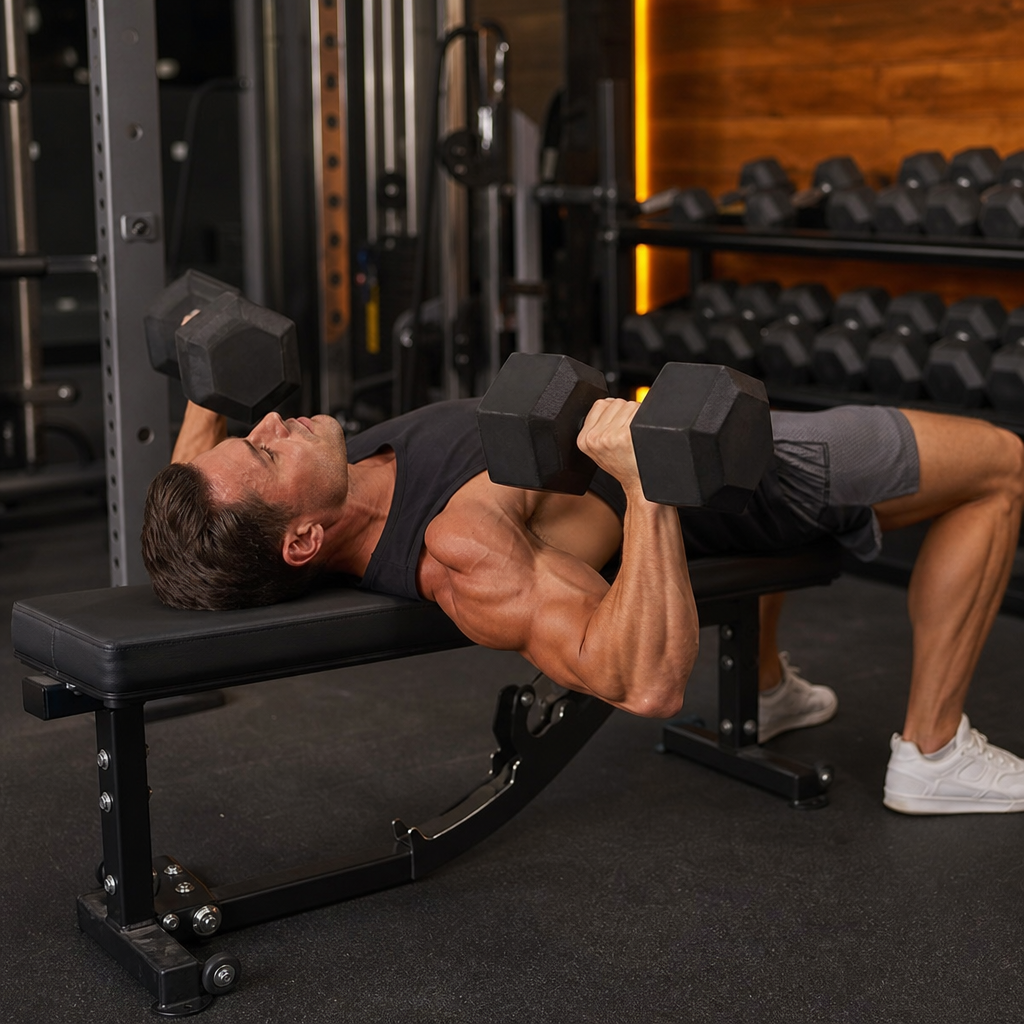
Dumbbell bench press execution at bottom position
How to Do the Dumbbell Fly with Proper Form
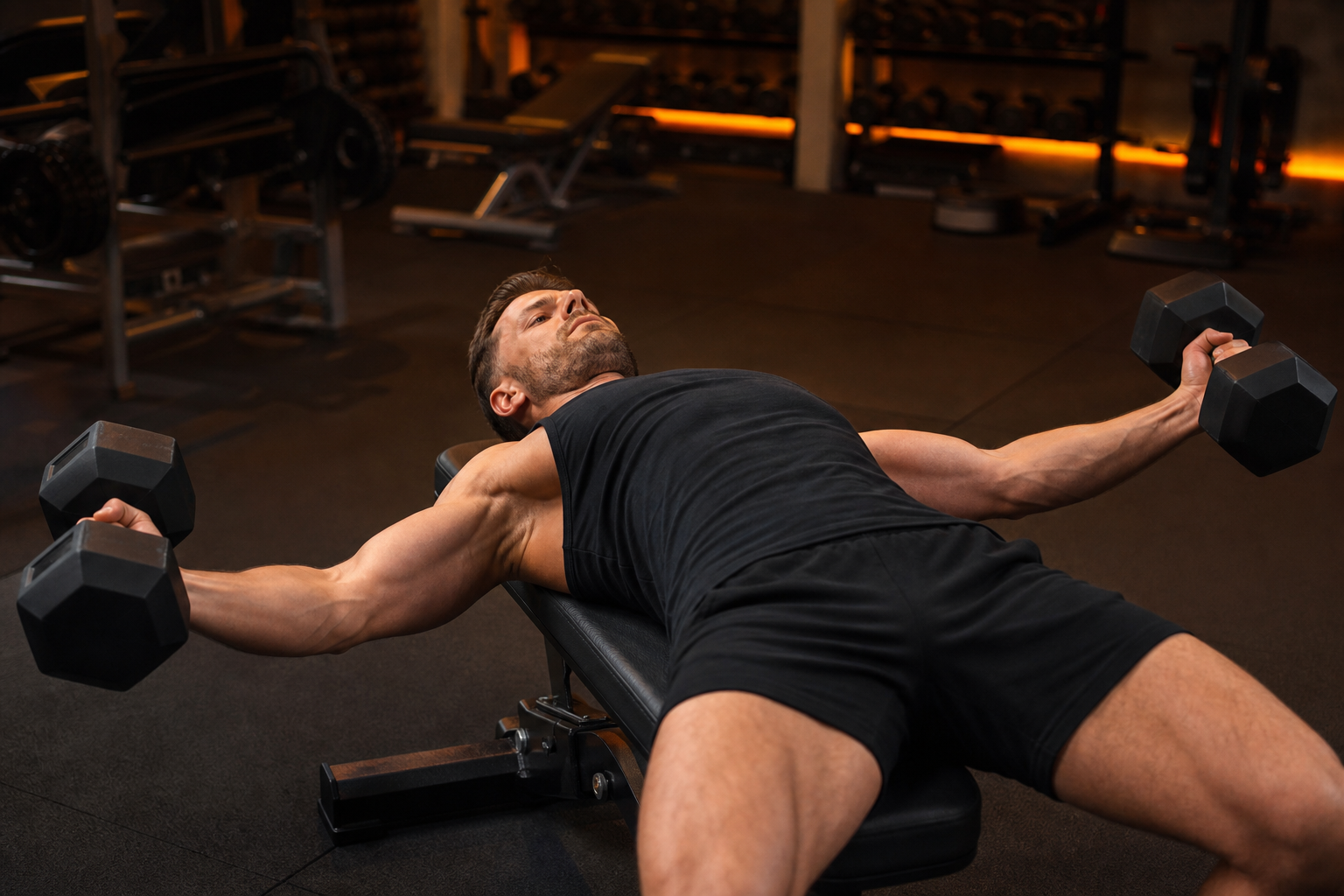
The dumbbell fly is an isolation movement that targets the pectoralis major through a wide arc, with minimal triceps involvement. It stretches the chest fibers under load — a key mechanism for muscle hypertrophy according to a 2023 review in Sports Medicine.
Step 1 — Setup and Arm Position
Lie flat on a bench with a dumbbell in each hand, arms extended over your mid-chest. Turn your palms to face each other (neutral grip). Keep a slight bend in your elbows — this angle stays fixed throughout the entire movement. Think of your arms as hooks connecting the weight to your chest, not pressing muscles.
Step 2 — Open (Eccentric)
Slowly open your arms in a wide arc, lowering the dumbbells out to your sides. Keep the slight elbow bend constant — do not let your elbows bend more as you go deeper. Lower until you feel a strong stretch across your chest, typically when your upper arms are near parallel to the floor. Control the descent: 3 seconds is ideal. The fly is not a heavy lift — it is a stretch-and-squeeze movement.
Step 3 — Close (Concentric)
Squeeze the dumbbells back together over your mid-chest along the same wide arc. Imagine hugging a large tree — the motion comes from your chest, not your arms. At the top, squeeze your pectorals together for a full second. Do not press the dumbbells together with your triceps — if your triceps are burning, you are pressing, not flying.
Step 4 — Breathing
Inhale as you open your arms, exhale as you close them. The breathing pattern is the opposite of the press: you breathe in during the stretch (eccentric) and out during the squeeze (concentric). This helps you maintain control through the vulnerable stretch position.
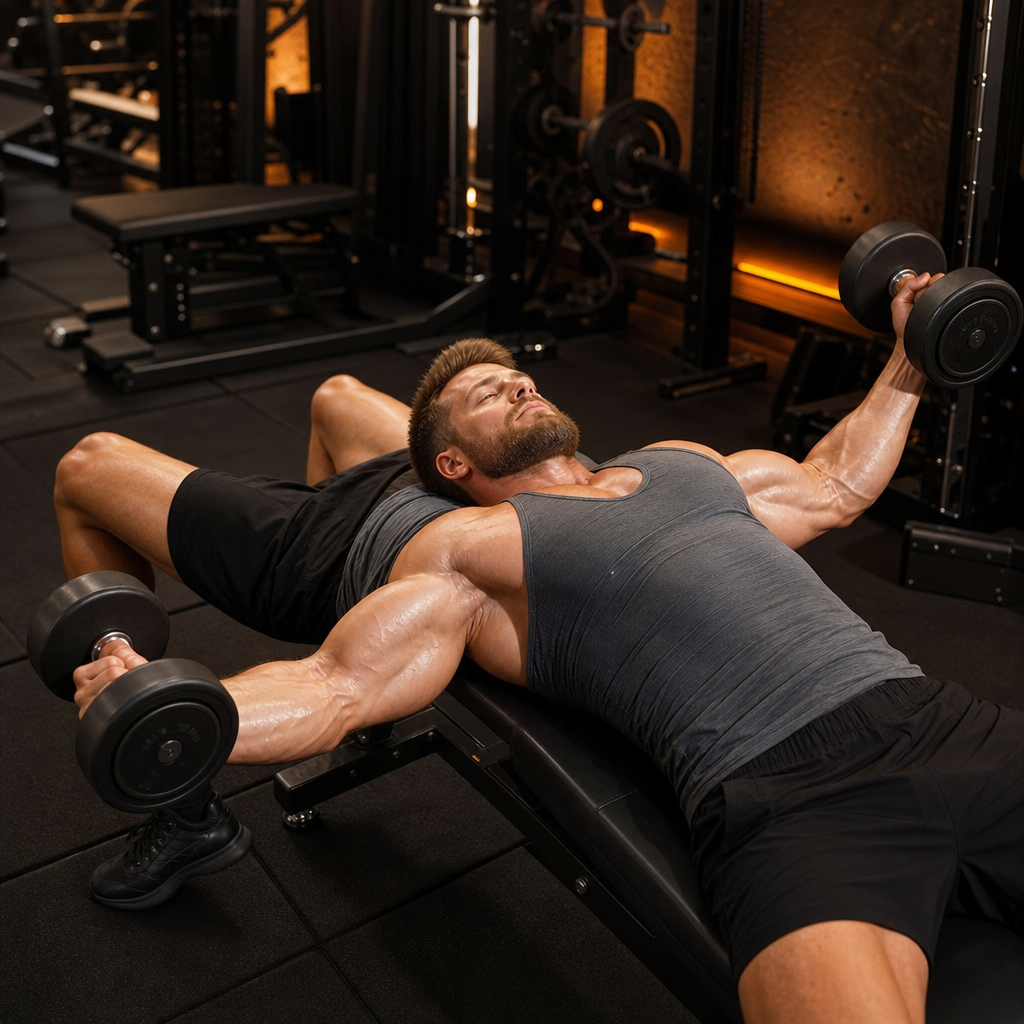
Dumbbell fly at bottom stretched position
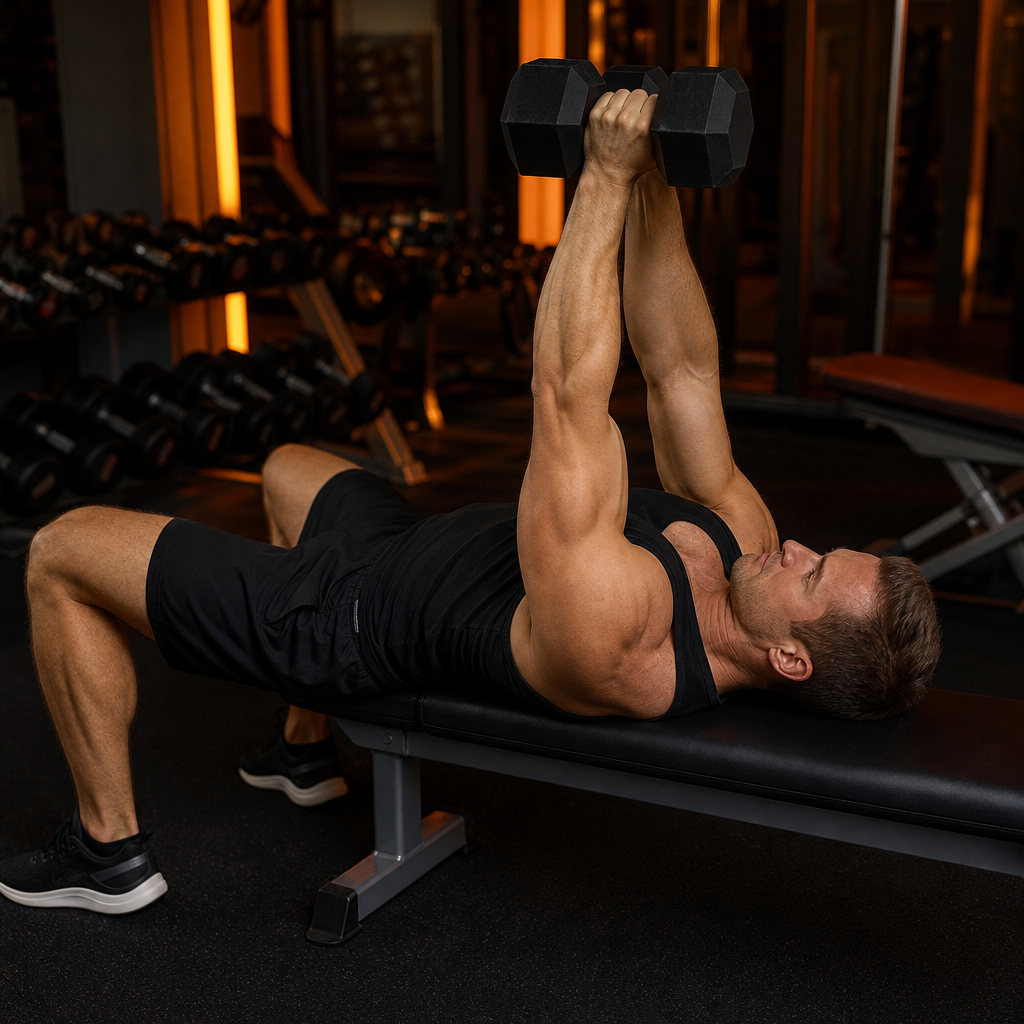
Dumbbell fly at top squeezed position
What Are the Most Common Dumbbell Chest Mistakes
These errors reduce effectiveness and increase injury risk. Fix them to get the most out of your dumbbell chest training.
Going too heavy on flyes: The fly is an isolation exercise, not a strength movement. If you need momentum or your elbows bend more at the bottom, the weight is too heavy. Use a weight you can control for 3-second negatives.
Flaring elbows to 90° on the press: Same rule as barbell — keep elbows at 45–60° to protect your shoulders. The dumbbell's freedom of movement makes it even easier to let your elbows drift into a dangerous position.
Pressing instead of flying: On flyes, if your triceps are doing work, you are turning the movement into a narrow press. Keep the elbow angle fixed and drive the motion from your chest.
Dropping the dumbbells from the top: This damages the equipment and can injure your shoulders. Learn to safely rerack by bringing the weights to your thighs first.
Skipping the deep stretch: The dumbbell's biggest advantage over the barbell is the extra range of motion. If you stop at the same depth as a barbell press, you are leaving growth on the table.
What Are the Key Takeaways
| Point | Recommendation |
|---|---|
| Why dumbbells for chest | Independent arm action + deeper stretch + fixes imbalances |
| Dumbbell press elbow angle | 45–60° from torso, V-shaped path |
| Dumbbell press depth | Lower until deep chest stretch, below barbell range |
| Fly elbow angle | Slight bend, fixed throughout — do not press |
| Both exercises | Control the eccentric, squeeze at the top, retract scapulae |
Quick mistake checklist:
- Fly weight too heavy — reduce and control the 3-second negative
- Elbows flared at 90° — tuck to 45–60° to protect shoulders
- Pressing on flyes — keep elbow angle fixed, drive from chest
- Dropping dumbbells — rerack to thighs first
- Not using the extra ROM — go deeper than barbell for more stretch
Recommended chest day combination: Barbell flat bench press 4×8 + Dumbbell incline press 3×10 + Dumbbell fly 3×12 + Cable crossover 3×15. Compound strength + isolation stretch = complete chest development.
Frequently Asked Questions
Are dumbbell presses better than barbell bench press for chest?
Dumbbells allow a deeper stretch and independent arm action, which fixes strength imbalances. But the barbell lets you lift more total weight. Use both — barbell for strength, dumbbells for stretch and balance.
How do I get a better chest squeeze on dumbbell flyes?
Keep a slight, fixed bend in your elbows and think about hugging a tree. Squeeze your pecs together hard at the top for a full second. If your triceps are burning, you are pressing, not flying.
Why do my shoulders hurt during dumbbell press?
Your elbows are likely flared too wide. Keep them at 45-60 degrees from your torso, just like the barbell press. The dumbbell's freedom makes it easy to let your elbows drift into a dangerous position.
Should I go deeper than barbell range on dumbbell presses?
Yes — the extra range of motion is the dumbbell's biggest advantage. Lower until you feel a deep stretch across your chest, which is typically below where the bar would stop.